Austrian Wine Map: Your Guide to All 18 Regions

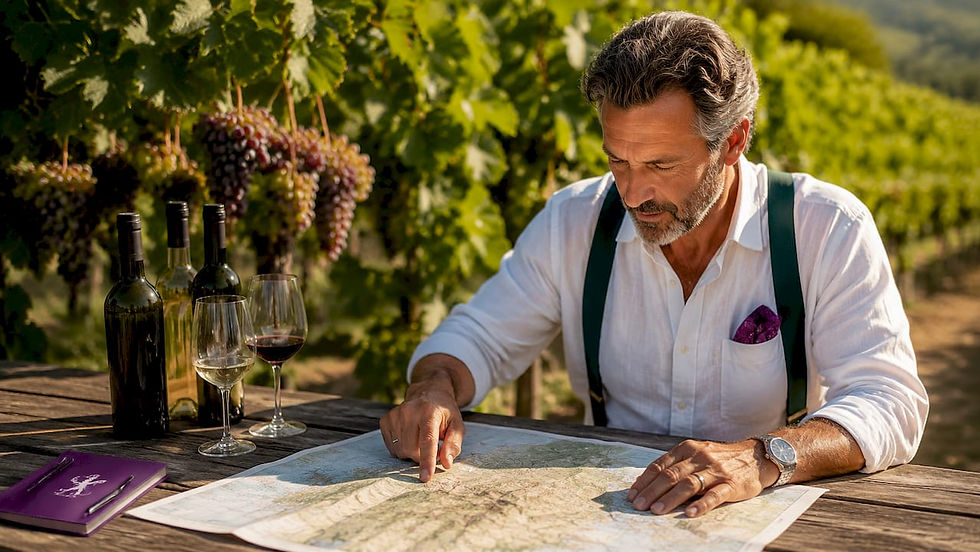
An Austrian wine map is defined as a geographic guide to Austria’s 18 legally recognized Districtus Austriae Controllatus (DAC) wine regions, each tied to specific terroir, grape varieties, and quality standards. Austria completed its full DAC rollout in 2023 after a 20-year process. That means every bottle you pick up today reflects a system built to guarantee origin and style. Whether you’re planning a vineyard trip or just trying to decode a label, understanding this map changes everything about how you experience Austrian wine.
1. What does an Austrian wine map actually show?
The wine map of Austria is not just a pretty poster for your kitchen wall. It shows 18 DAC regions spread across four federal states: Niederösterreich, Burgenland, Steiermark, and Wien. Each region has legally defined grape varieties, production rules, and quality tiers. Think of it like a GPS for flavor. Once you know where a wine comes from on the map, you already know a lot about what’s in your glass.
The DAC system represents a shift away from broad varietal marketing toward terroir and regional typicity. That’s a fancy way of saying the land matters more than the grape name on the label. Austria essentially said, “Where it grows tells you more than what it is.” That’s a bold move, and it pays off for curious wine drinkers.

2. What are the main Austrian wine regions on the map?
Austria’s four federal states each bring something totally different to the table. Here’s how they break down.
Niederösterreich (Lower Austria) is the powerhouse. It holds eight DACs and produces the lion’s share of Austrian wine. The Danube Valley alone contains five of those DACs: Wachau, Kremstal, Kamptal, Traisental, and Wagram. Kamptal is the largest at 3,907 hectares, while Traisental is the smallest at 815 hectares. Grüner Veltliner and Riesling rule this part of the map.
Burgenland covers six DACs and leans hard into red wines and luscious sweet wines. The Neusiedlersee area, with its shallow lake and misty autumns, creates ideal conditions for botrytized sweet wines. If you love bold reds like Blaufränkisch, Burgenland is your playground.
Steiermark (Styria) has three DACs tucked into mountainous terrain in the south. The vineyards here are steep and dramatic. Over 70% of Steiermark’s vineyards have gradients above 26%, which means machines can’t do the work. Every DAC wine here is hand-harvested by law. That effort shows up in the glass as bright, precise, and electric whites.
Wien (Vienna) has just one DAC, making it the world’s only major capital city with a legally defined wine region inside its borders. Viennese wine culture is deeply local. You’ll find Grüner Veltliner poured in traditional wine taverns called Heurigen, steps from the city center.
Niederösterreich: 8 DACs, Grüner Veltliner and Riesling dominant
Burgenland: 6 DACs, red and sweet wine focus
Steiermark: 3 DACs, steep terrain, hand-harvested whites
Wien: 1 DAC, urban wine culture unlike anywhere else
Pro Tip: When reading a wine map of Austria, look for the Danube River as your anchor. Most of the country’s top white wine regions follow its path east from the Wachau toward Vienna.
3. How does the DAC classification system organize wine quality?
Reading an Austrian wine label gets a lot easier once you know the three-tier DAC quality system. The tiers are Gebietswein, Ortswein, and Riedenwein. Each one gets more specific about where the wine comes from.
Gebietswein is the regional level. It covers the broadest geographic area within a DAC. These wines are approachable, food-friendly, and great for everyday drinking.
Ortswein is the village level. The grapes come from a specific village or commune within the DAC. More specificity means more character and usually a higher price.
Riedenwein is the single-vineyard level. This is where things get serious. The three-tier DAC hierarchy introduced Austria’s first legal single-vineyard classification outside France starting in 2023.
Erste Lage and Grosse Lage sit above Riedenwein as premium single-vineyard designations. They add a fine-grained layer of geographic specificity for collectors and serious enthusiasts.
Vinea Wachau classifications run parallel to the DAC system in the Wachau region. Steinfeder, Federspiel, and Smaragd describe ripeness and alcohol levels rather than geography. Wachau became a DAC in 2020 but kept this beloved local system alongside it.
Pro Tip: When shopping for Austrian wine, a Riedenwein label is your shortcut to finding a wine with real personality. It’s the equivalent of buying a single-estate olive oil instead of a blended one.
4. How do soil types on the wine map shape Austrian wine styles?
Soil is the secret ingredient that makes two bottles of Grüner Veltliner taste completely different even when they come from the same country. The wine map of Austria is essentially a soil map in disguise.
Wachau sits on ancient primary rock, mostly granite and gneiss. That bedrock gives its Grüner Veltliner and Riesling a mineral, almost stony quality. The wines feel taut and focused. Wagram, just downstream, sits on loess terraces that can be up to 20 meters deep. Loess is a fine, wind-deposited soil that holds water well and produces broader, spicier, more textured wines from the same grape. Same variety, totally different personality.
Steiermark’s steep slopes add altitude and cool temperatures to the mix. The combination of thin soils, sharp drainage, and mountain air produces whites with electric acidity. Sauvignon Blanc from Steiermark regularly surprises people who expect something soft and tropical. It comes out lean and herbal instead.
Understanding how soil shapes wine is the single biggest upgrade you can make to your wine knowledge. It turns a map from a geography lesson into a flavor predictor.
Region | Soil Type | Wine Character |
Wachau | Primary rock (granite, gneiss) | Mineral, taut, focused |
Wagram | Deep loess terraces | Broad, spicy, textured |
Steiermark | Thin mountain soils | Crisp, high-acid, herbal |
Burgenland | Clay and gravel | Rich, full-bodied reds |
Grüner Veltliner from loess soils tastes spicier and rounder than from primary rock
Blaufränkisch from Burgenland’s clay-rich soils produces deep, structured reds
Riesling from Wachau’s granite expresses pure citrus and mineral tension
5. How can travelers use the Austrian wine map to plan vineyard visits?
The Austrian wine tourism map is one of the most practical tools you can bring on a trip. Each DAC region has a distinct personality, and knowing that upfront saves you from showing up in the wrong place for what you love.
Start with the Danube Valley if you want a classic Austrian wine experience. The Wachau is the most photogenic stretch, with terraced vineyards above the river and medieval villages below. Visiting in september or october puts you right in the middle of harvest, and in Steiermark, you can actually watch hand-harvesting on near-vertical slopes. That’s a sight worth planning around.
Book visits to Wachau during harvest (september to october) for the most immersive experience
Look for Heurigen in Vienna for a casual, local tasting experience without a reservation
Seek out Erste Lage and Grosse Lage producers in Kamptal and Kremstal for serious single-vineyard tastings
Steiermark’s wine road (Südsteirische Weinstraße) runs through rolling hills and is one of Austria’s most scenic drives
Pair your trip with a food and wine event for a fuller cultural experience, similar to what you’d find at culinary events that combine regional producers with local cuisine
Pro Tip: Less-visited DACs like Traisental and Carnuntum offer serious quality at lower prices than Wachau. Locals know them well. Tourists mostly don’t. That’s your advantage.
For a broader look at planning winery visits across regions, winery region planning tips can help you build a solid itinerary before you land.
Key takeaways
Austria’s 18 DAC wine regions form the most geographically specific wine classification system in the world outside France, making the Austrian wine map an essential tool for both tasting and travel.
Point | Details |
18 DAC regions across four states | Niederösterreich leads with 8 DACs; Wien has just one urban DAC. |
Three-tier quality hierarchy | Gebietswein, Ortswein, and Riedenwein tell you exactly how specific a wine’s origin is. |
Soil drives flavor | Wachau’s granite and Wagram’s loess produce distinctly different Grüner Veltliner styles. |
Hand-harvesting signals quality | Steiermark and Wachau legally require hand-harvesting for all DAC wines. |
Wachau runs two systems | The Vinea Wachau classifications (Steinfeder, Federspiel, Smaragd) coexist with the DAC system. |
Why the Austrian wine map changed how I think about wine regions
I used to think of wine maps as decoration. Pretty, sure. Useful? Not really. Austria changed that for me completely.
The first time I held a bottle of Grüner Veltliner from Wagram next to one from Wachau, I expected them to taste basically the same. Same grape, same country, same general area. They were nothing alike. The Wagram was round and peppery, almost creamy. The Wachau was sharp and mineral, like biting into a wet stone. That’s when the map stopped being geography and started being a flavor guide.
What I find most underrated about the Austrian system is the Erste Lage and Grosse Lage designations. Most casual drinkers skip right past them. But those labels tell you a producer is staking their reputation on a specific patch of earth. That’s not marketing. That’s accountability.
My honest advice: skip the most famous Wachau producers on your first trip and go find a small Kamptal or Traisental grower instead. You’ll pay less, get more personal attention, and probably drink something more interesting. The elements of wine that make Austrian bottles so compelling, terroir, typicity, and legal quality tiers, are easiest to understand when a winemaker explains them to you directly over a glass.
Austria rewards the curious. The map is just the starting point.
— Thomas
Austrian wines worth exploring with Blameitonbacchus
If reading about Grüner Veltliner and Blaufränkisch has you itching to learn more, you’re in the right place.

Blameitonbacchus makes wine education genuinely fun. Whether you’re a total beginner trying to decode your first Austrian label or a traveler prepping for a Danube Valley trip, the wine elements course breaks down terroir, grape varieties, and regional styles in plain English. No stuffy lectures, no intimidating jargon. Just real knowledge that makes your next glass taste better. And while you’re at it, grab some wine-themed gear to show off your new obsession. Blameitonbacchus has you covered from the glass to the wardrobe.
FAQ
What is the DAC system on an Austrian wine map?
DAC stands for Districtus Austriae Controllatus, Austria’s legally defined wine origin system. It covers 18 regions across four federal states, each with rules on grape varieties, quality tiers, and production methods.
How many wine regions does Austria have?
Austria has 18 recognized DAC wine regions, distributed across Niederösterreich (8), Burgenland (6), Steiermark (3), and Wien (1).
What grape varieties dominate the Austrian wine map?
Grüner Veltliner and Riesling lead in the white wine regions of Niederösterreich, while Blaufränkisch is the star red variety in Burgenland. Steiermark specializes in Sauvignon Blanc and Welschriesling.
What does Smaragd mean on an Austrian wine label?
Smaragd is the highest ripeness tier in the Vinea Wachau classification system, indicating a full-bodied, high-alcohol wine. It coexists with the DAC system specifically in the Wachau region.
Is hand-harvesting required in Austrian wine regions?
Hand-harvesting is legally required for all DAC wines in Steiermark and Wachau, where steep terrain makes machine harvesting impossible. This requirement is a direct marker of quality and production care.
Recommended
Comments