Best Beginner Wine Classes Online: Find Your Perfect Fit


For most beginners in the U.S., Blameitonbacchus — The Elements of Wine is the best pick for starting your wine education online. Here’s why it earns the top spot:
Beginner-first design: Every module is built for people who are starting from zero, with zero intimidation and zero jargon overload.
Clear syllabus and friendly pacing: You know exactly what you’re getting before you commit, and the lessons move at a pace that feels like a fun conversation, not a lecture.
Approachable pricing: No massive upfront investment to figure out if wine education is your thing.
One honest caveat: if you need a globally recognized certificate for your résumé or a hospitality career, WSET Level 1 is the smarter starting point.
Key Takeaways
The single most important thing for any beginner: pick a course that matches your real goal, not your most ambitious one, and start tasting on day one.
Point | Details |
Best overall pick | Blameitonbacchus — The Elements of Wine is the top choice for most U.S. beginners wanting fun, structured learning. |
When to choose certification | WSET Level 1 (four weeks, globally recognized) is worth it only if you need a credential for career or serious study. |
What to expect | Most beginner courses cover grape varieties, the tasting method, food pairing, label literacy, and wine service basics. |
How to prepare | Have two or three wines, a standard glass, and a white surface ready before your first session. |
Free starting point | The University of Adelaide MOOC and Blameitonbacchus’s free Wine Basics blog are solid no-cost entry points. |
Table of Contents
Why take a structured beginner wine class at all?
You could spend months reading wine blogs, watching YouTube clips, and guessing at the grocery store. Or you could take a short, structured class and skip straight to the good part: actually enjoying wine with confidence.
A well-designed beginner course gives you:
Tasting confidence — you stop second-guessing whether you like something and start knowing why you like it.
Basic vocabulary — words like “tannins,” “acidity,” and “finish” stop sounding like a foreign language.
Food pairing instincts — you learn which wines play nicely with which dishes, which is genuinely useful every single week.
Smarter buying habits — you can read a label, spot a good value, and stop defaulting to whatever’s on sale.
Self-teaching works, but it’s slow and scattered. A short course gives you a framework to hang everything else on. Once you have that skeleton, every bottle you open teaches you something new.
Pro Tip: Before your first session, grab two or three different wines — a light white, a medium red, and something sparkling. Tasting alongside the lesson is worth more than watching it twice.
What do beginner online wine classes actually teach you?
Most solid beginner courses cover the same core territory, even if they package it differently. Here’s what you should expect to learn:
Grape varieties and principal styles — the major white and red grapes, what makes each one distinct, and how growing region shapes flavor.
The tasting method — look, swirl, smell, taste, and conclude. This is the backbone of wine literacy. Check out the top white wine varieties guide for a head start on the white side.
Food pairing basics — why acid cuts through fat, why tannins clash with fish, and how to build pairings that actually work.
Wine service essentials — temperature, glassware, opening, and pouring without embarrassing yourself at dinner.
Label literacy — how to decode a wine label, understand vintage years, and identify region and producer.
Basic region overview — Old World vs. New World, and why it matters for flavor expectations.
A typical beginner module breakdown looks something like this:
Module | Topic | What you can do after |
1 | How wine is made | Explain fermentation in plain English |
2 | Major grape varieties | Name and describe 6 key grapes |
3 | The tasting method | Evaluate a wine using look, smell, taste |
4 | Food and wine pairing | Build a simple pairing for any meal |
5 | Reading labels and regions | Decode a label and identify the style |
6 | Wine service basics | Serve wine correctly at home or at a table |
After a good beginner course, you should be able to pick up a glass, walk through a tasting, describe what you’re experiencing, and pair it with dinner. That’s the real finish line.

Self-paced, instructor-led, or live tasting kit: which format suits you?
Not all beginner wine classes online are built the same way. The format you choose shapes everything from your schedule flexibility to how much you actually taste.

Format | Best for | Pros | Cons |
Self-paced video | Busy schedules, budget-conscious learners | Watch anytime, rewind freely, lower cost | No live feedback, easy to procrastinate |
Instructor-led cohort | Structured learners who want accountability | Live Q&A, peer interaction, set deadlines | Fixed schedule, often pricier |
Live tasting with shipped kit | Hands-on learners who want the full experience | Taste the exact wines discussed, real-time guidance | Kit shipping varies by U.S. state; added cost |
MOOC-style (university) | Academic learners who want depth and breadth | Often free to audit, credible institution | Less personal, no live tasting component |
A quick note on technical requirements for any online wine class:
A stable internet connection (at least 10 Mbps for smooth video).
A device with a decent screen — tablet or laptop beats a phone for reading tasting notes.
For live sessions: a working camera and microphone, good lighting so the instructor can see your glass, and a quiet space.
For tasting kits: check shipping eligibility before you enroll. U.S. alcohol shipping laws vary by state, and some providers can’t ship wine to every address.
Pro Tip: For live tasting sessions, set your glass on a white piece of paper. It makes color evaluation dramatically easier and looks impressively pro on camera.
How to choose the right beginner wine course for you
Run through these questions before you hand over your credit card:
What’s your actual goal? Casual enjoyment, impressing dinner guests, or a hospitality career? Your goal determines whether you need a certificate or just a fun evening.
Do you need a recognized certification? If yes, stick to accredited programs. If no, a well-structured boutique class often delivers more fun per dollar.
What format fits your life? Be honest about your schedule. A live cohort is useless if you can’t show up consistently.
Is a tasting kit included or available? Tasting alongside lessons is the fastest way to learn. Confirm kit availability and shipping to your state before enrolling.
What’s the refund policy? A reputable course offers at least a partial refund window. No refund policy is a red flag.
When does it start? Self-paced courses start when you do. Instructor-led cohorts have fixed dates — check the calendar before you commit.
What do other students say? Look for specific reviews, not just star ratings. “I can now describe wines at a restaurant” beats “Great course!” every time.
Red flags to watch for:
No syllabus or sample lesson available before purchase.
Hidden kit costs revealed only at checkout.
Vague instructor credentials (“wine enthusiast” is not a qualification).
No student reviews or testimonials anywhere on the site.
The core tradeoff is simple: time vs. cost vs. certification. A free MOOC costs you time. A certified program costs you money. A boutique beginner class often hits the sweet spot in the middle.
Our recommended beginner courses: profiles and honest verdicts
Blameitonbacchus — The Elements of Wine (top pick)
Built specifically for adults who are new to wine and want to learn without feeling talked down to. The format is self-paced, the tone is warm and playful, and the syllabus covers the essentials without drowning you in trivia. Pricing is beginner-friendly, and the U.S.-based setup means no international shipping headaches. This is the pick for anyone who wants to actually enjoy the learning process. Read the beginner’s guide to wine to get a taste of the teaching style before you enroll.
WSET Level 1
The gold standard for beginners who need a credential. WSET Level 1 is a four-week self-guided online program that recommends at least three hours of private study per week, tasting a minimum of six wines, and sitting a formal exam. The enhanced online option is priced at a moderate fee. It’s thorough, globally recognized, and worth every penny if a hospitality career or serious wine study is on your radar. For pure hobbyists, it may feel more like homework than fun.
World of Wine: From Grape to Glass (University of Adelaide)
An academic MOOC that covers wine science, production, and tasting from a university perspective. You can audit it for free, with a paid certificate option available. The depth is impressive for a free resource, but the format is lecture-heavy and there’s no live tasting component. Great for learners who love structured academic content and want to go broad before going deep.
Wine Folly online courses
Wine Folly built its reputation on visual, approachable wine education, and the online courses carry that same DNA. The content is practical, the graphics are genuinely helpful for visual learners, and the focus is on real-world wine knowledge rather than certification. A solid pick for hobbyists who learn better from infographics than from textbooks.
Napa Valley Wine Academy (online offerings)
A recognized name in U.S. wine education, the Napa Valley Wine Academy runs online courses that range from beginner-friendly introductions to WSET delivery partnerships. If you want an established American academy feel with structured progression, this is worth a look. The course catalog skews toward hospitality students and serious enthusiasts more than pure beginners.
Pro Tip: Match the course to your motivation, not your ambition. If you want to enjoy wine more, choose the fun class. If you need the certificate, choose WSET. Trying to do both at once usually means doing neither well.
What does a beginner wine class actually cost, and what do you need?
Here’s a realistic look at what to budget and what to have on hand:
Time commitment varies just as much as price:
Short workshops: 1–3 hours total, great for a quick taste of the subject.
Boutique beginner courses: 3–6 hours of content, completable in a weekend.
Multi-week certified programs: 4+ weeks, 3+ hours of study per week.
What to have ready before class:
Two or three wine glasses (a standard tulip-shaped glass works fine).
A white surface or piece of paper for color evaluation.
A corkscrew and a wine stopper.
Two or three bottles covering different styles (a crisp white, a medium red, and a rosé or sparkling if you’re feeling adventurous).
A notebook or tasting sheet for notes.
On tasting kits: many courses don’t include shipped wine by default. Where kits are offered, U.S. alcohol shipping laws mean availability varies by state. Always confirm before enrolling, and budget for the kit as a separate line item if it’s an add-on.
Free and low-cost ways to start learning about wine online
Not ready to spend money yet? Totally fair. Here’s how to get real value for free:
World of Wine: From Grape to Glass (University of Adelaide) — audit the full MOOC at no cost. Academic, thorough, and genuinely useful.
Wine Folly’s free content — the blog and social channels are packed with visual explainers on grape varieties, regions, and tasting.
MasterClass previews — James Suckling’s wine appreciation course on MasterClass is a paid subscription, but preview lessons give you a feel for high-production-value wine education.
Library resources — Wine Folly: The Essential Guide to Wine and The Wine Bible by Karen MacNeil are available at most public libraries and cover beginner ground thoroughly.
Blameitonbacchus blog — the Wine Basics category is a free starting point with practical, beginner-friendly articles.
To structure a free self-study session that actually works:
Pick three wines: one white, one red, one sparkling or rosé.
Download a free tasting sheet (Wine Folly has one).
Work through look, swirl, smell, and taste for each wine, writing notes as you go.
Compare your notes to a published tasting note for the same wine.
Pro Tip: The biggest mistake in free self-study is tasting without writing. Even three words per wine (“bright, tart, short”) trains your palate faster than passive sipping.
How Blameitonbacchus teaches beginners
The teaching approach at Blameitonbacchus is built around one idea: wine should be fun before it’s formal. The Elements of Wine course uses short, focused modules that get you tasting quickly rather than sitting through long lectures before you ever open a bottle.
Here’s what the learning experience looks like in practice:
Short modules: Each lesson is digestible, designed to fit into a lunch break or an evening without burning you out.
Tasting-first approach: You’re encouraged to open a bottle and taste alongside the content, not after you’ve finished the theory.
Pairing practice: Food and wine pairing is woven throughout, not saved for a single module at the end. The step-by-step pairing guide is a natural companion resource.
Friendly, judgment-free tone: No one’s going to quiz you on obscure appellations or make you feel bad for preferring sweet wine.
For learners who want to go further after the course, the United Sommeliers Foundation documents structured pathways for those considering a professional sommelier track, which is a useful reference point for understanding how far beginner education can take you.
What you can expect to walk away with after The Elements of Wine:
Outcome | What it means for you |
Confident tasting vocabulary | Describe wines clearly without sounding pretentious |
Food pairing instincts | |
Label literacy | Read a wine label and know what you’re buying |
Tasting method fluency | Work through look, swirl, smell, taste on any wine |
My honest take: which course is right for which learner?
Here’s the thing about beginner wine education that most roundups won’t tell you: the “best” course is almost always the one that matches your actual motivation, not the one with the most impressive credential.
If you’re someone who wants to enjoy wine more at dinner, feel confident ordering at a restaurant, or just stop nodding blankly when someone mentions Burgundy, Blameitonbacchus — The Elements of Wine is genuinely the right call. It’s built for exactly that person. The tone is warm, the pacing is forgiving, and you’ll finish it.
If you’re eyeing a hospitality career, working in a restaurant, or want something that carries weight on a résumé, WSET Level 1 is the move. It’s more demanding, it costs more, and it’s worth it for that specific goal.
If your budget is zero and your curiosity is high, the University of Adelaide MOOC is a legitimate free option. Just know that without live tasting and instructor feedback, the learning curve is steeper.
Time-poor learners should go self-paced, full stop. A live cohort you can’t attend consistently is money wasted.
Ready to pour? Here’s how to get started with Blameitonbacchus
Skip the endless comparison spiral. If you’ve read this far, you already know enough to take the next step.
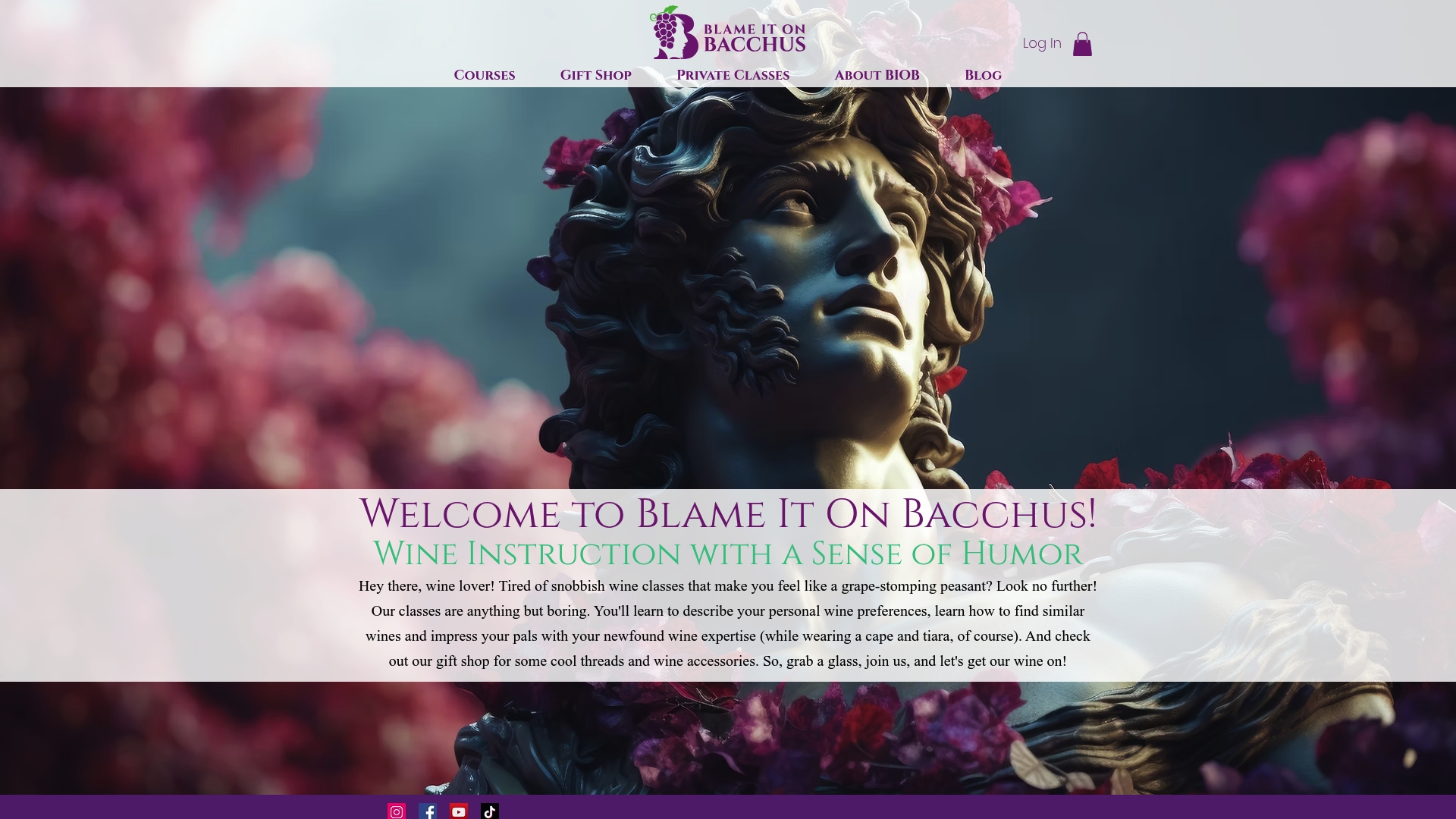
Getting started with Blameitonbacchus — The Elements of Wine takes about three minutes:
View the syllabus on The Elements of Wine course page so you know exactly what you’re signing up for.
Choose your session and complete checkout — the process is straightforward, and the pricing is built for beginners, not professionals.
Open a bottle and start learning — no waiting, no complicated setup.
If you want to give the gift of wine education, Blameitonbacchus also carries wine-themed gear — shirts, tote bags, tumblers, and more — that pairs nicely with a class enrollment as a gift. Head to The Elements of Wine and see if it’s the right fit for you.
Sources
FAQ
What is the easiest way for a beginner to learn about wine?
The fastest path is a short, structured beginner course that gets you tasting immediately alongside the content. Blameitonbacchus — The Elements of Wine is built exactly for this: short modules, a friendly pace, and a tasting-first approach that builds real skills quickly.
Are there any free online wine courses available?
Yes. The University of Adelaide’s World of Wine: From Grape to Glass MOOC can be audited for free, and Wine Folly’s blog and social content cover grape varieties, regions, and tasting basics at no cost. The Blameitonbacchus Wine Basics blog is another free starting point.
What is the 20-minute wine rule?
The breathing rule refers to letting a red wine breathe in the glass for a short time after opening before tasting. Exposure to air softens tannins and opens up aromas, making the wine more expressive and easier to evaluate.
What is the 75-85-95 rule for wine?
These figures refer to serving temperature guidelines for sparkling, white, and red wines. Exact temperatures vary by source and wine style, so treat them as starting points rather than strict rules.
Do I need a tasting kit to take an online wine class?
Most self-paced beginner courses don’t require a shipped kit. You can assemble your own tasting flight at home using two or three bottles covering different styles. Where kits are offered as add-ons, confirm shipping availability to your U.S. state before enrolling, since alcohol shipping laws vary.
Recommended
Comments