Glasses in a Bottle of Wine: What You Need to Know
- Thomas Allen

- Jul 6
- 7 min read

“Glasses in a bottle of wine” refers to the number of standard servings a single 750ml wine bottle produces, which is typically five 5-ounce pours. That number is not fixed, though. Pour size, glass shape, and even the setting you’re drinking in can push that count up or down. Whether you’re splitting a bottle with friends, trying to figure out if you’re getting a fair deal at a restaurant, or just curious about that joke where someone holds up a giant glass and says “one glass, please,” this guide covers it all. Let’s get this wine party started.
How many glasses are in a bottle of wine?
A standard 750ml bottle holds about 25.3 fluid ounces. At the industry standard pour of 5 ounces, that gives you exactly five glasses per bottle. That is the number you will see on most wine labels, restaurant menus, and serving guides.
But here is where it gets interesting. Pour size changes everything. A 4-ounce pour yields about six glasses. An 8-ounce pour drops you down to roughly three. Restaurant pours vary wildly, ranging from 3-ounce tasting pours to country club servings as generous as 8.45 ounces. That means one bottle could serve three people or eight people depending on where you are.
Pour Size | Glasses Per Bottle |
3 oz (tasting) | ~8 glasses |
4 oz (light pour) | ~6 glasses |
5 oz (standard) | ~5 glasses |
6 oz (generous) | ~4 glasses |
8+ oz (country club) | ~3 glasses |

The financial angle matters too. Ordering by the bottle is almost always the smarter move when you are sharing. Individual glasses at restaurants typically run $10–$18 each, while a full bottle often costs $30–$65. Three or four glasses by the glass can easily match the price of the whole bottle.
Pro Tip: At home, use a kitchen measuring cup once to calibrate your pour. You will be surprised how far off a “casual” pour can be from the standard 5 ounces.
What role does glass shape play in your wine experience?
Wine glass design is not just about looking fancy. Red wine glasses have large, wide bowls to increase the wine’s contact with air, which softens tannins and opens up aromas. White wine glasses are smaller and narrower to preserve cooler temperatures and keep delicate floral notes concentrated.
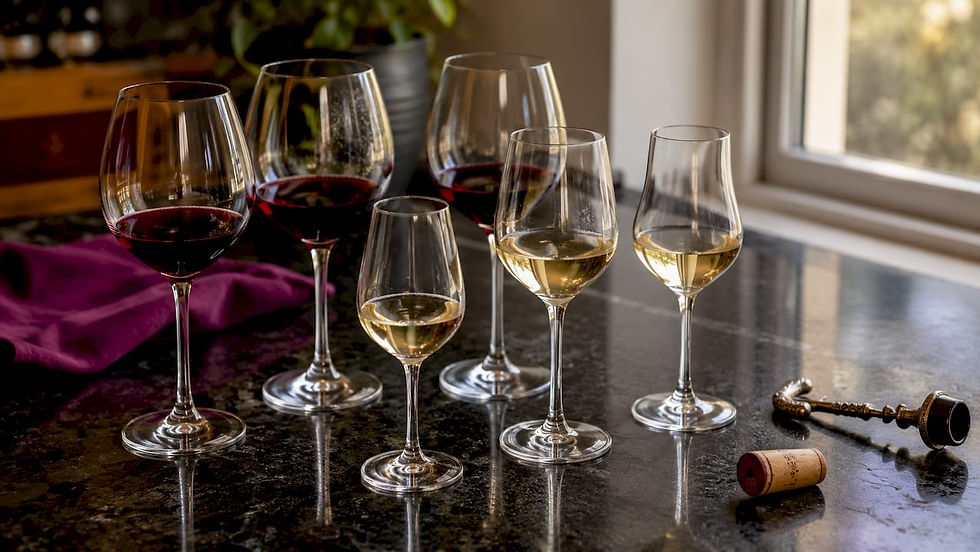
Glass shape also affects where the wine lands on your tongue. Rim diameter and bowl shape target different taste receptors, which means the same wine can taste more acidic, sweeter, or more bitter depending on the glass you use. That is not marketing fluff. It is basic sensory science.
Here is what actually matters for casual wine drinkers:
Large bowled glasses work best for bold reds like Cabernet Sauvignon or Syrah, where aeration softens the wine.
Smaller, narrower glasses suit crisp whites like Sauvignon Blanc or Pinot Grigio, keeping them cool and bright.
Tulip-shaped universal glasses handle most wines reasonably well and are the practical choice for everyday drinking.
Sparkling wine flutes preserve bubbles longer by reducing surface area, though many sommeliers now prefer a wider tulip shape for better aroma.
The good news? 90% of wine tasting enjoyment is achievable with just two main glass types. You do not need a cabinet full of varietal-specific stemware to drink well. Most casual wine drinkers get excellent results from one good red wine glass and one solid white wine glass. Understanding how wine aromas interact with glass shape can genuinely change how you experience a bottle.
Pro Tip: If you want one glass that does it all, look for a medium-sized tulip-shaped universal glass. It works beautifully for reds, whites, and even light sparkling wines.
Why does the phrase “glasses in a bottle” carry cultural weight?
The phrase does double duty. On the practical side, it is a quick way to calculate servings, cost, and how many friends you can invite over. On the fun side, it has become a playful shorthand in wine culture for abundance, generosity, and the joy of sharing.
Sharing a bottle and filling glasses together is one of the most undervalued rituals in wine culture. Sommeliers and wine writers have noted that the act of pouring for someone else, watching the glass fill, and making that small gesture of hospitality carries real social meaning. It is not just about the liquid. It is about the moment.
The humor angle is just as real. Wine lovers have long joked about needing a single glass the size of the whole bottle. That image, one enormous glass holding 25 ounces of wine, has become a meme, a gift idea, and a party conversation starter. You have probably seen the oversized wine glasses sold as novelty items or gag gifts. They exist because the joke lands every time.
“The best bottle of wine is the one you share. The number of glasses it holds matters far less than the number of people around the table.”
Wine culture thrives on this kind of humor. It makes the subject approachable and strips away the intimidation that sometimes surrounds wine knowledge. When you can laugh about how many glasses are in a bottle, you are already more relaxed about the whole experience.
How can you turn wine bottles into drinking glasses?
Upcycling wine bottles into actual drinking glasses has become a genuine DIY trend. The concept is simple: cut a wine bottle horizontally, smooth the edges, and you have a one-of-a-kind glass with a story. The execution requires patience and the right tools.
Here is how the process works:
Score the bottle using a dedicated glass cutter tool. Run it around the bottle at a consistent height to create a clean score line.
Apply heat and cold by alternating hot water and cold water over the score line. This thermal shock causes the glass to crack along the line. The two-bucket method works, but it can be inconsistent.
Sand the edges thoroughly using wet/dry sandpaper, starting with a coarser grit and finishing with a fine grit. This step is non-negotiable for safety.
Inspect and test by running your finger carefully along the rim. Any sharp point needs more sanding before the glass is safe to use.
Clean and display by washing the finished glass and letting it dry completely before use.
DIY wine bottle glasses require careful cutting and sanding. Rough edges are a real safety hazard, and the two-bucket thermal shock method can produce uneven breaks. A proper glass cutter combined with thorough sanding produces far better results than shortcuts. The environmental upside is real too. Repurposing a glass bottle keeps it out of the recycling stream entirely and gives it a second life with personality. For more creative ways to put empty bottles to work, wine bottle display ideas are worth exploring.
Pro Tip: Use a dedicated bottle cutter tool rather than improvising with a standard glass cutter. The bottle-specific design keeps the score line level and dramatically improves your success rate.
Key Takeaways
A standard 750ml wine bottle yields five 5-ounce glasses, but pour size, glass shape, and setting all shift that number in ways that affect cost, experience, and how you share.
Point | Details |
Standard serving count | A 750ml bottle yields five glasses at the 5-ounce industry standard pour. |
Pour size changes everything | A 4-ounce pour gives six glasses; an 8-ounce pour drops the count to three. |
Glass shape affects taste | Bowl size and rim diameter physically change where wine lands on your tongue. |
Two glasses are enough | One red and one white wine glass covers 90% of tasting experiences for casual drinkers. |
DIY bottle glasses need care | Proper scoring and thorough sanding are required to make safe, usable glasses from bottles. |
Why I think the math behind the bottle matters more than you’d expect
Here is my honest take: most wine drinkers never think about how many glasses are in a bottle until they are splitting the check at dinner and suddenly the math feels very personal.
Once you know the standard is five glasses, everything clicks. You stop second-guessing the restaurant pour. You know when a bottle is the smarter buy. You can plan a dinner party without running out of wine at the worst possible moment. That practical knowledge is genuinely freeing.
The glassware piece surprised me too. I spent years thinking specialized glasses were a luxury for serious collectors. Then I tried the same wine in a wide-bowled red glass versus a narrow white glass, and the difference was real enough to change my mind. You do not need a full set of varietal-specific glasses. But owning one good universal glass versus drinking from a coffee mug? That gap is worth closing.
The cultural humor around the phrase is what I find most charming, though. Wine has a reputation for being stuffy. The image of someone holding up a comically oversized glass and calling it “one serving” punctures that perfectly. It says: relax, enjoy this, and stop taking the rules so seriously. That spirit is exactly what makes wine worth drinking in the first place. If you want to go deeper on what actually makes wine taste the way it does, the grape variety guide at Blameitonbacchus is a great next read.
— Thomas
Deepen your wine knowledge with Blameitonbacchus
If this article got you thinking about wine in a new way, Blameitonbacchus has a lot more where that came from.
Blameitonbacchus offers private wine classes designed for beginners who want real knowledge without the pretension. You will learn how to read a pour, understand glassware, and actually taste what is in your glass. The classes are fun, approachable, and built for people who love wine without taking it too seriously. Blameitonbacchus also carries wine-themed merchandise that makes the perfect gift for any wine lover in your life. Check out the full channel and show lineup to find the right fit for your next wine adventure.
FAQ
How many glasses of wine are in a standard bottle?
A standard 750ml bottle yields about five glasses at the industry standard 5-ounce pour. Smaller or larger pours change that count significantly.
Does the type of wine glass affect how many servings you get?
Glass shape does not change the volume in the bottle, but it does affect how much you pour. Larger bowled glasses tend to encourage bigger pours, which reduces the number of servings per bottle.
Is it cheaper to order wine by the bottle or by the glass?
Ordering by the bottle is almost always cheaper when sharing, since three to four individual glasses often cost as much as a full bottle at restaurant prices.
What is the best wine glass for a casual drinker?
A universal tulip-shaped glass handles most red and white wines well. Casual drinkers do not need varietal-specific stemware to enjoy a quality tasting experience.
Is it safe to drink from a DIY wine bottle glass?
A DIY wine bottle glass is safe only after thorough edge sanding. Rough or uneven cuts pose a real safety risk, so always finish with fine-grit wet sandpaper before using the glass.
Recommended
Comments