How Grapes Shape Wine Flavor: A Tasting Guide
- Thomas Allen

- Jun 16
- 7 min read
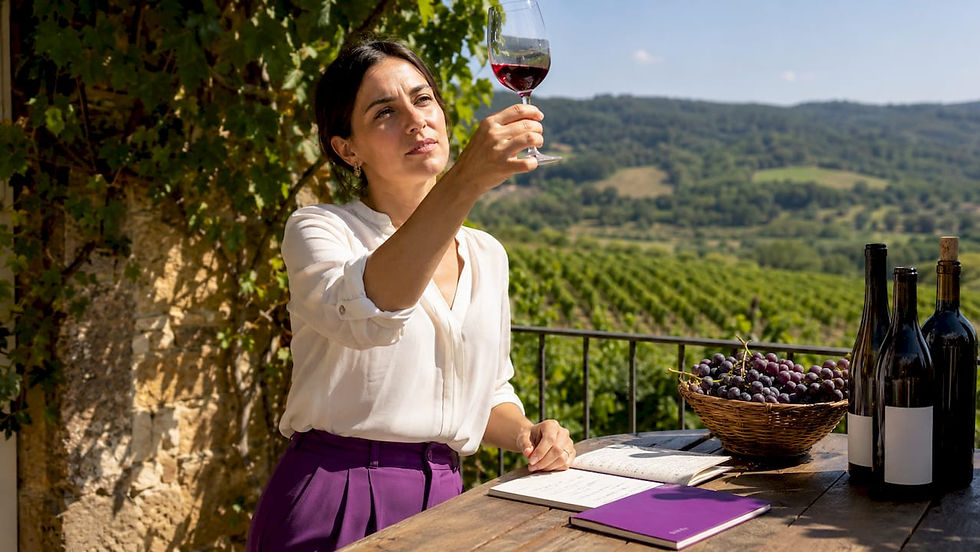
The role of grapes in flavor is defined by their chemical composition and genetic profile, which sets the baseline for every aroma and taste in your glass. Before yeast, oak, or winemaker decisions enter the picture, the grape itself is already loaded with flavor compounds. Terpenes, esters, tannins, and methoxypyrazines are all baked into the berry’s DNA. Understanding what those compounds do helps you taste wine with a whole new level of confidence. Think of it as getting the cheat code for your palate.
What chemical compounds in grapes create flavor and aroma?
Grape flavor is not magic. It is biochemistry. The grape berry contains a library of aromatic molecules, and each variety carries a different edition of that library.
Here are the star players:
Terpenes (linalool, geraniol, nerol, citronellol): These deliver floral and citrus notes. High-terpene varieties like Muscat and Gewürztraminer carry over 1,000 μg/kg of linalool and geraniol. That concentration is why a glass of Muscat smells like a flower shop.
Methoxypyrazines: These are the compounds behind “green” aromas. Cabernet Sauvignon is loaded with them, which is exactly why you sometimes get that bell pepper aroma in a young Cab. Harvest timing affects how much of this compound survives into the finished wine.
Esters (ethyl butyrate, ethyl hexanoate): These bring the fruity, candy-like notes. They are responsible for the strawberry, pineapple, and peach aromas you pick up in lighter wines. High ethyl acetate above 12 mg/L tips into off-aromas, so balance matters.
Tannins: These are the grippy, drying sensation on your gums. They come from grape skins, seeds, and stems. Tannins do not have a smell, but they shape how flavor feels in your mouth.
Acidity: Tartaric and malic acids give wine its brightness and freshness. High acidity makes fruit flavors pop. Low acidity makes a wine feel flat.
Pro Tip: When you sniff a wine and get a blast of florals, you are smelling terpenes. When you get a green, vegetal edge, that is methoxypyrazines at work. Knowing this makes tasting feel less like guesswork.
How do different grape varieties influence wine’s flavor profile?
Grape aroma is an organized biochemical system encoded in genetics. The flavor profile of any variety is best understood as a probability range, not a fixed recipe. Genetics load the dice, but growing conditions and winemaking roll them.
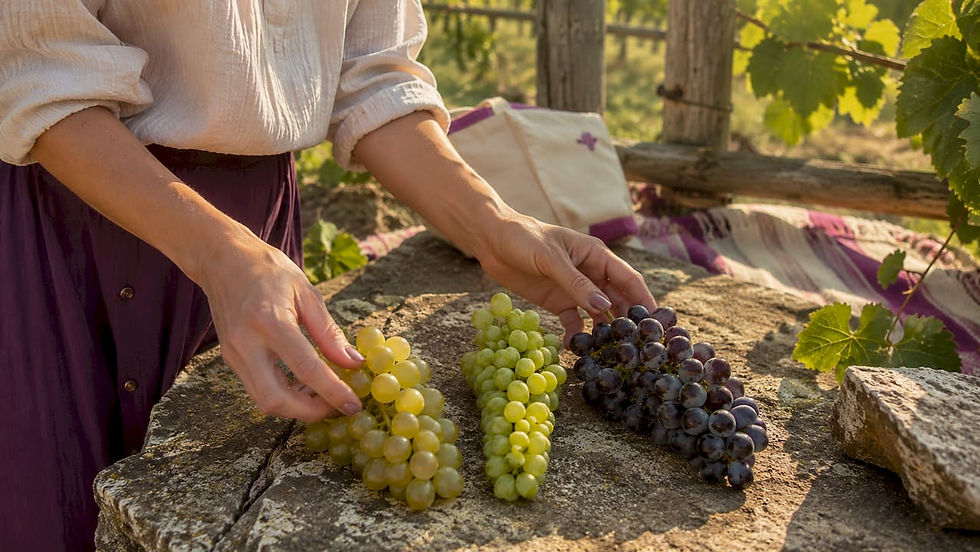
Here is a quick comparison of signature grape varieties and their key flavor drivers:
Grape Variety | Key Compound | Flavor Characteristic |
Muscat Blanc | Linalool, geraniol | Perfumed, orange blossom, rose |
Sauvignon Blanc | Thiols (3-MH, 4-MMP) | Grapefruit, passionfruit, cut grass |
Cabernet Sauvignon | Methoxypyrazines | Bell pepper, blackcurrant, cedar |
Gewürztraminer | Terpenes (geraniol) | Lychee, rose petal, spice |
Concord (Vitis labrusca) | Methyl anthranilate | Sweet, “foxy,” grape candy |
The Vitis labrusca species deserves a special callout. Concord and similar North American grapes produce methyl anthranilate at concentrations up to 2,000 μg/L in juice. That compound is detectable at just 40–60 μg/L. It is also chemically identical to artificial grape flavoring, which is why grape-flavored candy tastes more like Concord than Cabernet. That is not a coincidence. It is chemistry.
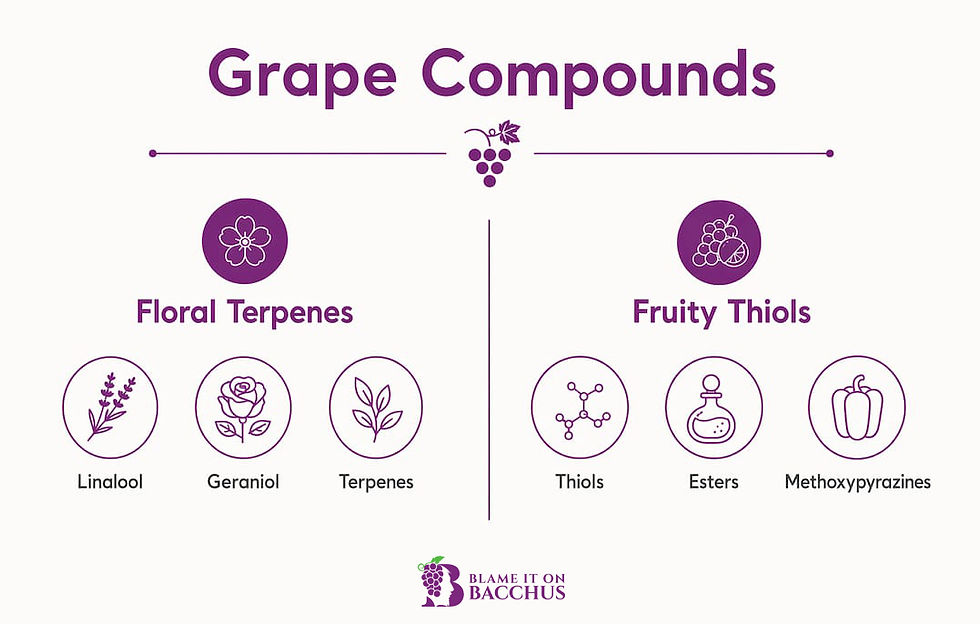
Sauvignon Blanc’s grapefruit and passionfruit punch comes from sulfur-based compounds called thiols. These are not freely floating in the grape. They exist as odorless precursors that only get unlocked during fermentation. More on that in a moment.
Pro Tip: Want to understand grape varietals at a deeper level? Start by tasting a Muscat next to a Sauvignon Blanc. The contrast between terpene-driven florals and thiol-driven citrus is one of the clearest examples of how genetics shape flavor.
How do vintage, terroir, and vineyard practices shape grape flavor?
Grape flavor is not fixed at the genetic level alone. The season, the soil, and the farming decisions all push those flavor compounds in different directions. Here is how each factor plays out:
Vintage matters more than you think. Research shows that vintage has a greater impact on flavor compound profiles than variety or region. A warm year concentrates sugars and reduces methoxypyrazines. A cool year preserves acidity and green notes. Two bottles of the same grape from the same vineyard can taste dramatically different depending on the year.
Organic vs. conventional farming changes the chemistry. Organic cultivation of Syrah and Tempranillo produces higher acidity at 4.11 g/L and higher tannin levels compared to conventionally grown grapes. That translates directly to a more structured, food-friendly wine.
Canopy management controls sunlight exposure. More sunlight on grape clusters degrades methoxypyrazines, reducing green, vegetal notes. Winemakers in cooler climates use leaf-pulling techniques specifically to coax riper, fruitier flavors out of their grapes.
Water stress concentrates flavor. Mild water stress during the growing season forces the vine to focus energy on the berry. The result is smaller berries with higher skin-to-juice ratios, which means more tannin and more concentrated flavor compounds.
Harvest timing is a flavor dial. Picking early preserves acidity and herbaceous notes. Picking late boosts sugar, alcohol, and ripe fruit character. For methoxypyrazine-heavy varieties like Cabernet Sauvignon, late picking is one of the main tools for softening that green edge.
Terroir, the French term for the combined effect of soil, climate, and topography on a wine’s character, does not override genetics. It modulates them. A Pinot Noir from Burgundy and one from Oregon share the same genetic blueprint, but they taste different because the environment shapes which compounds express themselves most strongly.
How does winemaking affect the expression of grape flavor?
Not every flavor in your glass came directly from the grape. Wine aromas fall into three categories, and knowing them changes how you taste.
Primary aromas are grape-derived. Florals from terpenes, citrus from thiols, green notes from methoxypyrazines. These are the flavors the grape brought to the party.
Secondary aromas come from fermentation. Yeast converts grape sugars and precursor compounds into new aromatic molecules. Yeast strain and fermentation temperature can cause up to a 10-fold difference in thiol intensity. That is why two winemakers using the same Sauvignon Blanc grapes can produce wines that smell completely different.
Tertiary aromas develop during aging. Oak adds vanilla, spice, and toast. Malolactic fermentation converts sharp malic acid into softer lactic acid, creating that buttery note in many Chardonnays. Neither of these comes from the grape itself.
One of the coolest things in wine science is the concept of bound aroma precursors. Many terpenes in grapes are locked to sugar molecules called glycosidic conjugates. They are odorless in the berry. Terpene synthesis peaks from véraison through harvest, but those compounds only become aromatic when enzymatic action during fermentation or aging breaks the bond. This is why an aged Riesling can suddenly explode with petrol and floral notes that were invisible in the young wine. The grape had those aromas all along. They just needed time and chemistry to unlock.
For a deeper look at how this process works, the wine aroma guide from Blameitonbacchus breaks down primary, secondary, and tertiary notes in plain language. And if you want to geek out on the fermentation side, the fermentation science breakdown is worth your time.
Key takeaways
Grape genetics set the flavor foundation of every wine, but vintage, farming, and winemaking choices determine how fully and in what direction those flavors express themselves.
Point | Details |
Genetics set the baseline | Each grape variety carries specific compounds like terpenes, thiols, and methoxypyrazines that define its core flavor range. |
Vintage is the biggest wildcard | Research confirms vintage impacts flavor compound profiles more than variety or region, making year-to-year variation significant. |
Farming choices shift chemistry | Organic cultivation raises acidity and tannin levels, producing more structured wines compared to conventional growing. |
Winemaking unlocks hidden aromas | Bound terpene precursors in grapes only become aromatic through fermentation or aging, so winemaking choices shape what you actually smell. |
Harvest timing is a flavor dial | Picking early preserves acidity and green notes; picking late amplifies ripe fruit and reduces herbaceous character. |
Why i think most wine drinkers underestimate the grape
Here is something I have noticed after years of tasting and teaching: most people credit the winemaker for everything they love in a glass. The oak, the technique, the label. The grape gets treated like a raw ingredient that just shows up and waits to be transformed.
That framing gets it backwards. The grape is the script. The winemaker is the director. A great director cannot save a bad script, and a mediocre director can still produce something memorable with exceptional source material.
What I find genuinely exciting is using knowledge of grape chemistry as a guide rather than a rigid rulebook. When you know that Cabernet Sauvignon carries methoxypyrazines, you stop being surprised by that green edge in a cool-climate bottle. You start expecting it, and then you start appreciating how a warmer vintage or later harvest dials it back. That is not just tasting. That is reading the wine.
The vintage piece is where things get really fun. Amino acid concentrations in white grape juices range between 905.2 and 2,892.8 mg/L depending on the year. Those differences show up in the glass as texture, weight, and aromatic intensity. Chasing the same wine across multiple vintages is one of the most rewarding things you can do as an enthusiast. It is the same grape telling a different story every year.
My honest advice: pick one variety you love and taste it from three different vintages or regions. The differences will teach you more about how grapes influence flavor than any article can.
— Thomas
Ready to taste the difference for yourself?
Understanding grape chemistry is one thing. Tasting it in action is where the real fun begins. Blameitonbacchus offers private wine classes designed to take you from curious beginner to confident taster. You will explore how different grape varieties express themselves in the glass, guided by someone who genuinely loves this stuff.

Whether you want a hands-on session exploring varietal flavor profiles or you just want to rep your love of wine in style, Blameitonbacchus has you covered. Check out the Wine God Tee for a little grape-fueled swagger, or head to the main hub to explore everything on offer. Your next favorite wine is out there. Go find it.
FAQ
What is the primary role of grapes in wine flavor?
Grapes provide the foundational flavor compounds in wine, including terpenes, esters, tannins, and methoxypyrazines. These compounds, encoded in the grape’s genetics, determine the core aromatic and taste profile before fermentation or aging begins.
Why do different grape varieties taste so different?
Each grape variety carries a unique set of aromatic compounds. Muscat produces linalool for floral notes, Sauvignon Blanc generates thiol precursors for citrus and passionfruit, and Cabernet Sauvignon contains methoxypyrazines that create bell pepper aromas.
Does vintage really change how a grape tastes?
Yes. Research confirms that vintage impacts flavor profiles more than variety or region. Warm years reduce green notes and boost ripe fruit; cool years preserve acidity and herbaceous character.
What is the difference between primary and secondary wine aromas?
Primary aromas come directly from the grape, such as florals and citrus. Secondary aromas develop during fermentation through yeast activity, and tertiary aromas emerge from aging in oak or bottle.
What makes concord grape wine smell like grape candy?
Concord grapes belong to the Vitis labrusca species and produce methyl anthranilate at very high concentrations. That compound is chemically identical to artificial grape flavoring, which is why the aroma feels so familiar.
Recommended
Comments