How to Make Wine Butter: a Home Cook's Guide

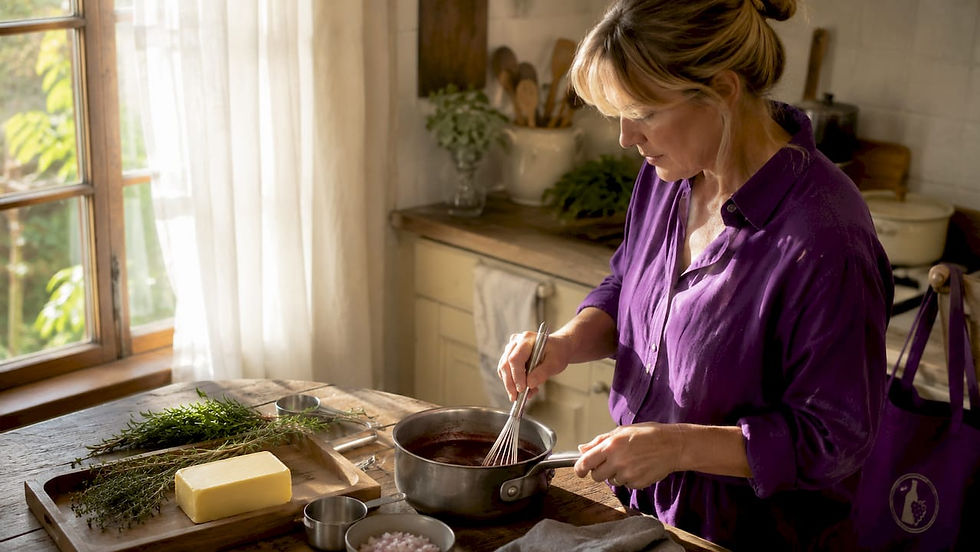
Wine butter is a compound butter or sauce made by infusing softened butter with a concentrated wine reduction, producing a rich, wine-forward flavor that transforms everyday dishes. The two main forms are compound butter (cold, firm, sliced) and beurre blanc (warm, emulsified, poured). Both start with the same core technique: reducing wine until its water evaporates and its flavor concentrates. Knowing how to make wine butter opens up a world of finishing touches for steak, chicken, fish, and crusty bread. Grab a saucepan and let’s get this wine party started.
What ingredients and equipment do you need for wine butter?
Getting your setup right before you cook makes everything easier. Wine butter has a short ingredient list, but each item does a specific job.
The key ingredients
Unsalted butter: Unsalted butter is the only smart choice here. Wine reductions vary in intensity, so you need full control over salt levels. Salted butter can push the final flavor over the edge.
Wine: Choose a dry red like Cabernet Sauvignon or Pinot Noir, or a dry white like Sauvignon Blanc or Chardonnay. Dry, crisp wines keep the flavor clean and balanced. Heavily oaked or sweet wines overpower the butter and muddy the sauce.
Shallots: Two finely minced shallots add a mild, savory backbone to the reduction.
Aromatics and extras: Garlic, fresh thyme, rosemary, or a teaspoon of Dijon mustard all deepen the flavor. Shallots, garlic, and Dijon mustard are classic additions for savory meat pairings.
Salt and white pepper: Season at the end, after tasting.
Essential kitchen tools
Tool | Why you need it |
Small saucepan | For reducing wine evenly without scorching |
Whisk | For emulsifying butter into the sauce |
Mixing bowl | For blending compound butter by hand |
Measuring cups and spoons | For accurate wine and butter ratios |
Plastic wrap or parchment paper | For rolling and chilling compound butter |
Shallow container | For cooling the reduction quickly in the fridge |
A stand mixer or hand mixer works for compound butter if you want a fluffier texture, but a fork and a bowl get the job done just as well.
How to make compound wine butter step by step
Compound butter is the easier of the two styles. Think of it like a flavored butter log you slice straight from the fridge onto a hot steak. Here is the full process.
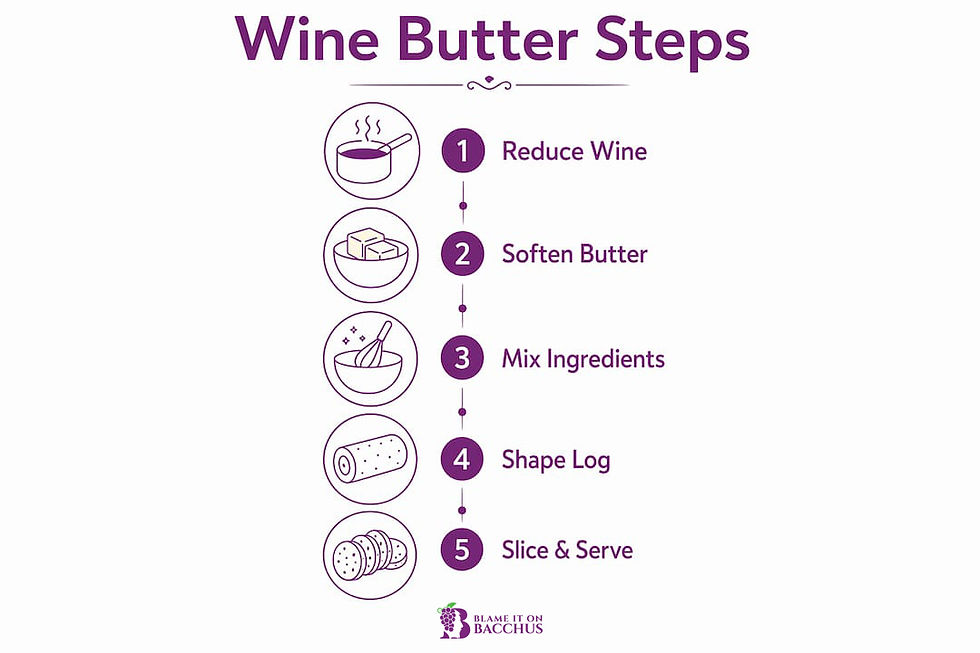
Make the wine reduction. Pour 1 cup of dry red or white wine into a small saucepan with 2 minced shallots. Simmer over medium heat for 10–15 minutes. You want the wine reduced to about 2 tablespoons of thick, syrupy liquid. That concentration is what gives the butter its punch.
Cool the reduction completely. Pour the reduction into a shallow container and refrigerate it. This step is non-negotiable. Warm reduction mixed into butter causes the fat to separate and turns your butter greasy and broken. Give it at least 20 minutes in the fridge.
Soften your butter. Pull 1 stick (½ cup) of unsalted butter out of the fridge about 30 minutes before you plan to mix. You want it soft enough to press with a finger but not melted or shiny.
Mix the butter and reduction. Add the cooled reduction to the softened butter in a mixing bowl. Stir firmly with a fork or rubber spatula until the wine is fully incorporated and the butter looks uniform in color. Add any herbs, garlic, or Dijon mustard at this stage. Taste and season with salt and white pepper.
Form the butter log. Scoop the butter onto a sheet of plastic wrap or parchment paper. Roll it into a tight log shape, twisting the ends to seal. A log shape makes slicing easy later.
Chill until firm. Refrigerate for at least 15 minutes before slicing. For longer storage, wrap the log in foil and freeze it for up to 3 months.
Pro Tip: Slice the butter log into rounds while it is still cold. Place one round directly on a hot steak or grilled chicken breast right before serving. The butter melts slowly over the meat, creating a glossy, wine-scented sauce without any extra work.
The compound butter approach is perfect for weeknight cooking. You can make a batch on Sunday and use it all week on everything from grilled salmon to roasted vegetables.

How does beurre blanc differ from compound wine butter?
Beurre blanc is the warm, pourable cousin of compound butter. It is a French classic, and it sounds fancier than it is. The technique takes about 20 minutes and the result is a silky, restaurant-quality sauce.
The method:
Combine ½ cup dry white wine, 2 tablespoons white wine vinegar, and 2 minced shallots in a small saucepan.
Simmer over medium heat until the liquid reduces to an almost-dry stage (called “au sec” in French kitchens). About 1–2 tablespoons of liquid should remain.
Remove the pan from the heat. Add 1 cold tablespoon of unsalted butter and whisk vigorously until it melts into the reduction.
Return the pan to very low heat. Continue adding cold butter one tablespoon at a time, whisking constantly between each addition.
Season with salt and white pepper. Strain out the shallots if you prefer a smooth sauce.
Pro Tip: Never let beurre blanc boil after you start adding butter. Overheating breaks the emulsion and turns your silky sauce into a greasy puddle. Keep the heat low and patient.
Here is how the two styles compare side by side:
Feature | Compound butter | Beurre blanc |
Temperature | Cold, firm | Warm, pourable |
Texture | Solid, sliceable | Creamy, emulsified |
Preparation time | 15–20 min plus chilling | 20 min, served immediately |
Best used on | Steak, grilled meats, bread | Fish, chicken, vegetables |
Make-ahead friendly | Yes, freezes well | No, serve right away |
Compound butter is firm and sliced as a finishing touch, while beurre blanc is a delicate hot sauce that goes straight from the pan to the plate. Both are incredible. They just play different roles at the table.
What are the most common wine butter mistakes?
Even experienced cooks trip up on wine butter. Here are the errors that show up most often, and how to fix them.
Adding raw wine directly to butter. This is the number one mistake. Raw liquid added directly to butter prevents proper incorporation and creates a watery, unstable mess. Always reduce the wine first.
Mixing warm reduction with soft butter. If the reduction is even slightly warm, the butter fat separates. The result looks oily and broken. Cool the reduction fully before mixing.
Overheating beurre blanc. Heat is the enemy of an emulsified sauce. Once the butter starts going in, keep the temperature low and steady.
Not chilling compound butter long enough. If you skip the fridge time, the butter will be too soft to slice cleanly. Give it at least 15 minutes, preferably 30.
Using the wrong wine. Sweet wines like Moscato or heavily oaked Chardonnay throw off the balance. Stick to dry, crisp wine varieties for a clean finish.
If your beurre blanc breaks, do not panic. Remove it from the heat immediately and whisk in one or two tablespoons of cold water. This can sometimes bring the emulsion back together. If the compound butter tastes flat, add a pinch of flaky sea salt and a squeeze of lemon juice to brighten it up.
The good news is that wine butter is forgiving once you understand the logic behind it. Reduce the wine fully, control the temperature, and taste as you go.
Key takeaways
Wine butter succeeds or fails based on two things: a fully reduced wine base and careful temperature control at every stage.
Point | Details |
Reduce wine fully | Simmer wine down to about 2 tablespoons to concentrate flavor and remove excess water. |
Cool before mixing | Let the reduction chill completely before blending with butter to prevent a greasy, broken texture. |
Use unsalted butter | Unsalted butter lets you control seasoning precisely, since reduction intensity varies by wine. |
Choose dry wines | Dry reds or whites like Cabernet Sauvignon or Sauvignon Blanc keep the flavor balanced and clean. |
Know your style | Compound butter is make-ahead and firm; beurre blanc is warm, delicate, and served immediately. |
My honest take on wine butter after years of cooking with it
I have made wine butter with everything from a $10 Pinot Noir to a leftover splash of Burgundy, and here is what I have learned: the wine does not need to be expensive, but it does need to be something you would actually drink. Cooking concentrates flavor, so a wine that tastes off in the glass will taste even more off in the butter.
My favorite combination is a red wine compound butter with shallots, a clove of garlic, and fresh thyme, sliced over a ribeye straight off the grill. If you want to pair that butter with the right bottle, the best wines for steak guide from Blameitonbacchus is a great starting point. The same wine you use in the butter can go right into the glass.
For white wine beurre blanc, I reach for Sauvignon Blanc every time. It has enough acidity to hold up through the reduction and enough brightness to complement fish and chicken without competing. Temperature control is the skill that separates a broken sauce from a silky one. Once you nail that, you will make beurre blanc on autopilot.
My honest advice: start with compound butter. It is more forgiving, it stores beautifully, and it will make you look like a culinary genius with almost zero effort. Once you are comfortable with the reduction technique, graduate to beurre blanc. The food and wine pairing principles you pick up along the way will change how you cook with wine entirely.
— Thomas
Wine butter is just the beginning of your wine kitchen adventures
If making wine butter has you curious about what else wine can do in the kitchen and at the table, Blameitonbacchus has you covered.

Blameitonbacchus offers fun, beginner-friendly online wine classes that teach you everything from selecting the right bottle to understanding why certain wines work so well in cooking. The Elements of Wine course is a great place to build the foundation that makes recipes like wine butter click on a deeper level. And if you want to wear your wine love on your sleeve (literally), check out the wine-themed merchandise at Blameitonbacchus. Because nothing pairs better with a butter-basted steak than a great glass of wine and a killer outfit to match.
FAQ
What wine is best for making wine butter?
Dry red wines like Cabernet Sauvignon or Pinot Noir and dry whites like Sauvignon Blanc work best. Avoid sweet or heavily oaked wines, which overpower the butter’s flavor.
Can you freeze compound wine butter?
Yes. Wrap the butter log tightly in plastic wrap and then foil, and freeze for up to 3 months. Slice off rounds directly from frozen as needed.
Why did my wine butter turn out greasy?
A greasy texture usually means the wine reduction was still warm when mixed with the butter, or the butter was too soft. Cool the reduction fully in the fridge before blending.
How is beurre blanc different from compound wine butter?
Compound butter is cold and firm, used as a finishing slice on hot food. Beurre blanc is a warm, emulsified sauce served immediately, best with fish, chicken, or vegetables.
How much wine do I need for one batch of wine butter?
Start with 1 cup of wine and reduce it down to about 2 tablespoons. That concentrated reduction mixes into ½ cup (1 stick) of unsalted butter for one standard batch.
Recommended
Comments