How to Understand Wine Microclimates: A Taster's Guide

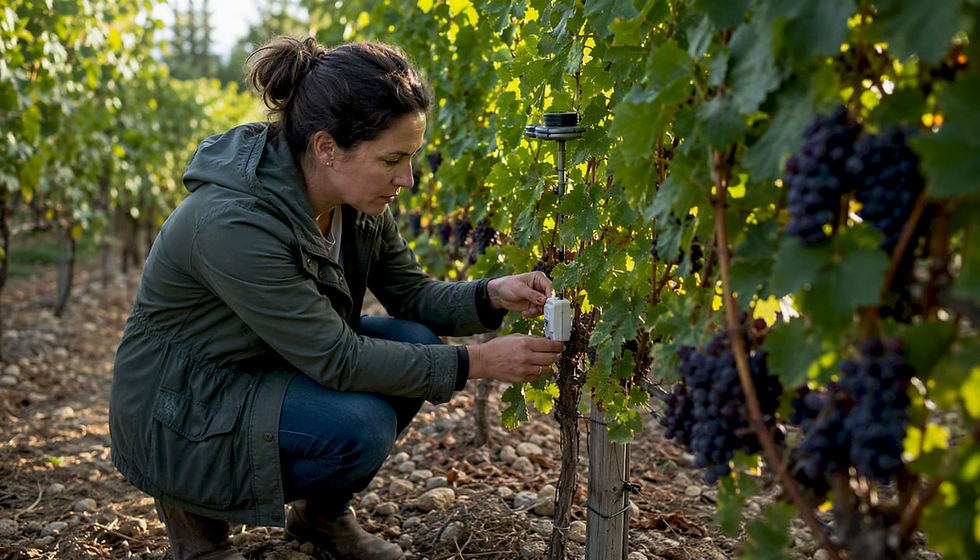
A vineyard microclimate is the set of local atmospheric and soil conditions within a few meters of the vine that directly controls how grapes ripen and, ultimately, what ends up in your glass. Think of it as the vine’s personal weather bubble. Two rows of Pinot Noir planted fifty feet apart on the same hillside can ripen days apart, produce different sugar levels, and land in wines that taste nothing alike. That is the microclimate doing its thing.
Here is the short version: cooler microclimates slow ripening, preserve natural acidity, and produce wines with brighter fruit and more zip. Warmer pockets speed things up, push sugar higher, and give you richer, fuller-bodied wines. Regions like Los Carneros in Napa Valley and the Russian River Valley in Sonoma are famous precisely because their microclimates are cool enough to keep Pinot Noir and Chardonnay lively and fresh. Growers track this using a metric called GDD (growing degree days), which adds up daily heat accumulation above 50°F across the growing season. The higher the GDD, the warmer the site and the riper the fruit.
Pro Tip: On your next vineyard visit, arrive in the morning. Watch where fog lingers longest and where it burns off first. Those fog-free patches are your warmer pockets. The spots still shrouded at 10 AM? That is where the cool-climate magic happens.
Microclimate operates at the vine or canopy level, not the regional level.
It directly shapes sugar, acid, tannin, and aroma in the grape.
GDD is the go-to metric for comparing site heat across a growing season.
You can spot microclimate differences with your eyes before you ever taste a drop.
Table of Contents
What is the difference between macroclimate, mesoclimate, and microclimate?
People throw “microclimate” around loosely, often when they really mean something much bigger. Getting the scale right matters because the climate scale you are working at determines which solutions actually work. According to wine.co.za’s detailed explainer, microclimates are measured in millimeters to a few meters, while mesoclimates cover a single estate or hillside. Calling an entire appellation a “microclimate” is technically a misuse of the term, and it matters because canopy tweaks fix vine-level problems while replanting fixes site-level ones.
Scale | Spatial Extent | What It Covers | Example |
Macroclimate | Hundreds of miles | Regional climate zone | Napa Valley as a whole |
Mesoclimate | A few acres to a single estate | A hillside block or sub-appellation | A single Carneros hillside |
Microclimate | A few meters | Individual vine rows or canopy pockets | One row’s shaded interior |
Canopy microclimate | Centimeters to ~1 meter | Leaf and berry surface environment | Humidity inside a dense canopy |
Here is how each scale plays out in the real world:
Canopy microclimate: — Inside a dense canopy, humidity spikes and sunlight drops, slowing phenolic development and raising disease risk.
The canopy microclimate is the one growers can actually manipulate day-to-day through pruning, leaf pulling, and shoot positioning. That is where most vineyard management decisions live.
How does microclimate change what you taste in the glass?
This is where it gets genuinely exciting. Every microclimate difference at the vine level eventually shows up as a flavor, a texture, or a structural element in the wine. Here is the chain reaction:
Temperature and vine water status → altered aroma precursors. Research published in Oeno One confirms that temperature and water status directly affect the formation of volatile compounds and their precursors during ripening. Cooler sites tend to preserve floral and red-fruit aromatics; warmer sites shift toward dark fruit and spice.
Tasting-note examples that connect the dots:
Hang-time is the winemaker’s tactical response when a cool microclimate needs a nudge toward ripeness. Leaving grapes on the vine longer after veraison builds more sugar and phenolic maturity, but it trades away some of that bright natural acidity. According to research on aroma compounds, extended hang-time also affects aromatic development, making careful canopy management during that period critical. It is a balancing act, and the microclimate sets the rules of the game.
Research by Kees van Leeuwen, detailed in his hierarchy of climate, soil, and cultivar, shows that soil water-holding capacity and vine water status explain much of the variation in berry composition across sites. Even two blocks with identical air temperatures can produce very different wines if their soils drain differently. Microclimate and soil are partners, not rivals. For a deeper look at how soil shapes wine flavor, that connection runs surprisingly deep.
Famous wine-growing microclimates you can visit and taste
These six U.S. regions are textbook examples of how physical forces build distinctive growing environments. Each one has a tasting signature you can learn to recognize.
Los Carneros (Napa/Sonoma border): San Pablo Bay pushes cold air and afternoon winds northward into this flat, windswept zone. Fog arrives most mornings and often lingers until midday. GDD totals here are relatively low in Napa, making it one of the few spots where Pinot Noir and Chardonnay genuinely thrive. Expect wines with tart cherry, lemon curd, and a mineral edge. Ask your tasting-room host when the fog typically lifts and how that changes harvest dates compared to warmer Napa benchlands.
Russian River Valley (Sonoma County): The Petaluma Gap, a break in the coastal mountains, funnels cold Pacific air and fog deep into this valley every afternoon. Pinot Noir from here tends to show silky tannins, strawberry and raspberry fruit, and a cool-climate earthiness. Wine Enthusiast’s microclimate explainer highlights how proximity to the ocean and valley topography are the primary determinants of this kind of vine-level climate.
Petaluma Gap (Sonoma County): Technically its own AVA since 2017, the Gap is essentially a wind machine. Afternoon winds regularly exceed 25 mph, stressing vines and producing Pinot Noir with notably firm structure, concentrated dark fruit, and a savory, almost meaty quality. The wind is the microclimate here. You will feel it the moment you step out of your car.

Santa Lucia Highlands (Monterey County): An offshore submarine canyon channels cold Pacific water close to shore, driving daily fog and afternoon winds that can reach 30–40 mph. The Santa Lucia Highlands climate overview describes this as a repeatable daily rhythm that lengthens the growing season dramatically. Chardonnay and Pinot Noir from here show intense aromatics, high natural acidity, and a freshness that surprises people expecting a warm California style. Elevation (1,200–2,200 feet) adds another cooling layer on top of the marine influence.
Willamette Valley (Oregon): The Coast Range blocks most Pacific storms, but enough marine influence sneaks through to keep the valley cool. Burgundian varieties, especially Pinot Noir, dominate because the mesoclimate suits them. Within the valley, individual sub-AVAs like Chehalem Mountains and Eola-Amity Hills have their own microclimate personalities driven by elevation and wind exposure. Willamette Pinot tends toward red cherry, dried herbs, and forest floor, with a savory depth that sets it apart from California versions. You can explore wine regions and regional profiles to compare Willamette’s climate data against other cool-climate zones.
Sta. Rita Hills (Santa Barbara County): An east-west transverse mountain range is the key. Unlike most California ranges that run north-south and block marine air, these mountains funnel cold Pacific fog and wind directly inland. Pinot Noir from Sta. Rita Hills is famously structured, with high acidity, red and blue fruit, and a chalky mineral quality that many tasters find addictive. The fog can roll in thick enough to feel like a coastal morning even though you are miles inland.
Pro Tip: When visiting any of these regions, ask the winemaker or tasting-room host one simple question: “What time does the fog usually burn off here?” The answer tells you almost everything about the site’s daily microclimate rhythm and why the wines taste the way they do.
How do growers measure and monitor vineyard microclimates?
You do not need a meteorology degree to start reading a vineyard’s climate. Growers use a mix of hardware and derived metrics, and even a casual enthusiast can pick up the basics fast.
Tool | What It Measures | Why It Matters for Grapes |
Temperature datalogger | Hourly Tmin and Tmax | Tracks GDD accumulation and frost-risk windows |
Humidity sensor | Relative humidity (RH%) | Flags disease pressure inside the canopy |
Leaf wetness sensor | Duration of leaf surface moisture | Predicts fungal infection risk after rain or fog |
Pyranometer | Solar radiation (W/m²) | Quantifies light available for photosynthesis and berry heating |
Anemometer | Wind speed and direction | Identifies cooling and drying patterns across blocks |
The derived metric growers rely on most is GDD (growing degree days). Each day, you subtract 50°F from the average temperature; any positive result adds to the seasonal total. A site accumulating 2,500 GDD across the growing season is significantly warmer than one at 1,800 GDD, and variety suitability shifts accordingly. Growers also watch minimum temperatures around budburst (frost risk) and in the weeks before harvest (acid retention), plus the number of days where temperatures spike above 95°F, which can shut down photosynthesis and scorch berries.
For low-tech field checks, a pocket thermometer placed at canopy height gives you a real-time snapshot. Observing when fog arrives and departs, noting which blocks stay wet longest after rain, and feeling afternoon wind timing are all free, immediate data points. VinePair’s accessible microclimate explainer makes the point that a single vineyard can contain many distinct microclimates, and you can often spot them just by walking the rows.
Pro Tip: Sensor placement is everything. A temperature sensor mounted 6 feet above open ground reads a different number than one placed inside a dense canopy at berry level. Growers who want actionable data place sensors at the height of the fruiting zone, in the shade of the canopy, not in the open air above the trellis.
Can you actually taste the microclimate in your glass?
Yes, and once you know what to look for, it becomes one of the most satisfying parts of tasting wine. Here is a quick checklist to run through with any glass:
Acidity level: Bright, mouthwatering acidity points to a cool microclimate with wide diurnal swings. Soft, low acidity suggests a warmer site. Check out what wine acidity actually means if you want to sharpen your palate for this.
Fruit ripeness: Red cherry and cranberry = cool site. Dark plum and blackberry = warmer site. It is that simple as a starting point.
Aromatic profile: Floral, herbal, and red-fruit notes lean cool. Dark fruit, chocolate, and spice lean warm. Herbaceous green notes (think bell pepper in Cabernet) can signal underripeness from an overly cool or shaded microclimate.
Tannin texture: Firm, grippy tannins often come from wind-stressed vines with thick skins. Silky tannins suggest a gentler, more sheltered growing environment.
Alcohol impression: A wine that feels “hot” or heavy likely came from a warm microclimate with high sugar at harvest. A wine that feels light and refreshing probably had a cooler ripening window.
Questions to ask at a tasting room or on a vineyard visit:
“How long is your typical hang-time after veraison?”
“Do you use sensors in the vineyard, and what do they tell you about temperature variation across blocks?”
“Which blocks ripen first, and what’s different about those sites?”
“How do you manage the canopy to protect against afternoon heat or morning frost?”
Matching tasting cues to the regional examples from earlier: a Sta. Rita Hills Pinot with high acidity and red fruit is doing exactly what its fog-driven, transverse-range microclimate predicts. A Santa Lucia Highlands Chardonnay with electric acidity and stone-fruit intensity is the canyon-driven wind and fog at work in the glass. How grapes shape wine flavor goes deeper on the grape-level side of this equation.
What does recent research tell us about microclimates and climate change?
The science here is moving fast, and it matters for anyone who loves wine. A global analysis published in PLOS Climate found that climate metrics including mean growing season temperature and days above 35°C have shifted measurably since 1980, altering ripening windows across many of the world’s major wine regions. The practical consequence is that sites once considered marginal for warm-climate varieties are now viable, while some traditionally warm regions are pushing into territory where quality suffers.
“Climate change is already altering harvest timing, variety suitability, and vintage character across wine regions worldwide. Growers who monitor microclimate data at the vine level are better positioned to adapt than those relying on regional averages alone.” PLOS Climate, Global shifts in climate metrics for winegrapes
On hang-time, Oeno One’s research on aroma compounds confirms what many winemakers already know from experience: delaying harvest builds phenolic maturity but accelerates acid loss and shifts aromatic development. In a warming climate, the window between “ripe enough” and “overripe” narrows, making precise microclimate monitoring more valuable, not less.
Kees van Leeuwen’s work on climate, soil, and cultivar interactions adds a critical nuance: even if two sites share identical air temperatures, different soil water-holding capacities produce different vine water stress levels, which in turn alter berry composition. This means microclimate cannot be read from temperature data alone. Soil is always part of the equation.
Food & Wine’s climate impact overview notes that unusual heat spikes and wildfire risk are already changing harvest practices in California, with some growers picking earlier to preserve acidity and avoid smoke taint. That is a direct, real-time consequence of shifting macroclimates interacting with site-level microclimates. The Nature review on climate change and wine frames adaptation as a multi-tool challenge: new varieties, different rootstocks, altered training systems, and smarter irrigation are all on the table.
Key Takeaways
Vineyard microclimates, the local atmospheric conditions within a few meters of the vine, directly control ripening speed, sugar, acid, tannin, and aroma, making them the single most important site-level factor in determining wine style.
Point | Details |
Scale matters | Microclimate operates at the vine or canopy level, not the regional level; confusing it with mesoclimate leads to wrong management decisions. |
GDD is your benchmark | Growing degree days (GDD) quantify seasonal heat accumulation above 50°F and let you compare site warmth across regions like Carneros vs. Santa Lucia Highlands. |
Diurnal range drives freshness | Wide day-to-night temperature swings preserve natural acidity and aromatic complexity, the signature of cool-climate sites like Russian River Valley and Sta. Rita Hills. |
Soil amplifies climate | Vine water status and soil drainage interact with air temperature to shape berry composition; identical air temps produce different wines on different soils. |
Blameitonbacchus accelerates learning | The Elements of Wine class at Blameitonbacchus connects these microclimate concepts to hands-on tasting so you can recognize them in the glass faster. |
Why microclimates are the most exciting thing in wine right now
Here is my honest take: most wine education starts with grapes and ends with regions, and microclimates get squeezed into a footnote. That is backwards. The microclimate is where the actual decision-making happens, at the vine, in real time, driven by fog timing and wind speed and soil drainage. Understanding that level of detail does not make wine more complicated. It makes every glass more interesting.
What I find genuinely underappreciated is how observable microclimates are. You do not need a PhD or a laboratory. You need a thermometer, a willingness to walk a vineyard at different times of day, and a few good questions for the person pouring your wine. The gap between “I like this wine” and “I understand why this wine tastes this way” closes fast once you start thinking at the vine level.
The tasting connection is the payoff. When you pick up that electric acidity in a Willamette Valley Pinot and you know it is the Coast Range doing its job, or when you feel the grip in a Petaluma Gap Pinot and picture those 25 mph afternoon winds, wine stops being a mystery and starts being a story you can read. That is what makes this topic worth spending time on. And if you want a structured way to build that skill, Blameitonbacchus’s beginner classes are a genuinely fun place to start.
Ready to taste microclimates for yourself?
Reading about fog banks and GDD is one thing. Tasting the difference between a cool Carneros Chardonnay and a sun-warmed Napa benchland Cab is something else entirely, and that is where the real learning happens.

The Elements of Wine class at Blameitonbacchus is built for exactly this moment in your wine education. It covers the fundamentals of how climate, soil, and grape variety interact to create the flavors in your glass, with tasting exercises that make abstract concepts click fast. No jargon, no intimidation, just clear explanations and a lot of fun. Whether you are planning your first vineyard visit to Russian River Valley or just want to understand why your favorite Willamette Pinot tastes the way it does, this class gives you the vocabulary and the palate to figure it out. Head to Blameitonbacchus to see all available classes and wine-themed gear that makes a great gift for any enthusiast in your life.
Useful sources
These are the primary sources cited throughout this guide, each worth bookmarking for deeper reading:
What microclimate actually means and how it shapes every bottle of wine | wine.co.za
What is the expected impact of climate change on wine aroma compounds and their precursors in grape?
Global shifts in climate metrics for winegrapes (PLOS Climate)
Climate change and wine production: review and adaptation strategies | Nature
FAQ
What exactly is a vineyard microclimate?
A vineyard microclimate is the local set of atmospheric conditions, temperature, humidity, wind, and light, measured within a few meters of the vine or inside the canopy. It operates at a much smaller scale than a regional or appellation climate and directly controls how grapes ripen.
How do microclimates affect wine flavor?
Cooler microclimates preserve natural acidity and aromatic freshness, producing wines with brighter fruit and more zip. Warmer microclimates accelerate sugar accumulation and phenolic ripeness, yielding fuller-bodied wines with richer, darker fruit.
What is GDD and why do growers use it?
GDD (growing degree days) measures seasonal heat accumulation by adding up daily temperatures above 50°F across the growing season. It gives growers a single number to compare site warmth, predict ripening timing, and assess variety suitability.
Can you taste microclimate differences between two wines?
Yes. Side-by-side tastings of the same variety from different microclimates, such as a Russian River Valley Pinot versus a Petaluma Gap Pinot, reveal clear differences in acidity, tannin texture, and aromatic profile that trace directly back to their growing environments.
How can I learn more about how climate shapes wine?
Blameitonbacchus’s Elements of Wine class covers climate, soil, and grape variety interactions with tasting exercises designed for beginners who want to connect vineyard science to what they taste in the glass.
Recommended
Comments