Pét-Nat Wine Explained: What It Is and Why You'll Love It
- Thomas Allen

- Jun 29
- 7 min read

Pét-nat wine is defined as a naturally sparkling wine made by sealing the bottle mid-fermentation, letting the remaining yeast finish its work inside and trap carbon dioxide naturally. The full name is pétillant naturel, French for “naturally sparkling.” This production method, called the méthode ancestrale, is the oldest sparkling wine technique on record, predating Champagne by centuries. What you get in the glass is cloudy, lively, and a little wild. No added yeast, no dosage, no disgorgement. Just fermentation doing its thing, bottled at exactly the right moment.
What is pét-nat wine and how is it made?
Pét-nat production starts with a single fermentation. The winemaker bottles the wine while primary fermentation is still active, typically when there is still residual sugar in the range of 8–15 g/L. That sugar feeds the yeast already present in the wine. Fermentation continues inside the sealed bottle, producing CO₂ that has nowhere to go. The result is natural carbonation with no shortcuts.
This is the méthode ancestrale in action. It skips every step that defines traditional sparkling wine production: no secondary fermentation, no added yeast, no dosage, no riddling, and no disgorgement. The process is leaner, faster, and far less forgiving.
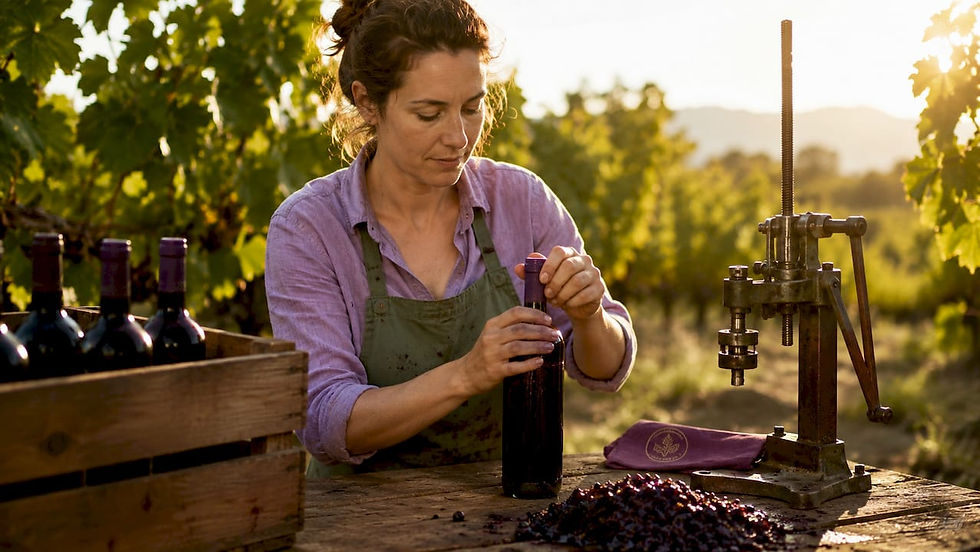
The bottle pressure runs 2.5–3 bar, which is noticeably softer than Champagne’s 5–7 bar. That lower pressure is why pét-nat bubbles feel gentle and creamy rather than sharp and aggressive. Most bottles are sealed with a crown cap, the same style used on beer bottles. Crown caps provide a more reliable seal than corks during active fermentation, preventing leakage and keeping carbonation stable.
Here is the basic sequence of the méthode ancestrale:
Harvest and crush the grapes, then begin primary fermentation as usual.
Monitor sugar levels closely until residual sugar hits the target window.
Bottle the wine while fermentation is still active, sealing with a crown cap.
Allow fermentation to finish inside the bottle, trapping CO₂ naturally.
Release the wine without disgorgement, leaving yeast sediment in the bottle.
Because pét-nat skips fining, filtration, and protective sulfites, winery sanitation must be impeccable to avoid spoilage. The wine looks casual and raw, but making it well requires serious technical discipline.
Pro Tip: Winemaker Natalie Siddique describes pét-nat production as “alchemy” because the timing window for bottling is narrow and unforgiving. Miss it, and you get flat wine or exploding bottles.
What are the characteristics of pét-nat wine?
Pull a bottle of pét-nat off the shelf and the first thing you notice is the color. It looks hazy, sometimes downright murky. That cloudiness comes from yeast sediment left in the bottle after fermentation finishes. Pét-nat is typically unfiltered, so the sediment stays put unless you choose to disgorge it, which some producers do.
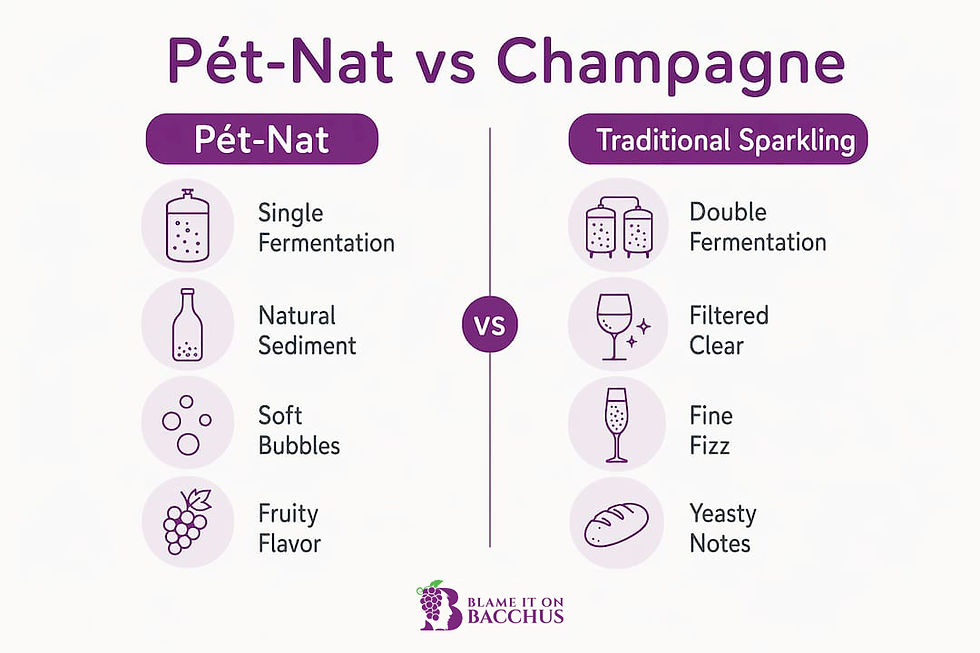
The bubbles are soft and mousse-like. Think of them as the friendly, laid-back cousin of Champagne’s aggressive fizz. Alcohol typically lands between 10% and 12% ABV, which makes pét-nat a lighter, more sessionable option than most sparkling wines.
Flavor-wise, pét-nat is fruit-forward and fresh. You get bright citrus, stone fruit, and sometimes a funky, yeasty edge that fans love. That funkiness is not a flaw. It is a direct result of wild yeast fermentation and the absence of heavy processing.
Here is what sets pét-nat apart from traditional sparkling wines at a glance:
Feature | Pét-nat | Traditional sparkling (e.g., Champagne) |
Production method | Méthode ancestrale, single fermentation | Secondary fermentation in bottle or tank |
Bottle pressure | 2.5–3 bar | 5–7 bar |
Appearance | Cloudy, unfiltered | Clear, filtered |
Alcohol | 10%–12% ABV | 11.5%–12.5% ABV |
Dosage added | No | Yes |
Vintage consistency | Variable | Controlled |
The vintage variability is a defining feature, not a defect. Because pét-nat relies on wild yeasts and unadjusted residual sugar at bottling, each vintage tastes different. That unpredictability is part of the charm. You can explore wine sediment and what it means for your glass if the cloudiness makes you curious.
What is the history of pét-nat wine?
Pét-nat is not a trend. It is the original sparkling wine. The méthode ancestrale was first documented in 1531 at the Abbey of Saint-Hilaire in Limoux, France. That is more than 150 years before Dom Pérignon started experimenting with Champagne. The monks there stumbled onto natural carbonation by bottling wine before fermentation finished. They did not know the science. They just knew it tasted alive.
The method faded as Champagne’s precision and prestige took over. Then in the 1990s, Loire Valley winemaker Christian Chaussard helped revive it. He and a small group of natural wine producers saw the méthode ancestrale as a way to make wine with minimal intervention and maximum personality.
A few reasons pét-nat clicked with the natural wine movement:
No additives. The lack of fining agents and sulfites appeals to drinkers wary of heavily processed wines.
Faster to market. Pét-nat can be released within months of harvest, skipping the long aging requirements of traditional sparkling wine.
Lower cost to produce. Fewer steps mean lower production costs, which often translates to more accessible pricing.
Artisanal identity. Small producers can make pét-nat without the industrial equipment Champagne requires.
“Pét-nat embodies the punk rock spirit of winemaking, rebelling against formal sparkling wine conventions with every cloudy, fizzy pour.”
That rebellious energy is real. Pét-nat has become a symbol of the natural wine movement’s ethos: less manipulation, more expression. You can read more about natural wine practices to see how pét-nat fits into the bigger picture.
How to serve pét-nat wine the right way
Serving pét-nat well takes a little know-how. The wine is alive in a way that most bottles are not. Handle it right and you get a beautiful, lively pour. Handle it wrong and you get a geyser on your kitchen ceiling.
Follow these steps for a clean, enjoyable experience:
Chill upright for at least 24 hours. This settles the yeast sediment to the bottom of the bottle before you open it.
Keep it cold. Serve pét-nat between 45°F and 50°F. Warmer temperatures make the CO₂ more volatile and increase the risk of gushing.
Open over a sink. Improper bottling sugar levels can cause gushing, so always open cautiously, especially with an unfamiliar bottle.
Pour gently. Tilt the glass and pour slowly to preserve the bubbles and minimize foam.
Drink it young. Pét-nat is built for freshness. Most bottles are best within one to two years of release.
Pro Tip: If you want a clearer pour, decant slowly and leave the last inch of wine in the bottle with the sediment. If you love the full funky experience, swirl the bottle gently before opening and pour it all in.
Pét-nat pairs beautifully with food. Its bright acidity and low alcohol make it a natural match for oysters, charcuterie, soft cheeses, and light salads. It also works surprisingly well with spicy dishes because the gentle bubbles cool the heat without overwhelming the palate. Think of it as the wine club pick that works at brunch, lunch, and dinner without overthinking it.
Key Takeaways
Pét-nat wine is the oldest sparkling wine method on record, defined by single-fermentation bottling, natural carbonation, and a deliberately unfiltered, fruit-forward character.
Point | Details |
Méthode ancestrale process | Wine is bottled mid-fermentation, trapping CO₂ naturally without added yeast or dosage. |
Lower pressure and alcohol | Bottle pressure runs 2.5–3 bar and alcohol sits at 10%–12% ABV, softer than Champagne. |
Cloudy appearance is normal | Yeast sediment stays in the bottle, creating the characteristic hazy look. |
Vintage variability is a feature | Wild yeast and unadjusted sugar make each vintage taste different. That is the point. |
Serve cold and open carefully | Chill upright for 24 hours and open over a sink to manage natural effervescence safely. |
Why pét-nat won me over (and why it might surprise you too)
I’ll be honest. The first time I poured a pét-nat, I thought something had gone wrong with the bottle. It was cloudy, slightly funky, and the bubbles were nothing like the crisp fizz I expected. I almost set it aside.
Then I actually tasted it. Bright, fresh, a little wild. It tasted like the vineyard was still in the glass.
What I have come to appreciate is that pét-nat rewards curiosity. The variability that frustrates some drinkers is exactly what makes it interesting. You are not buying a formula. You are buying a moment in time from a specific harvest, made by a winemaker who had to trust their instincts at exactly the right second.
That said, pét-nat is not foolproof. The production demands real skill. Because there is no safety net of dosage or filtration, a poorly timed bottling produces flat wine or worse, an explosive mess. The casual, low-fi aesthetic hides serious technical work behind every crown cap.
My honest advice? Do not let the cloudiness or the crown cap put you off. Those are features, not flaws. Approach your first pét-nat the way you would a great live performance: a little unpredictable, a little raw, and completely worth it.
— Thomas
Pét-nat and wine education at Blameitonbacchus
If pét-nat has you curious about how wine actually works from fermentation to flavor, you are in the right place.
Blameitonbacchus offers online wine classes that break down the elements of wine in a way that actually sticks, no stuffy tasting notes required. Whether you want to understand why pét-nat is cloudy, what makes bubbles feel different in your mouth, or how fermentation shapes flavor, the courses cover it all in plain English. And if you want to wear your wine love on your sleeve, the wine-themed tees make a great gift for any enthusiast in your life. Pét-nat is just the beginning.
FAQ
What does pét-nat mean?
Pét-nat is short for pétillant naturel, a French phrase meaning “naturally sparkling.” It refers to wines made using the méthode ancestrale, where fermentation finishes inside a sealed bottle.
How is pét-nat different from Champagne?
Pét-nat uses a single fermentation with no added yeast, dosage, or disgorgement, while Champagne undergoes a secondary fermentation with precise additions. Pét-nat also runs at 2.5–3 bar of pressure compared to Champagne’s 5–7 bar.
Why is pét-nat wine cloudy?
The cloudiness comes from yeast sediment left in the bottle after fermentation. Pét-nat is typically unfiltered and undisgorged, so the sediment stays suspended in the wine.
Is pét-nat wine sweet or dry?
Pét-nat ranges from bone dry to lightly off-dry depending on how much residual sugar remained at bottling. Most examples lean toward dry with a fresh, fruit-forward character.
How long does pét-nat wine last?
Pét-nat is best consumed young, ideally within one to two years of release. It is built for freshness, not aging, and its bright fruit character fades over time.
Recommended
Comments