What Is Organic Wine? Your No-Nonsense Guide

TL;DR:
Organic wine is made from grapes grown without synthetic pesticides, herbicides, or chemical fertilizers, and it follows specific legal standards. Certification varies by country, with US and EU standards allowing different sulfite levels and vineyard practices, so consumers should look for official seals to verify authenticity. Unlike natural wine, organic wine is legally certified, promising transparency and environmental benefits, but labels still require careful reading to avoid greenwashing.
You’ve spotted “organic wine” on a shelf, and now you’re wondering if it’s actually better for you or just a clever marketing move. You’re not alone. What is organic wine, really? The short answer: it’s wine made from grapes grown without synthetic pesticides, herbicides, or chemical fertilizers, but the full picture is a lot more interesting than that. Certification rules differ by country, sulfite levels vary by label wording, and terms like “natural” or “biodynamic” get thrown around like they all mean the same thing. They don’t. Let’s clear all of that up right now.
Table of Contents
Key takeaways
Point | Details |
Organic means certified | Organic wine follows legally defined standards covering both vineyard practices and winemaking inputs. |
Labels matter a lot | “USDA Organic” and “Made with Organic Grapes” are different labels with different sulfite rules. |
Not the same as natural | Organic wine has legal certification; natural wine does not have a universal regulated standard. |
Real environmental benefits | Organic farming protects pollinators, reduces chemical runoff, and builds healthier soil ecosystems. |
Greenwashing is real | Always look for a recognized certification logo, not just the word “organic” on the label. |
What organic wine actually means
So here’s the thing: organic wine is made from grapes grown without synthetic pesticides, herbicides, or chemical fertilizers, and it follows additional restrictions inside the winery too. It is not just a vibe or a marketing buzzword. There is actual legal weight behind it.
The tricky part is that the rules differ depending on where the wine comes from. In the United States, the USDA National Organic Program governs certification. In the European Union, both vineyard and winery practices fall under organic standards. Understanding those differences is what separates a savvy shopper from someone who just grabs a bottle because the label has a leaf on it.
Here is a quick breakdown of how the two biggest systems compare:
Feature | USDA Organic (US) | EU Organic |
Synthetic pesticides | Not allowed | Not allowed |
Added sulfites | Not allowed | Allowed up to 100 ppm |
Winery input restrictions | Yes | Yes |
Carries official seal | USDA Organic seal | EU green leaf logo |
“Made with Organic Grapes” option | Yes, up to 100 ppm sulfites | Not a separate category |
That “Made with Organic Grapes” label on American bottles trips people up constantly. It means the grapes were organically farmed, but the wine can still have added sulfites up to 100 ppm and cannot carry the USDA Organic seal. Two very different things hiding behind similar-sounding words.
Pro Tip: If you are sulfite-sensitive and shopping in the US, look specifically for the USDA Organic seal, not just language that says “organic grapes.” That seal is the only guarantee of no added sulfites.
Certification also varies significantly by country, which means not all organic-looking labels guarantee the same standards. Some refer only to grape growing; others cover the full vinification process. When in doubt, look for the logo.
How organic wine is made differently
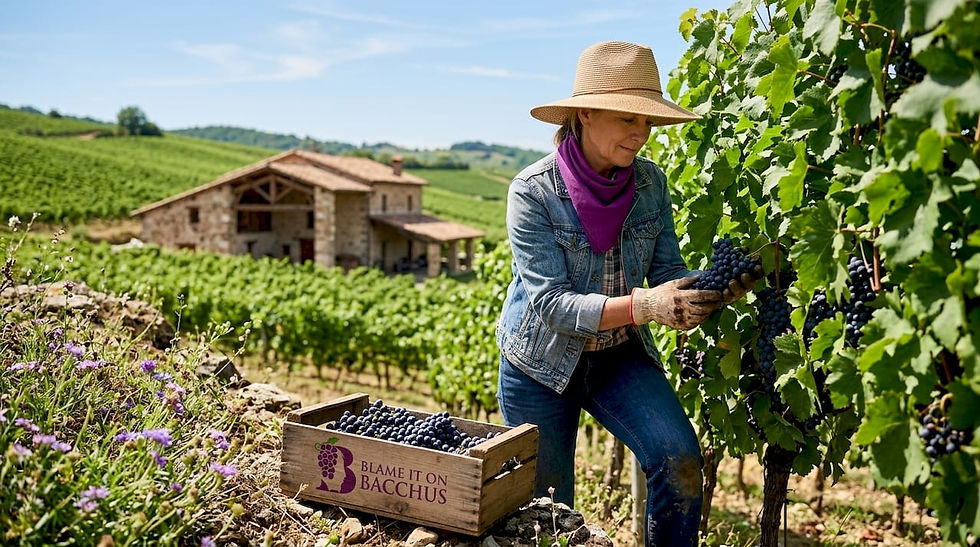
Walk into any conventional vineyard and you might see rows of vines sprayed on a schedule, regardless of whether pests are actually present. Organic vineyards work differently. The goal is to build a living ecosystem, not just grow grapes.
Here is what that looks like in practice:
No synthetic inputs. Organic growers skip the chemical pesticides, herbicides, and fertilizers that conventional vineyards rely on. Instead, they use compost, cover crops, and natural predators to manage the vineyard.
Soil health is the priority. Healthy soil grows resilient vines. Organic farming focuses on building microbial life underground, which leads to more expressive, site-specific wines.
Winery restrictions apply too. Certification restricts certain fining agents and cellar additives. This does not mean the wine is low-intervention or minimally processed, but it does mean the additive list is shorter.
Sulfites are limited, not eliminated. Organic winemakers often use lower sulfite levels than conventional producers, and in the US, certified organic wines contain no added sulfites at all.
Now, here is where people get confused. Organic, natural, and biodynamic wines are three distinct categories. Organic has legal certification. Natural wine lacks a universal regulated standard, meaning any producer can call their wine “natural” without meeting specific requirements. Biodynamic goes even further than organic, adding holistic farming practices based on lunar cycles and treating the farm as a self-sustaining ecosystem. You can check out more on natural wine practices if you want to geek out on those differences.
Pro Tip: “Low-intervention” is a philosophy, not a regulated label. Organic certification verifies what goes in and what stays out, not the overall winemaking style.
Why people choose organic wine
Let’s get real about the benefits, because there are genuine ones worth knowing about alongside a few overhyped claims.
Reduced pesticide exposure. Grapes are among the most heavily sprayed crops in agriculture. A European study found multiple pesticide residues in non-organic wines, some linked to cancer or hormone disruption. Choosing organic means significantly lower or zero residues in your glass.
Lower sulfites for sensitive drinkers. If sulfites give you headaches or other reactions, organic wines are worth exploring. Organic wine benefits include legally capped or zero added sulfites, depending on the label.
Potentially more antioxidants. Organic wines have shown consistently lower pesticide residues, lower sulfur dioxide levels, and potentially higher antioxidant content compared to conventional wines. The science is still building, but it is pointing in an interesting direction.
Genuine environmental wins. Choosing organic supports pollinator protection, reduces chemical runoff into waterways, and builds healthier soil. Organic farming benefits ripple well beyond the vineyard fence.
More expressive terroir. Here is the fun part for wine lovers: organic vineyards often produce grapes with more personality. When soil is alive and vines are stressed in natural, productive ways, the wine in your glass tends to taste more distinctly of where it came from.
“The best-framed benefit of organic wine is peace of mind. Reduced chemical exposure and greater transparency are real wins, even if organic wine is not a medicinal product.” — Vintage Roots
Just be honest with yourself about expectations. Organic wine will not cure anything. But it does give you a cleaner, more transparent glass of wine, and that counts for a lot.
Reading labels and picking the right bottle
Okay, you are standing in the wine aisle, phone in hand, slightly overwhelmed. Here is your cheat sheet.
USDA Organic seal (US). The gold standard for American wines. Guarantees organically farmed grapes and no added sulfites. Look for the round green and white seal.
“Made with Organic Grapes” (US). Grapes were organic, but sulfites up to 100 ppm may be present. No USDA seal on the front. Understanding these label differences is genuinely useful before you buy.
EU Organic leaf logo. The green leaf on a dark background. Covers both vineyard and winery standards, but allows up to 100 ppm sulfites.
Other country certifications. Look for logos from bodies like Ecocert (France), BioSuisse (Switzerland), or Australian Certified Organic. These all operate under different but legitimate frameworks.
Watch for greenwashing. Words like “sustainable,” “eco-friendly,” or “natural” on a label mean nothing legally. Certification scrutiny is the only way to verify real organic claims.
Here is a quick comparison of the main wine categories you will encounter:
Wine type | Legal certification | Sulfite rules | Key distinction |
Organic wine | Yes | Restricted or zero | Certified vineyard and winery standards |
Natural wine | No universal standard | Often none added | Philosophy-based, no regulated definition |
Biodynamic wine | Yes (Demeter, etc.) | Restricted | Organic plus holistic farming practices |
Vegan wine | No universal standard | Varies | No animal-based fining agents used |

If you want to go deeper on reading any wine label, not just organic ones, there is a solid guide on wine label reading that makes the whole process way less intimidating.
Trying to figure out if a biodynamic option is worth the price bump? Look for the Demeter certification seal. That is the most recognized biodynamic certifier globally, and it tells you the producer went through rigorous auditing to earn it.

My honest take on organic wine
I’ve spent a lot of time with organic wines, and here is what I’ve actually learned: certification matters, but it is not magic.
I’ve seen gorgeous certified organic wines that tasted dull and uninspired. I’ve also had uncertified wines from small family farms that were farmed beautifully but could not afford the paperwork. The label tells you what went in and what was kept out. It does not tell you if the winemaker has a good palate.
What I genuinely believe is that organic certification provides a verifiable, audited standard rather than just a marketing claim. That transparency is worth something real, especially when you are thinking about pesticide exposure over years of drinking. It is not paranoia. It is just paying attention.
The confusion I see most often is people treating “organic” and “natural” as interchangeable. They are not, and that misunderstanding leads people to either overpay for a marketing label or dismiss legitimate certified wines because they heard one anecdote. Read the label. Find the logo. Then decide.
Where I think organic wine is heading: more accessibility, more small producers getting certified, and eventually clearer global standards. Right now, the patchwork of country-specific rules is genuinely confusing for consumers. That will get better. Until then, knowing the basics puts you well ahead of most people in that wine aisle.
— Thomas
Learn more with Blameitonbacchus
If this has you curious about which organic wines to actually try, or how to develop a palate that can spot the difference between a well-farmed bottle and a greenwashed one, Blameitonbacchus has you covered.

Blameitonbacchus offers fun, beginner-friendly online wine classes that cover everything from reading labels to understanding sustainable wine categories without making your head spin. Think of it as your friendly shortcut to actually knowing what you are talking about at the next dinner party. And if you are shopping for a wine lover in your life, the Blameitonbacchus wine lover’s collection has seriously fun merchandise that makes the perfect gift. Come learn, laugh, and raise a glass to drinking a little smarter.
FAQ
What is the difference between organic and natural wine?
Organic wine has legal certification verifying farming and winemaking standards. Natural wine has no universal regulated definition, so any producer can use the term without meeting specific requirements.
Does organic wine have sulfites?
It depends on the label. In the US, wines carrying the USDA Organic seal contain no added sulfites. Wines labeled “Made with Organic Grapes” can contain up to 100 ppm. EU organic wines also allow limited sulfites.
Is organic wine healthier than conventional wine?
Organic wine offers reduced pesticide residues and lower or no added sulfites compared to conventional wine, but it is not a health product. The main benefit is transparency and reduced chemical exposure over time.
What is biodynamic wine?
Biodynamic wine goes beyond organic certification by applying holistic farming principles, including treatment of the farm as a self-sustaining ecosystem and alignment with lunar cycles. Look for the Demeter seal to confirm certification.
How do I avoid greenwashing when buying organic wine?
Skip vague terms like “sustainable” or “eco-friendly” on the label and look specifically for recognized certification logos such as the USDA Organic seal or the EU green leaf. Those logos require audits and verified standards.
Recommended
Comments