What Is Wine Acidity? Your Flavor Guide


Wine acidity is the measure of natural acids in wine that create its tartness, freshness, and structure. The two star players are tartaric acid and malic acid, both found in grapes before fermentation even starts. These acids shape everything from how lively a Sauvignon Blanc tastes to how well a Barolo holds up in the cellar for twenty years. Understanding wine acidity is the difference between sipping a glass and actually getting what’s in it.
What is wine acidity, exactly?
Wine acidity refers to both the chemical acids present in wine and the sensory perception of sharpness or tartness on your palate. Think of it like the zing in a squeeze of lemon. You feel it before you can explain it. According to wine chemistry, most wines fall between pH 2.9 and 3.9, though that number alone doesn’t tell the whole story. Acidity also gets measured as titratable acidity, or TA, which counts the total amount of acid in the wine rather than just its strength.
Why does this matter for you as a taster? Because acidity is what makes wine feel alive. A wine without enough acid tastes flat and dull, like soda that’s been left open overnight. Too much, and it’s like biting into an unripe green apple. The sweet spot is where freshness, balance, and flavor all click together.
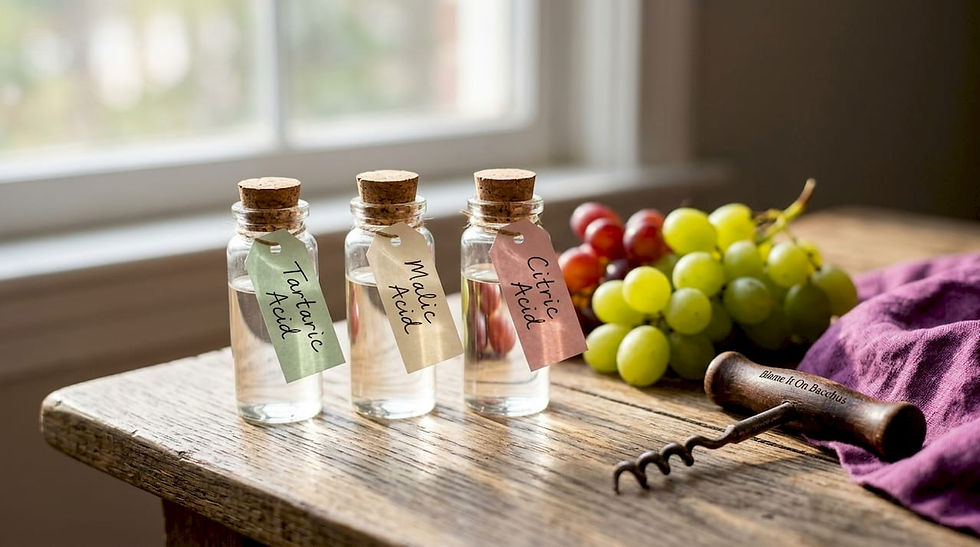
What acids are actually in your wine?
Not all acids are created equal, and each one brings something different to the glass. Here’s a quick breakdown of the main players:
Tartaric acid is the most abundant acid in grapes and the most stable. It gives wine its firm backbone and doesn’t change much during fermentation. You’ll taste it as clean, crisp tartness.
Malic acid is the same acid found in green apples. It delivers a sharper, fruitier bite. Cooler climate grapes like Riesling and Grüner Veltliner tend to hold onto more of it.
Citric acid shows up in small amounts and adds a light, zesty lift. It’s less significant than tartaric or malic but still contributes to the overall acid profile.
Lactic acid forms during malolactic fermentation, when bacteria convert the harsher malic acid into softer lactic acid. The result is a creamier, rounder texture. Think buttery California Chardonnay versus a lean, crisp Chablis.
Acetic acid is the one you don’t want too much of. It’s the acid in vinegar, and when it builds up in wine, it creates what winemakers call volatile acidity. A little is fine. A lot is a fault.
Primary acids in wine include tartaric, malic, and citric from the grape itself, while lactic and acetic acids develop during fermentation. Each acid shapes the wine’s flavor and stability in a distinct way, which is why winemakers track them closely throughout production.
Pro Tip: If a wine smells faintly of nail polish remover or vinegar, that’s acetic acid running wild. It’s a sign of poor fermentation control, not a quirky flavor feature.
How is wine acidity measured?
Here’s where things get a little nerdy, but stick with me because this part actually changes how you read a wine label or talk to a sommelier.
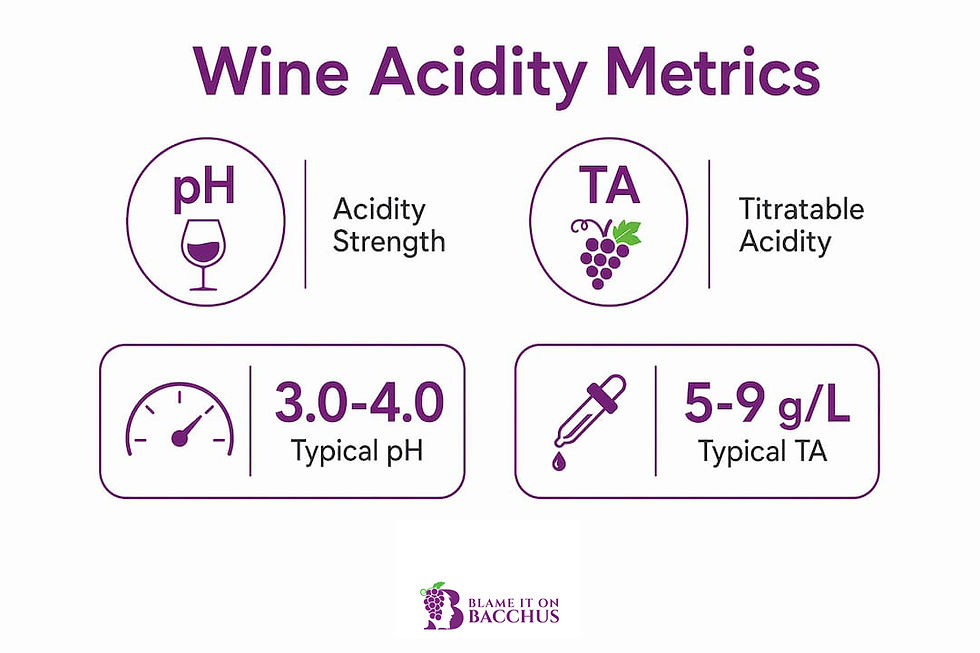
Two measurements define wine acidity: pH and titratable acidity. They sound similar but measure completely different things. pH measures hydrogen-ion activity on a logarithmic scale, meaning a wine at pH 3.0 is ten times more acidic than one at pH 4.0. TA, on the other hand, measures the total volume of acid present, expressed in grams per liter.
Here’s the twist: a wine can have a low pH and low TA, or a high pH and high TA. They don’t always move in the same direction. That’s why both pH and TA are needed to fully assess a wine’s acid structure. Relying on just one number is like judging a movie by its runtime.
Measurement | What it measures | Typical range | Sensory effect |
pH | Strength of acidity (hydrogen-ion activity) | 3.0 to 4.0 | Lower pH feels sharper and more tart |
Titratable acidity (TA) | Total amount of acid in the wine | 5 to 9 g/L | Higher TA creates fuller, more persistent sourness |
Combined reading | Full acid profile and stability | Varies by style | Predicts balance, aging potential, and microbial safety |
Small shifts in pH have a big impact on microbial stability. A wine at pH 3.2 is far more resistant to spoilage bacteria than one at pH 3.8. That’s not a minor detail for winemakers. It’s the difference between a wine that ages gracefully and one that turns into something undrinkable.
Pro Tip: When you’re at a tasting and the winemaker mentions pH, ask about TA too. A wine with a pH of 3.4 and a TA of 8 g/L will taste very different from one with the same pH and a TA of 5.5 g/L.
How does acidity affect the way wine tastes?
This is the fun part. Acidity is what makes your mouth water. Literally. When you sip a high-acid wine like a Champagne or a New Zealand Sauvignon Blanc, your salivary glands kick into gear. That watering sensation is your body responding to the acid, and it’s also what makes high-acid wines so food-friendly.
Acidity creates tactile freshness, tartness, and sourness that balance out sweetness and bitterness in a wine. Without enough acid, a sweet Riesling would taste cloying. Without enough acid, a tannic Cabernet Sauvignon would feel heavy and one-dimensional. Acidity is the backbone that holds everything together, and you can learn more about how it interacts with other components in this wine balance guide.
Here’s what too much or too little acidity actually feels like:
Too much acidity: The wine tastes sharp, sour, or even aggressive. Your cheeks pucker. It can feel uncomfortable rather than refreshing.
Too little acidity: The wine tastes flat, heavy, or “flabby.” There’s no lift or energy. It feels like it needs something.
Just right: The wine feels lively and fresh. The flavors are clear and well-defined. You want another sip.
The role of acidity in white wine is especially pronounced. Whites like Albariño, Riesling, and Chablis rely on acidity as their primary structural element since they lack the tannins that give red wines their grip. In reds, acidity works alongside tannins to create complexity and aging potential. Cooler wine regions like Burgundy, Mosel, and Willamette Valley naturally produce higher-acid wines because grapes ripen more slowly and retain more malic acid.
What role does acidity play in winemaking and aging?
Acidity is not just a flavor component. It’s a preservation tool. Higher acidity protects wine from microbial spoilage and oxidation, which is exactly why high-acid wines tend to age better and longer. A wine with low acidity is more vulnerable to bacterial growth and flavor breakdown over time.
One of the most significant winemaking decisions involving acidity is whether to put a wine through malolactic fermentation, often called MLF. Malolactic fermentation converts sharp malic acid into softer lactic acid, changing the wine’s texture and perceived freshness. A buttery California Chardonnay that went through full MLF tastes completely different from a Burgundy Chardonnay that skipped it. Same grape, very different acid profile. You can dig deeper into this process in Blameitonbacchus’s wine fermentation breakdown.
In warmer climates like California’s Central Valley or parts of Australia, grapes ripen quickly and lose natural acidity. Winemakers compensate through acidification, typically by adding tartaric acid. Different acidifiers produce distinct flavor profiles even when the final pH is identical, which means the choice of acidifier is a genuine creative decision, not just a technical fix.
Wine style | Typical pH | Typical TA | Aging suitability |
Mosel Riesling | 2.9 to 3.2 | 7 to 9 g/L | Excellent, decades of potential |
Burgundy Chardonnay | 3.1 to 3.4 | 6 to 8 g/L | Strong, 5 to 15 years |
California Chardonnay (MLF) | 3.4 to 3.6 | 5 to 6 g/L | Moderate, drink within 3 to 5 years |
Napa Cabernet Sauvignon | 3.5 to 3.8 | 5.5 to 7 g/L | Good, 10 to 20 years with tannin support |
Acidity also affects color stability in red wines. Lower pH helps preserve the bright red and purple pigments in young reds, which is why high-acid wines often look more vivid in the glass. As wines age and acidity softens, those colors shift toward garnet and brick tones. It’s one of the visual clues sommeliers use to estimate a wine’s age.
Key takeaways
Wine acidity is the chemical and sensory backbone of every bottle, and understanding it transforms how you taste, choose, and enjoy wine.
Point | Details |
Acidity defines wine’s structure | Tartaric and malic acids create the tartness and freshness that make wine feel alive. |
pH and TA measure different things | Use both readings together to fully understand a wine’s acid profile and stability. |
Acidity drives aging potential | Higher-acid wines resist spoilage better and develop more complexity over time. |
MLF changes the acid character | Malolactic fermentation softens malic acid into lactic acid, shifting texture from crisp to creamy. |
Balance is everything | Too much acidity tastes sharp; too little tastes flat. The goal is freshness with harmony. |
Why acidity is the most underrated thing in your glass
Here’s my honest take: most beginners focus on tannins or sweetness when they’re learning to taste wine. Acidity gets ignored. That’s a mistake. Acidity is the thing that makes you want another sip. It’s the reason a crisp Albariño works so well with grilled shrimp, and why a flat, low-acid wine feels like it’s missing something even when you can’t name what.
I’ve seen people dismiss high-acid wines as “too sour” before they understand what acidity actually does. Once you learn to recognize that mouth-watering sensation as a feature rather than a flaw, your whole relationship with wine shifts. You start seeking out wines with great acid structure because you know they’ll age well, pair better with food, and stay interesting all the way to the bottom of the bottle.
The other misconception I run into constantly is that acidity and quality are inversely related. People assume a softer, rounder wine is a better wine. Not true. Some of the world’s greatest wines, Mosel Rieslings, aged Barolo, vintage Champagne, are built on high acidity. That sharpness is what keeps them fresh and complex for decades. Understanding wine aging potential starts with understanding acidity.
— Thomas
Ready to taste the difference?
If this got you curious about what’s actually happening in your glass, Blameitonbacchus has you covered. Their private wine classes are designed for curious beginners who want real answers, not just tasting notes. You’ll learn how to identify acidity, balance, and structure in real wines with a guide who makes the whole thing genuinely fun.
And if you want to rep your wine obsession while you learn, check out the Wine God Hoodie from the Blameitonbacchus shop. It’s the perfect outfit for your next tasting session. Head over to Blameitonbacchus to explore everything on offer.
FAQ
What is wine acidity in simple terms?
Wine acidity is the natural tartness and sharpness in wine created by acids like tartaric and malic acid. It’s what makes wine taste fresh, lively, and food-friendly rather than flat.
What makes a wine taste acidic?
High levels of tartaric and malic acid make a wine taste acidic. Cooler climates and earlier harvests preserve more of these acids, producing wines with a sharper, more pronounced tartness.
What is a normal acidity level for wine?
Most wines have a pH between 3.0 and 4.0 and a titratable acidity between 5 and 9 g/L. White wines typically sit at the lower, more acidic end of that range.
Does high acidity mean a wine will age better?
Yes. Higher acidity protects wine from spoilage bacteria and oxidation, giving it a longer and more stable aging window. Wines like Riesling and Barolo are classic examples of high-acid wines built for the long haul.
What is the difference between pH and titratable acidity?
pH measures the strength of acidity through hydrogen-ion activity, while titratable acidity measures the total volume of acid present in grams per liter. Both readings together give a complete picture of a wine’s acid structure and sensory profile.
Recommended
Comments