Why Chill Red Wine: Flavor, Balance, and Temp Tips


Chilling red wine is the single most overlooked way to make a bottle taste dramatically better. The phrase “serve red wine at room temperature” sounds like solid advice, but it’s actually outdated by about 200 years. Modern homes sit at 70–75°F, and that warmth turns even a great red into something boozy, flat, and a little harsh. The sweet spot for most reds lands between 55°F and 65°F, and getting there is easier than you think. Let’s get into why chill red wine matters and how to do it right.
Why chilling red wine changes everything
Temperature is the invisible ingredient in every glass of wine. When a red sits at 72°F or warmer, alcohol volatility spikes. That means the ethanol literally evaporates faster, and you smell and taste the burn before you ever get to the fruit. Wine educator Anthony Giglio puts it plainly: serving reds too warm is a disservice to both the wine and your palate.
Here is what actually happens when you cool a red wine down:
Alcohol burn softens. Heat amplifies ethanol. A slight chill dials it back so the wine tastes balanced, not boozy.
Fruit aromas pop. Cooling sharpens acidity and makes fresh fruit notes more vibrant. Think cherries, raspberries, and plums instead of stewed jam.
Tannins feel smoother. Warm temperatures make tannins (the grippy, drying compounds in red wine) feel harsher. A cooler pour softens that edge.
The wine stays balanced. Balance is the goal. Fruit, acid, tannin, and alcohol all need to play nicely together. Temperature is the referee.
The historical context here is genuinely surprising. When wine experts first coined “room temperature,” they were describing cooler European castle interiors at roughly 60–65°F. Modern central heating blew that reference point out of the water. Serving a Pinot Noir at 72°F today is nothing like what those old-school sommeliers intended.
Pro Tip: If your red wine tastes flat or overly alcoholic, it is almost certainly too warm. Pop it in the fridge for 15 minutes before you judge the bottle.
Which red wines should you chill?
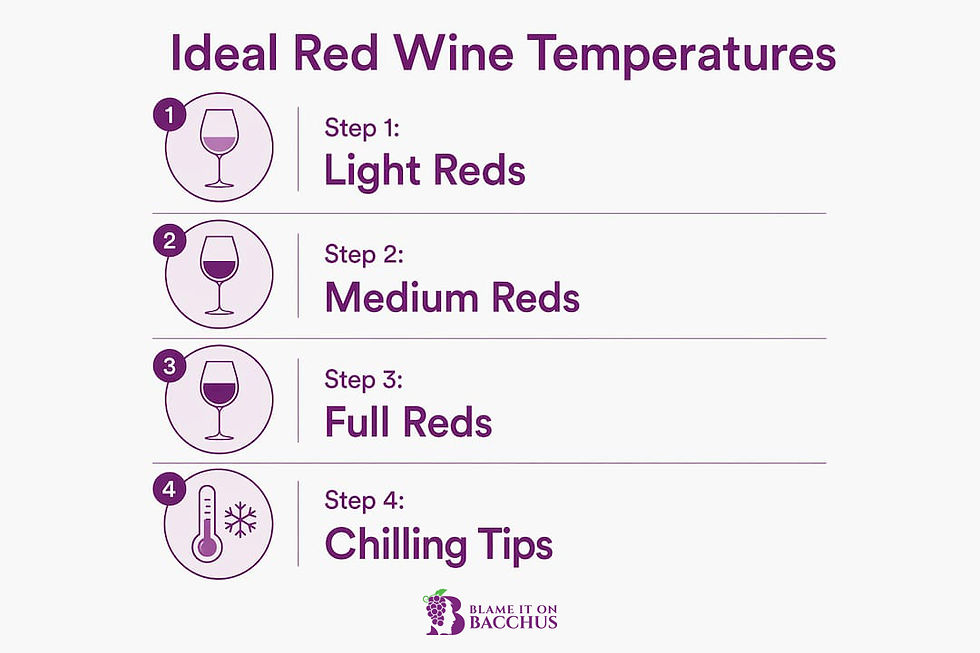
Not all reds respond to chilling the same way. The lighter and fruitier the wine, the more it loves a good cool-down. Fuller, more tannic reds still benefit from a slight chill, but they do not need to go as cold.

Wine Style | Examples | Ideal Serving Temp |
Light-bodied reds | Pinot Noir, Gamay, Grenache | 54–57°F |
Medium-bodied reds | Merlot, Sangiovese, Barbera | 57–61°F |
Full-bodied reds | Cabernet Sauvignon, Syrah, Malbec | 60–65°F |
Light-bodied reds like Pinot Noir, Gamay, and Grenache are the star players here. Their delicate acidity and aromatic profiles shine brightest at cooler temps. Gamay, the grape behind Beaujolais, is practically begging to be chilled. It is juicy, low in tannin, and absolutely sings at 54–57°F.
Medium-bodied reds like Merlot and Sangiovese sit in a sweet spot. A gentle chill brings out their fruit without muting the earthy complexity that makes them interesting. Full-bodied reds like Cabernet Sauvignon and Syrah still benefit from being a few degrees below modern room temperature. You are not trying to make them cold. You are just pulling them back from the edge of “too warm.”
One genuinely cool trend: modern winemakers now craft reds specifically designed to be served chilled, some with color-changing labels that signal when the bottle hits optimal temperature. That is not a gimmick. It reflects a real shift in how producers think about the drinking experience.
Pro Tip: When in doubt, check out the red wine varieties guide at Blameitonbacchus for a quick reference on which grapes love the cold treatment most.
How to chill red wine without wrecking it
Getting red wine to the right temperature is not complicated. You have a few solid options depending on how much time you have.
The fridge method. Place your bottle in the refrigerator for 15–20 minutes before serving. This brings a typical room-temp bottle from around 72°F down into the balanced serving range. It is the easiest and most reliable method for lighter reds.
The ice-water bath. Fill a bucket or large bowl with equal parts ice and water, then submerge the bottle for about 10–15 minutes. Ice-water baths chill faster than a fridge because water conducts cold more efficiently than air. This is your go-to when you need speed.
The cooler bag method. A quality wine cooler bag pre-chilled with ice packs works well for outdoor settings or when you are on the move. It is slower than an ice bath but keeps the bottle at a stable temperature once it gets there.
Taste as you go. Experienced wine drinkers use sensory tasting rather than thermometers to judge readiness. Pour a small taste after 10 minutes. If the alcohol still dominates, give it five more minutes.
The one thing to avoid: leaving a red in the fridge for hours. Over-chilling temporarily suppresses aromatics and can make the wine feel thin and muted. The good news is that over-chilling is recoverable. A wine that is too cold will warm naturally in the glass within a few minutes. A wine that is too warm cannot be un-warmed once it is poured. The guiding principle here is simple: better too cool than too warm.
Pro Tip: Wrap a wet paper towel around the bottle before placing it in the freezer for a fast 10-minute chill. Just set a timer so you do not forget it in there.
How chilling red wine transforms food pairings
A chilled red is a more versatile food partner than most people realize. Cooling a red wine does not just improve the wine in isolation. It opens up a whole new range of pairing possibilities that a warm red simply cannot pull off.
Here is where chilled reds genuinely shine at the table:
Grilled chicken and turkey. A chilled Pinot Noir or Grenache alongside grilled poultry is a seriously underrated combo. The cool, bright acidity cuts through the savory char beautifully.
Charcuterie boards. Cured meats, salty cheeses, and pickled things love the freshness that a chilled red brings. The acidity acts like a palate cleanser between bites.
Seafood. A lightly chilled Gamay or Pinot Noir pairs surprisingly well with salmon, tuna, and even seafood dishes like grilled shrimp. The cool temperature keeps the wine from clashing with delicate flavors.
Spicy food. Warmth amplifies the perception of alcohol, which intensifies the burn of spicy dishes. A chilled red tones that down and lets the food’s flavor come through.
Warm weather occasions. Chilled reds are more refreshing and approachable on a hot day. They feel lighter and more festive, which makes them perfect for outdoor gatherings, picnics, and summer barbecues.
The occasion matters too. A cozy winter dinner with a rich beef stew calls for a fuller red served at the warmer end of the range, around 63–65°F. A summer afternoon on the patio with a charcuterie spread? That is Gamay at 54°F territory. Adjust based on what you are eating, where you are, and what sounds good to you. Personal preference is always the final word.
Key takeaways
Chilling red wine to 55–65°F restores the balance winemakers intended by softening alcohol, sharpening fruit, and smoothing tannins for a dramatically better glass.
Point | Details |
Ideal temperature range | Serve most reds between 55°F and 65°F, not at modern room temperature. |
Light reds chill deepest | Pinot Noir, Gamay, and Grenache thrive at 54–57°F for peak freshness. |
15-minute fridge rule | A quick 15–20 minutes in the fridge brings most bottles to the right range. |
Better cool than warm | Over-chilling is recoverable in the glass; over-warming once poured is not. |
Pairing options expand | Chilled reds pair well with seafood, charcuterie, spicy dishes, and grilled chicken. |
The outdated advice that is still ruining your red wine
I have tasted the same bottle of Pinot Noir at 72°F and at 57°F in the same evening, and they tasted like completely different wines. The warm pour was boozy and flat. The chilled pour was bright, juicy, and alive. That experience alone converted me into a full believer in the chill.
What frustrates me is how persistent the “room temperature” myth remains. People hear it, trust it, and then wonder why their red wine tastes harsh or alcoholic. The advice was never wrong. It just stopped being relevant when central heating became standard. Chilling red wine restores tradition rather than breaking it. You are adapting to modern conditions to express what the winemaker actually intended.
My honest recommendation: stop treating the fridge as the enemy of red wine. It is one of the best tools you have. Start with a 15-minute chill on whatever red you are opening tonight. Taste it before and after. I am confident you will notice the difference immediately. And once you do, you will never go back to pouring straight from the shelf.
— Thomas
Level up your wine game with Blameitonbacchus
Ready to go deeper than just chilling tips? Blameitonbacchus is your go-to spot for making wine genuinely fun and approachable, whether you are just starting out or looking to sharpen what you already know.

Blameitonbacchus offers online wine education that covers everything from serving temperatures to tasting techniques, all without the stuffy wine-snob energy. You will find guides on serving wine perfectly as a beginner, plus wine-themed gear and apparel for every wine lover in your life. Whether you want to geek out on grape varieties or just look great in a wine-themed tee, Blameitonbacchus has you covered. Come for the knowledge, stay for the fun.
FAQ
What temperature should red wine be served at?
Most red wines taste best between 55°F and 65°F. Lighter reds like Pinot Noir and Gamay prefer the cooler end at 54–57°F, while fuller reds like Cabernet Sauvignon do well at 60–65°F.
Does chilling red wine ruin it?
Chilling does not ruin red wine. Over-chilling can temporarily mute aromatics, but the wine warms naturally in the glass and recovers within minutes.
How long should red wine chill in the fridge?
A standard 15–20 minutes in the refrigerator brings a room-temperature bottle down to an ideal serving range without over-chilling it.
Which red wines are best served chilled?
Light-bodied, low-tannin reds benefit most from chilling. Pinot Noir, Gamay, and Grenache are the top candidates, though medium-bodied reds like Merlot and Sangiovese also improve with a gentle cool-down.
Why does warm red wine taste harsh?
Serving red wine too warm causes alcohol and tannins to spike in perception while fruit and acidity fall away, creating a hot, unbalanced taste that many drinkers find unpleasant.
Recommended
Comments