Why learn wine basics for confident wine choices

Updated: May 26

Choosing wine can feel overwhelming when you’re staring at rows of bottles with unfamiliar labels and confusing terminology. Many beginner wine drinkers assume that higher prices guarantee better quality or that fancy label designs signal superior taste. The truth is that understanding a few fundamental wine concepts empowers you to make selections based on your personal preferences rather than marketing or guesswork. Learning wine basics transforms intimidating wine aisles into opportunities for discovery and enjoyment. This guide explains why mastering simple wine fundamentals matters for casual enthusiasts and how this knowledge builds the confidence you need to select, taste, and appreciate wines that truly suit your palate.
Table of Contents
Key Takeaways
Point | Details |
Core characteristics guide choices | Understanding sweetness, acidity, tannins, and body helps you select wines that suit your taste and pair with foods. |
Label basics prevent bias | Learning basic label cues lets you gauge sweetness, acidity, and body without relying on price or jargon. |
Tasting routine builds confidence | A five step method including look swirl smell and sip provides a repeatable framework that reduces intimidation. |
One characteristic focus | When tasting, concentrate on one trait at a time to improve memory and avoid overwhelm. |
Understanding core wine characteristics for better choices
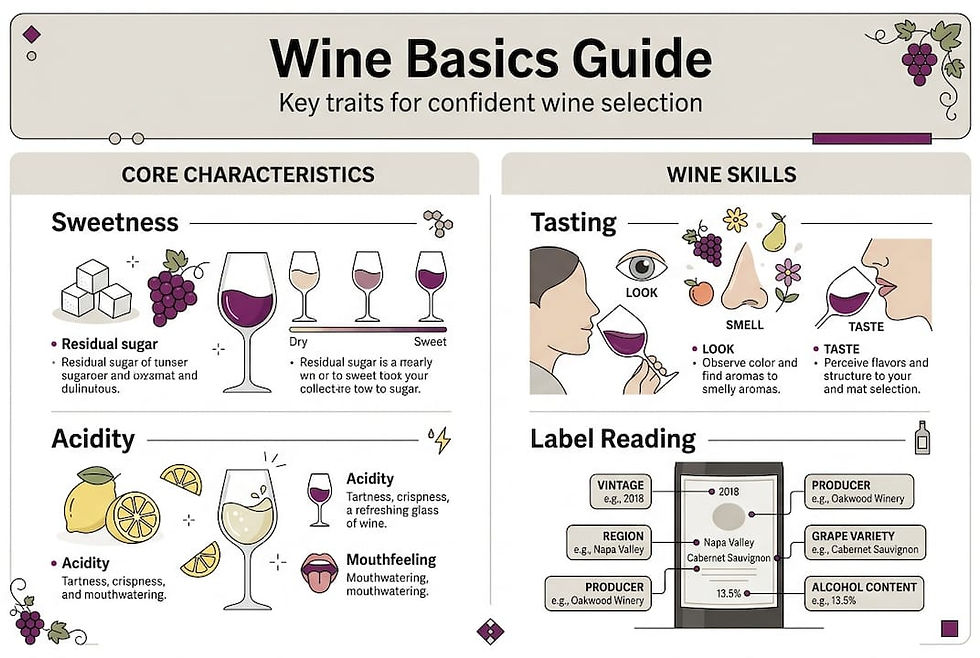
Every wine expresses four primary characteristics that shape its flavor profile and determine how it pairs with food. Understanding key wine characteristics like sweetness, acidity, tannins, and body allows better wine selection and pairing, building a sensory profile for confident choices. Sweetness refers to the residual sugar content you taste, ranging from bone dry to dessert-level sweet. Acidity creates that mouth-watering crispness or tartness that makes your mouth water, similar to biting into a green apple. Tannins produce a drying sensation on your tongue and gums, most noticeable in red wines from grape skins and seeds. Body describes the weight and texture of wine in your mouth, from light and delicate to rich and heavy.
These traits directly influence which foods complement specific wines. High acidity cuts through fatty dishes like salmon or creamy pasta, while bold tannins balance rich red meats. Understanding these relationships transforms food & wine pairing from mysterious art to logical framework. A light-bodied white with crisp acidity enhances delicate fish, while a full-bodied red with firm tannins stands up to grilled steak.
Wine Type | Sweetness | Acidity | Tannins | Body |
Sauvignon Blanc | Dry | High | None | Light |
Chardonnay | Dry to off-dry | Medium | None | Medium to full |
Pinot Noir | Dry | Medium to high | Low to medium | Light to medium |
Cabernet Sauvignon | Dry | Medium | High | Full |
Riesling | Dry to sweet | High | None | Light |
Rosé | Dry to off-dry | Medium to high | Low | Light to medium |
Recognizing these characteristics becomes easier with practice. Look for clues on wine labels and descriptions:
Dry, brut, or sec indicate low sweetness levels
Crisp, bright, or zesty suggest higher acidity
Bold, structured, or grippy signal notable tannins
Light, delicate, or refreshing describe lighter body
Rich, full, or intense point to fuller body
Pro Tip: When tasting new wines, focus on identifying one characteristic at a time rather than analyzing everything simultaneously. This approach builds sensory memory more effectively and prevents overwhelm during your learning journey.
Building confidence through a simple wine tasting routine
Developing a consistent approach to evaluating wine removes guesswork and social anxiety from tasting situations. A consistent wine tasting routine builds familiarity, reduces intimidation in social settings, and increases confidence through repetition. The five-step method provides a structured framework that works whether you’re at a casual dinner or formal tasting event. This systematic approach trains your senses to detect nuances while giving you something concrete to focus on rather than worrying about saying the right thing.
The look step involves observing color, clarity, and viscosity by tilting your glass against a white background. Color intensity and hue reveal age and grape variety, while clarity indicates quality and potential flaws. Swirling introduces oxygen that releases aromatic compounds, making the wine more expressive. The smell step engages your most powerful sense for wine evaluation, as your nose detects thousands more compounds than your taste buds. Sipping involves taking a small amount and letting it coat your entire mouth before swallowing. The savor step focuses on finish length and evolving flavors after swallowing.
Look at the wine’s color, clarity, and legs by tilting the glass against white paper or tablecloth
Swirl gently to aerate the wine and release aromatic compounds into the glass
Smell deeply by placing your nose into the glass and taking several short sniffs
Sip a small amount and move it around your mouth to coat all taste zones
Savor the finish by noting how long flavors persist and how they evolve after swallowing
“The beauty of a tasting routine lies not in sounding sophisticated but in developing personal reference points. Each wine you taste using this method adds to your sensory library, making future evaluations easier and more accurate. Confidence grows naturally when you trust your own observations rather than seeking external validation.”
This routine transforms wine tasting from intimidating ritual into approachable practice. Regular use develops your palate and creates familiarity with different wine styles. You’ll notice patterns across varietals and regions, building intuition about which wines suit your preferences. The structure also provides conversation fodder at social events, giving you specific observations to share rather than vague impressions. Practicing at home with inexpensive bottles builds skills without financial pressure, preparing you for any wine situation with genuine confidence.

Pro Tip: Keep a simple tasting journal on your phone noting wines you try and which characteristics stood out. This personal reference becomes invaluable when shopping or ordering, helping you articulate preferences to store staff or sommeliers who can guide you toward similar options.
Exploring wine basics through consistent practice accelerates your learning curve significantly. Consider dedicating one evening per week to focused tastings where you compare two similar wines side by side. This comparative approach highlights differences more clearly than tasting wines in isolation. You can learn wine basics quickly by combining structured tasting with targeted reading about specific grape varieties or regions.
Decoding wine labels and shopping with confidence
Wine labels contain essential information that guides informed purchasing decisions once you understand the terminology. Basic knowledge demystifies wine shopping and labels, empowering casual drinkers to select bottles confidently without relying solely on price or jargon. The varietal indicates which grape or blend comprises the wine, directly predicting flavor profile when you know grape characteristics. Vintage shows the harvest year, relevant because weather conditions affect quality and style year to year. Region identifies where grapes grew, important because climate and soil influence taste significantly. Producer names the winery, useful once you discover makers whose style matches your preferences.
Many label terms function more as marketing than meaningful descriptors. Watch for these common examples:
Reserve often lacks legal definition outside specific regions and may simply indicate higher price
Estate bottled means grapes came from winery-owned vineyards but doesn’t guarantee quality
Old vines sounds impressive but has no standardized age requirement in most regions
Special selection typically signals winemaker preference without objective quality standards
Limited edition creates false scarcity for marketing purposes rather than indicating rarity
Label Term | Common Perception | Actual Meaning |
Reserve | Premium quality wine | Often just marketing with no legal standard |
Barrel aged | Superior craftsmanship | Standard practice for many wines, duration varies |
Hand-picked | Careful selection | Common practice, doesn’t ensure quality |
Award winner | Objectively best wine | Competitions vary widely in credibility |
Winemaker’s selection | Expert-chosen excellence | Marketing term without standards |
Focus on concrete information rather than subjective claims when evaluating labels. Alcohol content provides clues about body and intensity, with higher percentages typically indicating fuller, riper styles. Appellation systems in regions like France, Italy, and California guarantee specific production standards and geographic authenticity. Back labels sometimes include tasting notes or food pairing suggestions that help predict whether a wine suits your preferences.
This knowledge prevents buyer’s remorse by aligning purchases with actual preferences rather than marketing appeal. You’ll spend less on overpriced bottles with fancy labels and discover excellent values from lesser-known producers. Understanding what information matters reduces decision paralysis in wine shops, letting you narrow choices quickly based on varietal, region, and vintage rather than drowning in options. The confidence to select wines based on informed criteria rather than price tags or elaborate packaging transforms shopping from stressful guessing into enjoyable exploration.
Developing familiarity with wine shopping and label reading creates independence from sales pressure and enables you to discover personal favorites through systematic experimentation rather than random selection.
Recognizing grape varieties and bridging the novice-expert gap
Learning to identify common grape varieties by taste improves both appreciation and selection accuracy significantly. Trained tasters can identify distinct varietals, showing basics aid in recognizing grape varieties and avoiding confusions from shared traits like high tannins. Each grape variety expresses characteristic flavor profiles, aromatic signatures, and structural elements that become recognizable with practice. Cabernet Sauvignon typically shows black currant, cedar, and firm tannins. Pinot Noir offers red cherry, earth, and silky texture. Chardonnay ranges from crisp green apple to buttery vanilla depending on winemaking. Sauvignon Blanc delivers grapefruit, grass, and racy acidity.
Developing varietal recognition narrows the expertise gap between beginners and experienced tasters. Expertise gap exists: novices rely on labels and price, while knowledgeable use tasting; learning bridges this for accurate selection without tasting. Understanding varietal signatures lets you predict whether you’ll enjoy a wine before purchasing or ordering, reducing disappointing experiences and wasted money.
Beginners can start building varietal recognition with these practical approaches:
Compare two wines from the same grape variety but different regions side by side
Focus on learning three to five common varietals thoroughly before expanding your range
Attend guided tastings where experts highlight distinguishing characteristics of each wine
Use aroma kits or common household items to train your nose on specific scent compounds
Take notes on each varietal you try, building a personal reference library over time
Common novice mistakes include expecting every example of a varietal to taste identical and becoming discouraged when unable to identify grapes immediately. Climate, winemaking techniques, and vineyard practices create significant variation within single varietals. A cool-climate Chardonnay from Chablis tastes dramatically different from a warm-climate California version, yet both express core Chardonnay characteristics beneath regional influences. Patience and repeated exposure build recognition skills gradually rather than instantly.
“The journey from label-dependent novice to confident taster happens incrementally through mindful practice. Each tasting where you consciously note varietal characteristics strengthens neural pathways that eventually allow intuitive recognition. The goal isn’t becoming a sommelier but developing enough familiarity to select wines you’ll genuinely enjoy based on past experiences with similar grapes.”
This growing knowledge creates positive feedback loops where successful selections reinforce learning and build genuine confidence. You’ll find yourself gravitating toward specific varietals and regions that consistently deliver pleasure, while understanding why certain wines don’t appeal to your palate. The ability to articulate preferences in varietal terms helps wine shop staff and restaurant servers guide you toward appropriate options, improving recommendations significantly.
Celebrating your developing grape variety recognition skills reinforces your identity as someone who appreciates wine thoughtfully rather than casually consuming it without consideration.
Explore wine-themed apparel and enhance your journey
As you build wine knowledge and confidence, celebrating your passion through wine-themed apparel adds fun to your journey. Quality wine-themed tees, hoodies, and hats let you express your enthusiasm while connecting with fellow wine lovers who share your interests. Whether you’re attending casual tastings, hosting dinner parties, or simply enjoying everyday life, wearing pieces that reflect your wine passion makes a statement about your commitment to enjoyment and learning.
Explore options like the women’s wine goddess tee white for casual elegance, the men’s wine god hoodie garnet for comfortable style, or the vintage wine lover cap for everyday wear. These pieces celebrate your growing wine expertise while providing conversation starters with others who appreciate the culture and craft behind every bottle. Wearing your wine confidence proudly reinforces your identity as someone who approaches wine with curiosity and knowledge rather than intimidation.
Why learn wine basics: frequently asked questions
Is wine knowledge necessary for casual drinkers?
While not strictly necessary, basic wine knowledge significantly enhances enjoyment and confidence for casual drinkers. Understanding simple concepts like wine characteristics and tasting techniques helps you select bottles you’ll actually enjoy rather than relying on guesswork or price. This knowledge transforms wine from mysterious beverage into approachable pleasure, reducing buyer’s remorse and social anxiety around wine situations.
How quick is it to learn the basics?
Most beginners grasp fundamental wine concepts within a few weeks of focused practice and reading. Learning core characteristics, basic tasting techniques, and common grape varieties requires only several dedicated tasting sessions and targeted study. The key is consistent practice rather than intensive cramming, as sensory skills develop gradually through repeated exposure to different wines.
Will knowing wine basics improve social experiences?
Absolutely. Wine knowledge provides conversation topics, reduces anxiety in tasting situations, and helps you articulate preferences when ordering or shopping. Understanding basics lets you participate confidently in wine discussions without pretending or feeling intimidated. You’ll also make better selections when hosting or attending dinners, enhancing everyone’s enjoyment through thoughtful pairings.
Can beginners trust their palate?
Yes, your palate is valid even as a beginner, though it develops accuracy and refinement with practice. Everyone perceives flavors differently based on genetics and experience, so trusting your own observations matters more than matching expert descriptions. Focus on noticing what you genuinely taste rather than searching for prescribed notes, and your confidence will grow naturally as your sensory library expands.
What are easy first steps to start learning wine?
Begin by practicing the five-step tasting routine with inexpensive wines from common grape varieties like Cabernet Sauvignon, Chardonnay, or Pinot Grigio. Keep simple notes on what you observe and prefer. Read beginner-friendly articles about wine characteristics and label reading. Attend one casual tasting event or class to learn from guided instruction. These foundational steps build confidence without requiring significant financial investment or time commitment.
Recommended
Comments