Wine Glass Shapes: A Beginner's Guide to Bowls and Rims


Here’s the short version: tall and slim for bubbly, small and narrow for crisp whites, big and wide for bold reds. The bowl is the star of the show, and its shape decides how much air your wine meets, how fast it warms up and where the aromas end up. Pick the right shape and you smell more. Pick the wrong one and you’re still fine, because wine is for drinking, not for passing exams.
I’m going to walk you through every shape you’ll meet on a store shelf, what each does, and how to build a small, sensible collection. If you want to train your nose while you’re at it, our Elements of Tasting class is $50 and made for beginners.
Table of Contents
The Parts of a Wine Glass (and Why Each One Matters)
Every glass has three working parts. The bowl shapes aroma and flavor and controls how much oxygen touches the wine. The base keeps the glass stable. The stem lets you hold the glass without warming the bowl with your hand, according to one glassware guide.

Then there’s the rim, the unsung hero. Christie’s advice is that a thin rim helps the wine arrive nicely on your tongue, while a heavy rolled rim does the opposite. So choose plain, well-balanced glassware that’s as thin as you can sensibly handle.
Think of the bowl like a camera lens. A big, balloon-like bowl works like a panorama for complex, powerful wines. A smaller bowl is a close-up for subtle ones and holds temperature longer, as Christie’s experts put it.
Wine Glass Shapes at a Glance
Before we get into the details, here’s your cheat sheet.
Glass shape | Bowl look | Best for |
Bordeaux | Tall and broad | Fuller reds |
Burgundy | Short, round, narrow opening | Delicate, softer reds |
White wine glass | Smaller, more upright | Crisp, aromatic whites |
Larger white glass | Medium bowl with more surface area | Fuller whites like Chardonnay |
Flute | Tall and slender | Sparkling wine |
Tulip | Wider bowl, tapered rim | Sparkling wine with more aroma |
Coupe | Wide and shallow | Presentation and cocktails |
Universal | Medium bowl, gentle taper | Pretty much everything |
The red and white pairings follow the Wine Selectors guide, which also points sparkling wines to flutes or tulips.
Red Wine Glass Shapes: Go Big, but Not Too Big
Red glasses are generally the larger ones, and the logic is simple. A large, broad bowl increases the wine’s surface area and air contact, which generally helps full-bodied reds release aroma and soften their tannins. (Tannins are the drying, grippy feeling you get from strong black tea.)
Bordeaux glass
This is the tall one with a generous bowl. It’s the classic match for fuller reds, think Cabernet Sauvignon and its bold friends. The height gives these big personalities room to stretch out.
Burgundy glass
Shorter, rounder and with a narrower opening. It suits delicate reds such as Pinot Noir and softer Shiraz, according to Wine Selectors. That curvy bowl gathers a perfumed wine’s aromas and funnels them toward your nose.
Bigger isn’t always better
Here’s the plot twist. Michelin Guide experts note that extra air can open up a young, concentrated wine, but an oversized bowl can let the delicate aromas of a mature wine drift away too fast. A big glass for an old, fragile bottle is like blasting a lullaby through a stadium speaker.
Pro tip: fill the glass no more than about halfway. The Drinks Business suggests leaving enough room to swirl without wearing the wine, and I agree. Swirling is half the fun.
White Wine Glass Shapes: Small, Narrow and Cool
White wine glasses have a smaller bowl. That helps keep the wine from warming too quickly and holds it close to your nose, which delivers bright aromas. This style suits Sauvignon Blanc, Pinot Grigio and Riesling, per this glassware overview.
The grape matters, though. Wine Companion’s 2025 guide says Riesling and Sauvignon Blanc do well in narrower, tapered bowls that concentrate aroma and limit oxygen exposure, while Chardonnay benefits from a larger bowl because the extra surface area lets it breathe.
In other words, not every white is a wallflower. Chardonnay can handle a bigger glass. Zippy, aromatic whites want the narrower one. If you’re building a menu around light whites, this piece on pairing seafood with white wine shows what those delicate bottles shine next to, and why the narrower bowl suits them.
Sparkling Wine Glasses: Flute, Tulip or Coupe?
Bubbles get their own glasses, and there are three contenders.
Flute. Tall, slender bowl, long stem. It lets bubbles form in Champagne and other sparkling wines, and the stem helps keep the wine chilled, according to this glass guide.
Tulip. A wider bowl with a tapered rim. Moët & Chandon’s guide says it expresses aroma better than a flute while holding bubbles better than a coupe. That’s the sweet spot, and it’s the one I reach for.
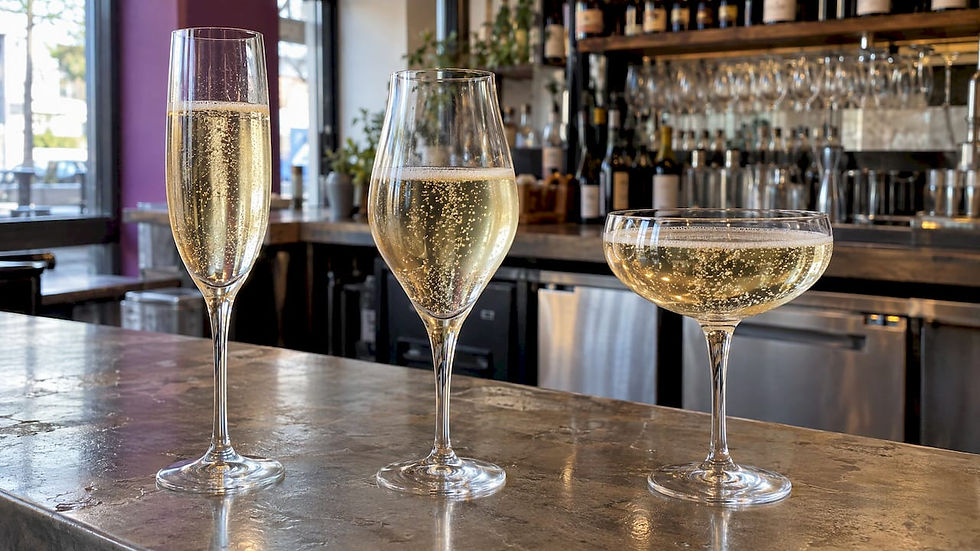
Coupe. Wide and shallow, very glamorous, very Gatsby. Per the same guide, it keeps bubbles poorly and is mainly a presentation or cocktail choice rather than the best vessel for really sniffing and analyzing sparkling wine. Fun for a party. Less fun for fizz that goes flat.
Does Glass Shape Really Change the Taste?
Short answer: yes, your nose notices. A study of 181 volunteers found that glass shape influenced ratings of wine odors, independently of how pretty people found the glasses. The shape wasn’t just a vibe.
That makes sense once you know how smell works. A huge part of what you call “flavor” is aroma. If you want to dig into that, our posts on what wine aroma is and the three aroma types for beginners will get your nose warmed up. Then these wine aroma examples give you actual scents to hunt for.
Try this at home: pour the same wine into two different glasses and sniff back and forth. It’s the cheapest tasting lab you’ll ever run.
Wine Glass Alternatives: Universal and Stemless
Nobody has to own seven glass types. Two alternatives cover most households.
Universal glasses
A universal red glass has a medium-large bowl with a gentle taper. A universal white has a smaller bowl and a slightly narrower rim. Both work well with most wines. Bon Appétit’s 2026 roundup treats universal glasses as enough for most wines, while noting that collectors may like bulbous Burgundy shapes for Pinot Noir, Nebbiolo and Gamay, plus specialized glasses for sparkling wine.
Translation: one good all-rounder is the wingman of the glass world.
Stemless glasses
They’re casual, sturdy and easy to stash. Michelin Guide experts say they suit parents and pet owners who want less risk of breakage. The trade-off is simple physics: since you hold the bowl, your hand warms the wine faster, as this guide notes. So they’re a natural for sturdy, easygoing pours and chilly-ish patios, and a cheerful choice for a backyard barbecue.
How to Choose Wine Glass Shapes for Your Home
Here’s my no-stress checklist.
Start with what you drink most. Mostly bold reds? A Bordeaux-style or large universal red. Mostly crisp whites? A smaller, narrower bowl.
Look for a clear bowl and an inward-curving rim. The Drinks Business puts these at the top of the list, with enough room to swirl.
Check the rim. Thin and plain wins.
Think about real life. The Independent’s 2026 review reminds us that aroma performance should be balanced against rim feel, stability, durability, storage, cleaning and replacement cost.
Trust your own nose. Michelin’s experts point out that the ideal glass is personal, so experiment until you find the one you love.
Hosting a dinner? This guide to planning a wine pairing dinner is handy for deciding how many glasses you’ll actually need per guest.
Washing, Holding and Storing Your Glasses
Good glasses are delicate. The American Cleaning Institute recommends hand-washing delicate wine glasses: cradle the bowl instead of stressing the stem, use a little detergent, rinse well and dry with a lint-free cloth.
Sturdier glasses can usually go in the dishwasher on a delicate cycle, with space between them and no heated drying, per the same guidance. Hand-washing is still the best long-term bet for special glassware.
When you drink, hold the stem. Your hand stays off the bowl, so the wine stays cooler and the glass stays smudge-free. Got a decanter too? We wrote up how to clean a wine decanter without cracking it.
Our Take on Wine Glasses
We think the glass is the easiest upgrade in wine, and the least intimidating one. You don’t need a fancy cabinet. You need to know what you’re sniffing for. That’s why we teach wine for beginners in a playful, wallet-friendly way. When you understand how a wine smells, why a Pinot is delicate and a Cabernet is bold, the glass decisions pretty much make themselves. A bowl shape is just a tool for getting aroma to your nose, and once you’ve noticed that aroma, you’ll never unnotice it. Our classes are made for exactly this moment: you’ve got a bottle, a glass and a head full of questions. Our private classes, including guided tastings and custom sessions, are great if you want to do it with friends and a few different glasses on the table. Thomas
Ready to Put Your Glasses to Work?
A nicer glass is a great start, but knowing what to look for in it is where the real fun begins. The Elements of Tasting is $50 as a one-off purchase, and The Elements of Wine is $75. Both are built for beginners, so you can start from zero and keep your sense of humor intact. Browse our online wine classes.

Planning a get-together instead? Take a look at our private classes for guided tastings, food and wine pairing and custom sessions. And if you’re shopping for a fellow wine lover, there’s wine-themed merchandise on our shop and an eGift card for when you can’t decide.
FAQ
What are the main wine glass shapes?
The main ones are Bordeaux and Burgundy for reds, a smaller-bowled glass for whites, and flutes or tulips for sparkling wine. Universal glasses blend elements of these to work with most wines. Stemless glasses are the casual cousin.
Do I really need different glasses for red and white?
Not strictly. A universal red and a universal white cover most wines well, according to Cult Wines’ guide. Specialized shapes are a bonus for the wines you drink most often.
Which glass is best for sparkling wine?
A tulip is a great pick. It gives better aroma than a flute and holds bubbles better than a coupe, according to Moët & Chandon. A flute is a classic if you want the fizz on show.
Are stemless wine glasses okay?
Yes, they’re practical, especially if you’re worried about breakage. Because your hand touches the bowl, the wine warms faster, so keep pours smaller and sip at a relaxed pace.
How full should I pour?
About halfway at most. That leaves room to swirl and gather aromas, which is the whole point of the bowl.
Sources
Recommended
Comments