Wine Pairing Made Easy for Food Lovers


TL;DR:
Great wine pairing is based on matching structural elements like acidity, tannin, and body with dish components such as fat, spice, and richness. Understanding these core principles allows for confident experimentation and personalized pairings beyond traditional rules. Practice detecting dominant flavors and adjust pairings accordingly to enhance enjoyment and discover new taste combinations.
You open a great bottle, sit down to a beautiful meal, and suddenly freeze. Red or white? Bold or light? The world of wine pairing can feel like a pop quiz you never studied for. Here’s the thing: it doesn’t have to. Great pairing isn’t about memorizing a rulebook. It’s about understanding a handful of structural principles that explain why certain wines and dishes just click. Once you get that, the whole thing becomes a lot more fun and a lot less stressful.
Table of Contents
Key takeaways
Point | Details |
Structure drives pairing | Match wine components like acidity, tannin, and body to your dish’s fat, protein, and spice levels. |
Contrast and harmony both work | You can pair by complementing similar flavors or by balancing opposites, like acid cutting through fat. |
Avoid heavy tannins with delicate food | Big, tannic reds can bulldoze light dishes. Save them for fatty meats and aged cheeses. |
Spicy dishes love off-dry wines | Residual sugar in wines like Riesling cools down heat instead of amplifying it. |
Rules are a starting point, not a finish line | Understanding core principles gives you the freedom to experiment and trust your own palate. |
Wine pairing: the structural building blocks
Good wine pairing is really about managing sensations. Think of it like sound mixing. Too much bass and the guitar disappears. Too much treble and everything feels thin. Wine and food work the same way. Pairing success depends on matching structural elements like acidity, tannin, sweetness, body, and flavor intensity with the sensory properties of your dish.
Here is a breakdown of the big players:
Acidity acts like a palate cleanser. High-acid wines stimulate salivation which cuts through fat and leaves your mouth feeling fresh. Champagne with fried chicken is not just a trend. It genuinely works because the bubbles and bright acidity slice right through the oil. Wines like Chablis, Vermentino, and Sauvignon Blanc are your go-to high-acid crew.
Tannins are phenolic compounds that bind proteins in wine and food, creating that dry, grippy feeling on your gums. When tannins meet fat and protein in a well-marbled steak, they soften up and become pleasantly grippy instead of harsh. Put those same tannins against a delicate piece of sole and they will steamroll it.
Sweetness is your peacemaker. Residual sugar dampens capsaicin heat, which is why a slightly sweet Gewürztraminer next to Thai curry feels like a cool breeze. Just remember: your wine should always be as sweet as or sweeter than your dish. A dry Chardonnay next to a rich dessert will taste flat and sour by comparison.
Body is about weight. A light-bodied Pinot Noir would get completely swallowed by a heavily braised short rib. Light-bodied wines pair with light dishes and full-bodied wines with richer, heavier food. You can learn more about how weight and texture shape pairings by reading about wine body and texture.
Flavor intensity matters too. A delicate grilled sole needs a gentle white like Muscadet, not an oaked Chardonnay that will show up and take over the whole dinner.
Pro Tip: When you’re unsure where to start, match the most dominant element in your dish. Fatty dish? Reach for high-acid or tannic wines. Spicy dish? Go off-dry and lower alcohol.
How to pick the right wine for any dish
This is where theory becomes a superpower. I want to give you a repeatable process you can use with any meal, whether it’s Tuesday night pasta or a fancy dinner party.
Identify the dominant structural element in your dish. Is it fatty and rich, like a cream-based pasta? Lean and acidic, like a ceviche? Spicy, like a vindaloo? Sweet, like a teriyaki glaze? That dominant element is your starting point.
Decide: complement or contrast? These are your two pairing strategies. Congruent pairing means matching similar flavors, like pairing a nutty, buttery Chardonnay with a buttered lobster to double down on richness. Contrasting pairing means using opposites to create balance. A crisp, acidic white next to a fatty salmon fillet cuts through the richness instead of amplifying it. Both approaches work. Knowing which one you are going for keeps you in control.
Match the weight. Whatever wine you choose, make sure it’s in the same weight class as your dish. A food’s richness should match the wine’s body. A delicate dish needs a delicate wine. A bold dish needs a bold wine.
Check the acid and sweetness calibration. Wine acidity must calibrate to food acidity or the wine falls flat. Lemon-dressed salads and tomato-heavy sauces need wines with real backbone. And if you’re serving dessert, your wine must be at least as sweet as the cake, or it will taste bitter and thin.
Adjust for spice. Spicy food is the wild card. Pairing high-alcohol wines with spicy food intensifies the heat. Lower-alcohol, slightly sweet wines are your friends here. Chill them down a bit for extra freshness.
Taste and adjust. No pairing is perfect on the first try. Pour a small amount, take a bite of your dish, and sip. Does the wine taste flatter? It needs more acidity. Does it taste harsh? The tannins are fighting the food. Tweak from there. You can start pairing step by step with beginner-friendly guidance if this feels like a lot at once.
Pro Tip: Sweet foods reduce your perception of wine sweetness and can make an off-dry wine taste almost bone dry. If the dish has any sweetness in it, go one step sweeter with your wine than you normally would.
Practical pairings by cuisine and dish type
Let’s get concrete. Here are some real-world pairings that actually work, plus a few that will surprise you.
Dish | Classic Pairing | Bold Alternative |
Grilled white fish | Crisp Sauvignon Blanc | Dry Vermentino |
Salmon (fatty, rich) | Oaked Chardonnay | Light Pinot Noir |
Shellfish and butter sauce | Chablis or Champagne | Dry Albariño |
Ribeye steak | Cabernet Sauvignon | Dry Riesling |
Spicy Thai curry | Gewürztraminer | Off-dry Riesling |
Soft cheese (Brie, Camembert) | Champagne | Light Pinot Gris |
Aged hard cheese (Parm, Manchego) | Barolo or Rioja | Aged white Burgundy |
Tomato-based pasta | Chianti |
A few things worth calling out here. Champagne is one of the most versatile food wines on the planet and it is criminally underused outside of celebrations. Its high acidity and effervescence work brilliantly with anything fried, fatty, or salty. Think fried chicken, oysters, potato chips. Yes, potato chips.

The regional co-adaptation of wine and food is also a useful shortcut. Italian food and Italian wine grew up together and their structures naturally complement each other. The high acidity of Chianti was basically designed to cut through tomato sauce. French Alsatian wines and the rich, pork-heavy cuisine of that region? Same story. When in doubt, match the passport of the dish to the passport of the bottle.
Spicy food deserves special attention. Off-dry Rieslings and Gewürztraminer are the MVPs of spicy cuisine because their residual sugar acts like a buffer against heat. You can also explore how other beverages work alongside spice by checking out this kombucha food pairing guide for non-wine perspectives on balancing heat.
Common pairing mistakes and how to fix them
Even experienced wine drinkers make these. Knowing the traps makes you better at avoiding them.
Confusing alcohol with body. A high-alcohol wine is not automatically full-bodied. But high-alcohol wines paired with spicy food will amplify the heat instead of calming it. If your mouth is on fire after a sip, the wine’s alcohol is the culprit. Switch to something lower in ABV.
Forgetting about salt. Heavily salted dishes like cured meats and aged cheese can make an already-acidic wine taste sharp and almost aggressive. Salt amplifies perceived acidity in whatever wine is in your glass, so lean toward rounder, fruitier wines with very salty food.
Bulldozing delicate dishes. A big, tannic Cabernet Sauvignon next to a lightly poached chicken breast is like turning up the volume to 11 during a whispered conversation. The food disappears. Match the size of your wine to the size of your dish, always.
Pairing dry wine with a sweet dish. This is one of the most common mistakes at the dessert table. A dry Prosecco next to a slice of cheesecake will taste borderline sour. Residual sugar in your wine must match or exceed the sweetness of your dessert or the wine suffers badly.
Serving wine at the wrong temperature. This one is sneaky. A red wine served too warm tastes boozy and flat. A white served too cold loses its aroma and complexity. Chill reds slightly if you’re pairing with spicy food to keep the alcohol from cranking up the heat.
My honest take on breaking the rules
I’ll be straight with you. The traditional rules of wine pairing are useful, but they can also be a cage if you let them be. I’ve seen people avoid an entire category of wine just because someone told them “red wine with red meat, white wine with fish.” That kind of thinking leads to missed discoveries.
One of my favorite examples is steak with a dry Riesling. It sounds wrong. But master sommelier Julie Dalton endorses exactly this pairing because the wine’s high acidity refreshes the palate between bites of fatty beef just as well as tannins do. Different mechanism, same result. That kind of curiosity is what separates good drinkers from great ones.
In my experience, people who learn the structural principles and then let themselves play are the ones who have the most fun. The rules exist to explain why things work. Once you understand the why, you can explore pairing with real confidence and occasionally break the rules on purpose. That’s where the best discoveries live.
Pairing is personal. It evolves. And honestly, a pairing that doesn’t quite work is just a story to tell at your next dinner party.
— Thomas
Ready to take your pairing skills further?
If this article has you excited to go deeper, Blameitonbacchus has exactly what you need to keep the momentum going.
Whether you want a personalized experience or prefer learning at your own pace, there’s something here for every kind of wine lover. The private wine classes at Blameitonbacchus are perfect for hands-on pairing practice with expert guidance tailored to your tastes. If you prefer a self-paced approach, the online wine courses cover everything from the basics to more advanced pairing concepts in a format that actually feels fun. And if you know a fellow wine lover who needs a gift, the wine-themed merchandise collection is stocked with options they’ll actually love.
FAQ
What is wine pairing?
Wine pairing is the practice of matching a wine’s structural characteristics, like acidity, tannin, body, and sweetness, to the sensory properties of a dish to create a more enjoyable eating and drinking experience.
What wines work with spicy food?
Off-dry whites like Riesling and Gewürztraminer work best with spicy dishes. Their residual sugar reduces the perception of heat, while lower alcohol levels prevent the spice from intensifying further.
Can you pair white wine with steak?
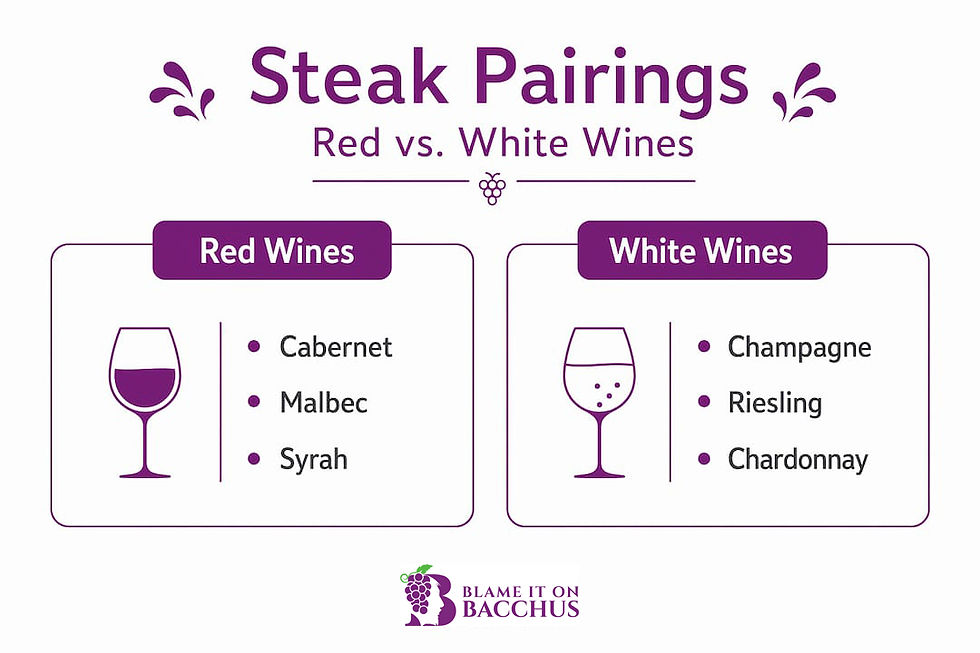
Yes. High-acid white wines like dry Riesling or even Champagne can refresh the palate between bites of fatty beef, functioning similarly to the tannins in a classic red wine pairing.
Why does my wine taste flat next to my food?
A flat-tasting wine usually means the food is more acidic than the wine. The dish makes the wine seem dull by comparison. Try switching to a wine with noticeably higher acidity to match the food’s brightness.
How do I learn more about wine pairing?
Start by understanding the five structural elements: acidity, tannin, body, sweetness, and flavor intensity. From there, online wine education courses, wine knowledge classes, and hands-on tasting practice will sharpen your instincts fast.
Recommended
Comments