Practice Wine Tasting Order Tonight: 4 Ready Lineups for Beginners

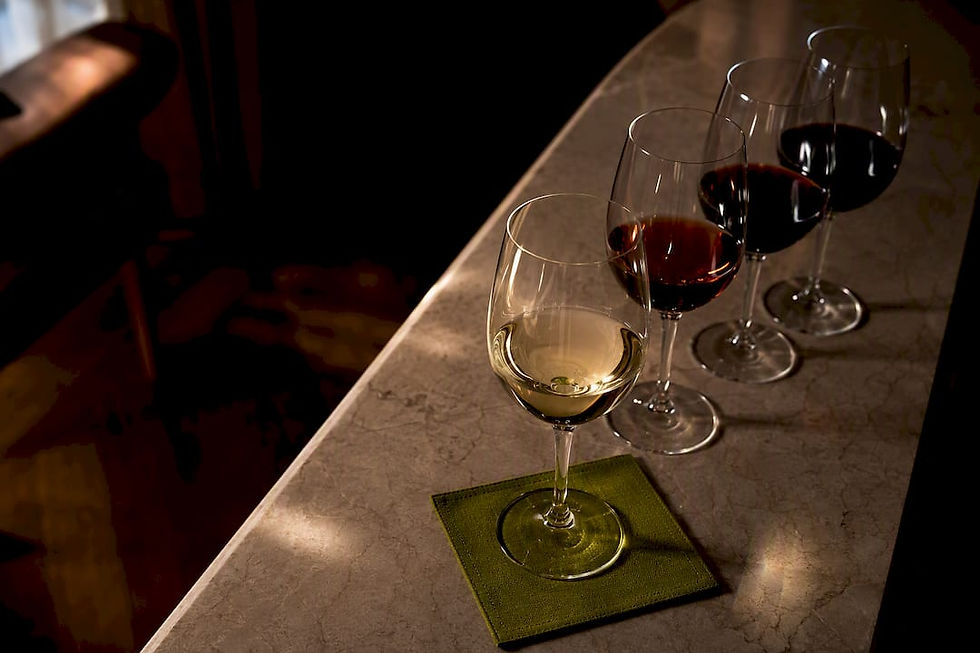
For most tastings, the winning lineup generally runs sparkling first, then light whites, fuller whites, rosé, light reds, followed by bold reds, and finally dessert or fortified wines. Two core rules hold the sequence together: dry before sweet, and light before heavy. Exceptions exist, so keep water and crackers nearby to reset your palate along the way.
TL;DR:
Starting with sparkling wine is essential because its bubbles and aroma fade quickly, making early tasting the best option.
Light, dry whites like Sauvignon Blanc and Riesling taste best early, as high acidity resets the palate for more complex wines.
Save the boldest reds and fortified wines for last, since their tannins and sweetness can overwhelm lighter wines if tasted earlier.
Always use water and plain crackers to cleanse your palate between wines, avoiding oily or salty snacks that can distort flavors.
Break the standard order for short flights, blind tastings, or when tasting old vintages to better suit specific situations.
Table of Contents
What’s the Best Wine Tasting Order for Most Flights?
Here’s your cheat sheet, straight from how sommeliers actually build a lineup. Follow it top to bottom, and you’ll rarely go wrong.
Sparkling wine. Bubbles fade fast, so grab them while the mousse is lively and the aromas are still popping. Wait too long and you’re just drinking flat wine with extra steps.
Light, crisp whites (Pinot Grigio, Vinho Verde, unoaked Sauvignon Blanc). These wake up your palate without overwhelming it.
Fuller-bodied whites (oaked Chardonnay, Viognier). More weight, more richness, more oak-driven flavor.
Rosé. It’s the bridge wine, more structure than a light white, less tannin than a red.
Light-bodied reds (Pinot Noir, Gamay, Beaujolais). Soft tannins, bright acidity, easy on the palate.
Medium to full-bodied reds (Merlot, Cabernet Sauvignon, Syrah, Malbec). Save your biggest, boldest reds for here.
Fortified and dessert wines (Port, Sauternes, late-harvest Riesling). Sugar and alcohol both coat the tongue, so they go dead last.
A few placement notes that trip people up:
Off-dry whites like Riesling or Gewürtztraminer typically slot in right after dry whites, before moving into reds.
High-acid wines (Albariño, Chablis) actually taste great early since acid resets your palate almost like a mini cleanse.
Only got three to five wines? Compress the list: sparkling or lightest white first, your boldest red or dessert wine last, and let everything else fall in the middle by weight.
That’s the full flight-building framework the Napa Valley Wine Academy teaches, and it works whether you’re tasting five wines or fifteen.
Why Does Tasting Order Actually Matter?
It’s not wine snobbery. It’s straight-up sensory science, and once you understand it, you’ll never need to memorize a rule again.
Sugar coats your tongue. Taste something sweet first and every dry wine after it tastes stripped, sour, even harsh. That’s why the Oxford Companion to Wine has long codified dry before sweet as the backbone of any serious tasting order.
Tannins behave the same way, just with texture instead of taste. A big, grippy Cabernet will flatten a delicate Pinot Noir tasted right after it, because tannin lingers on your gums and tongue for minutes, not seconds. That’s the light-before-heavy rule in action.
Sparkling wine is a timing issue more than a sensory one. Once you pop the cork, the clock starts ticking on the mousse (that fine, persistent bubble texture) and the volatile aromas that make Champagne smell like Champagne. Taste it soon after opening, before the fizz fades.
Young versus old is trickier. General wisdom suggests tasting young wines before old ones, since older bottles tend to be more delicate and complex. An exception exists: some vintage Ports and producers running vertical tastings prefer chronological order instead, oldest to newest, to demonstrate wine evolution. As a practical guideline, if comparing vintages of the same wine, go chronological; if comparing different wines, go young to old.

What Are Some Ready-to-Use Wine Tasting Lineups?
Copying a template beats overthinking it every time. Here are four you can use tonight.
Six-wine mixed flight: Prosecco → Sauvignon Blanc → oaked Chardonnay → dry rosé → Pinot Noir → Cabernet Sauvignon. This hits every major style category without exhausting your palate.
Whites-only lineup: Unoaked Chardonnay → Vinho Verde → Riesling (off-dry) → Viognier → aged white Burgundy. Acid and body climb steadily; sweetness stays contained to the middle.
Reds-only lineup: Gamay → Pinot Noir → Merlot → Malbec → Cabernet Sauvignon → Zinfandel. Tannin and alcohol both build toward the end.
Same-grape vertical across regions: taste a cooler-climate Pinot Noir (say, Oregon) before a warmer-climate example (say, California), since cooler climates generally produce lighter wines that get steamrolled if tasted last.
Adapting on the fly? Ask three quick questions: which wine is driest, which is lightest, and which has the least alcohol. Whatever wins all three questions goes first. For a deeper walkthrough on setting up flights at home, Blame It On Bacchus’s guide to conducting wine flights covers glassware, pour sizes, and pacing.
How Do You Reset Your Palate Between Pours?
Plain water is your best friend here. Unsalted crackers or a plain piece of white bread work too, they absorb residual flavor without adding their own. Skip anything oily, salty, or heavily flavored (cheese plates, olives, spicy snacks) until after the formal tasting, since fat and salt both scramble your taste buds for the next pour.

Keep pours small, an ounce or two is plenty, so you’re not overloading your palate before you’ve even reached wine four. Sniff before you sip every single time; your nose catches nuances your tongue never will.
Quick reset checklist between wines:
Sip water, swish gently, swallow.
Wait about 30 seconds before the next pour.
Jot a one-word note (fruity, tart, tannic) while the impression is fresh.
Pro Tip: Rinse your glass with a splash of the next wine before pouring your full sample. It clears out lingering residue from the last pour and gives you a cleaner read.
When Should You Break the Wine Tasting Order Rules?
Rules are a starting point, not a cage. Break them when it makes sense.
Short flights (three wines or fewer): palate fatigue barely factors in, so starting with a red you’re most excited about is fine.
Blind tastings or judging panels: rotate the pour order for each taster to cancel out primacy and position bias, where whatever’s tasted first or last gets rated more favorably regardless of quality.
Very old bottles: taste delicate, decades-old reds before younger, more powerful ones, since age has already softened their structure.
Fortified wines in a themed tasting: if the whole flight is Port or Sherry, order by sweetness and alcohol strength rather than forcing them to the end.
How Blame It On Bacchus Helps You Practice Tasting Order
Reading about tasting order gets you halfway there. Actually tasting wine, in the right sequence, with guided feedback, is what builds real palate memory.
Blame It On Bacchus’s Elements of Wine course walks beginners through structured tasting exercises, so the sparkling to fortified progression becomes second nature instead of something you have to look up every time. Pair that with the blog’s flight-building guide for hosting your own at-home lineup.
What you get | Why it helps |
Guided tasting lessons | Builds palate memory faster than trial and error |
Practical flight templates | Removes the guesswork from hosting |
Beginner-friendly pacing | No wine snobbery, just clear steps |
Do Food Pairings Change Wine Tasting Order?
Food changes the math. A pure tasting (wine only, no food) follows the sparkling to fortified sequence pretty rigidly, because nothing’s competing for your palate’s attention. Add courses, and you’re now sequencing wine around the meal, not the other way around.
Light apps like oysters or a salad call for something crisp and acidic, think Sauvignon Blanc or Champagne, served first regardless of where it’d normally fall in a standalone tasting. Rich mains (steak, braised short ribs) demand your boldest reds arrive right when that course does, even if a lighter wine hasn’t technically had its turn yet. Dessert courses are the one spot where the standalone rule and the food-pairing rule actually agree: sweet wine goes last, full stop, because nothing tastes good after a Sauternes except more Sauternes.
The fix is simple: build your wine order around the meal’s arc first, then slot in the dry-before-sweet and light-before-heavy logic wherever the food allows it. A hospitality-focused approach to sequencing courses treats wine and food as one continuous experience rather than two separate timelines, which is exactly the mindset worth borrowing for a dinner party. If you’re hosting and want the wine list to actually make sense with your menu, match acid to acid (a squeeze of lemon on fish, a bright white in the glass) and match weight to weight (a hearty ragu, a full-bodied red) before you worry about anything else.
How Does Culture Shape Wine Tasting Order?
American tastings, the kind taught in most beginner classes, tend to follow the structured light-to-heavy, dry-to-sweet template pretty closely. It’s methodical, almost academic, which makes sense given how much of it traces back to formal sommelier training.
European traditions vary more by region than most guides admit. French service, especially in Burgundy and Bordeaux, often leans into vertical tastings by vintage rather than strict style progression, since showing how a single producer’s wine evolves matters more than a textbook sequence. Italian tastings frequently start with a lighter red rather than a white altogether, since so much of the everyday drinking culture there revolves around red wine with food from the first course onward.
Sherry service in Spain flips the fortified-last rule on its head. Dry Fino and Manzanilla are often poured first, as aperitifs, with sweeter styles like Pedro Ximénez reserved for dessert, so the dry-before-sweet rule still holds even though fortified wine isn’t universally treated as a “last pour” category.
None of this means the standard sequence is wrong. It means the standard sequence is a default, not a law, and regional habits often encode their own internal logic that’s just as sound.
The Order Matters Less Than Actually Practicing It
Here’s what the research keeps pointing back to: the rules are simple, dry before sweet, light before heavy, sparkling early, fortified late, but simple isn’t the same as automatic. You still have to build the habit of thinking about order before you pour.
Where conventional advice falls short is treating the sequence like scripture. Decanter’s own guidance admits experienced tasters break the rules constantly, tasting red first, circling back to a fresh white to cleanse the mouth. The framework is a strong default, not a law carved in stone.
What I’d tell any beginner is this: master the light-to-heavy, dry-to-sweet logic first, because it’ll serve you in 90% of tastings you’ll ever attend. Then start noticing when it doesn’t apply, an old vintage, a themed Sherry flight, a meal that demands its own wine order. That’s the difference between memorizing a rule and actually understanding wine.
— Thomas
Sources
The core rules and exceptions here draw from Decanter’s tasting order guidance, the Oxford Companion to Wine, and Napa Valley Wine Academy’s tasting steps. For more beginner-friendly reading, browse Blame It On Bacchus’s wine tasting guide.
Wine tasting order: Red, white or sparkling first? — Decanter
Order of Wines to be Served — Oxford Companion to Wine (Jancis Robinson excerpt)
How To Taste Wine: A Guide to Developing Your Wine Palate — Napa Valley Wine Academy
Shattering Wine Tasting Myths: Why Wine Tasting Order Matters, but Not How You Think — Innovinum
FAQ
What Are the Five Steps of Wine Tasting?
The five steps are see, swirl, sniff, sip, and savor, essentially the same framework taught by sommeliers to evaluate a wine’s appearance, aroma, and flavor systematically.
What Is the 75-85-95 Rule for Wine?
This isn’t a standard or widely documented wine tasting rule, and definitions of it vary depending on the source, so it’s best not to rely on it as an official guideline.
What Are the “Five S’s” of Wine Tasting?
They’re see, swirl, sniff, sip, and savor, essentially the same five-step tasting method broken into memorable single-word cues.
Should I Taste Sparkling Wine First or Last?
First, almost always. Sparkling wine loses its mousse and aromatic lift quickly after opening, so tasting it early captures it at its best.
What Should I Drink Between Wines to Cleanse My Palate?
Plain water and unsalted crackers or white bread work best. Skip oily, salty, or strongly flavored snacks, since they mask the flavors of the next wine you taste.
Recommended
Comments