7 Dessert and Wine Pairings You Can Pull Off Without a Sommelier


Here’s the rule we live by: match sweetness first. Your wine should taste at least as sweet as the dessert on your plate, or it will come across thin and sour. For go-to styles, we reach for late-harvest Riesling, Moscato d’Asti, demi-sec Champagne, Sauternes, Tokaji, Port, PX Sherry, or Madeira. Pour sweeter wines in small glasses and serve them just slightly chilled, not icy.
Table of Contents
1. Seven dessert and wine pairings we always come back to
You don’t need a sommelier certificate to get this right. You just need to know which bottle to grab for which treat, so here are seven combos we’d happily serve at any dinner party.
Strawberry shortcake calls for a demi-sec sparkling wine or Moscato d’Asti. The bubbles and acidity cut through the whipped cream while the gentle sweetness matches the berries instead of fighting them.
Peach cobbler or fruit cobblers pair beautifully with an off-dry or late-harvest Riesling. Riesling’s natural acidity keeps things lively, and its own stone-fruit character practically high-fives the dessert.
White chocolate or vanilla custard wants something rich right back at it, like demi-sec Champagne or a glass of Sauternes or Tokaji. Both bring honeyed, almost caramelized notes that make custard taste even more luxurious.
Lemon bars and other citrus desserts can turn a dry wine downright sour, so reach for late-harvest Riesling or a sweeter sparkling wine instead. You need enough sugar in the glass to stand up to all that pucker.
Carrot cake and spiced cakes do well with off-dry Riesling, but if you want something with more depth, try tawny Port. The nutty, caramel finish on tawny plays nicely with warm spices like cinnamon and nutmeg.
Chocolate mousse or ganache is where fortified wines shine. PX Sherry, aged tawny Port, or Madeira all bring roasted, dried-fruit flavors that echo chocolate’s own deep, slightly bitter edge, and Michelin’s sommelier guidance notes these fortified styles often outperform dry reds here because their sweetness and oxidative character match chocolate better than tannin ever could.
Apple pie and other baked fruit desserts land perfectly with late-harvest Riesling, Sauternes, or a medium-sweet Moscato. All three bring the acid-to-sugar ratio that baked apples practically beg for.
Chocolate lovers who want to go deeper on this exact combination can check out our chocolate pairing guide for more detail on which fortified styles work best with which cocoa percentages.
2. Why these pairings actually work on your tongue
There’s real science behind why a dry Cabernet tastes awful next to cheesecake, and once you get it, you’ll never second-guess a pairing again.
Sugar in food dulls sugar in wine. When you eat something sweet, your palate recalibrates, so a wine that tasted plenty sweet on its own can suddenly taste flat or even sour next to dessert. Galloway Culinary’s pairing guide puts it plainly: pair sweet foods with wines that are equal to or sweeter than the dish, or the wine ends up tasting thin and astringent.
Acidity is your palate’s reset button. A chilled, zippy wine slices through cream, butter, and custard, which is exactly why Champagne and Riesling show up so often on this list.
Match the weight, not just the sugar. A delicate fruit tart needs a lighter wine, while something as dense as chocolate ganache needs a fortified wine with real muscle behind it, as Michelin’s sommelier tips confirm when they pair Sauternes with crème brûlée and Port with chocolate.
Temperature changes what you taste. According to tasting notes from New Mexico State University’s extension program, chilling a wine down hard mutes its perceived sweetness and pushes acidity forward, while serving a very sweet botrytized wine just slightly chilled instead of ice-cold keeps its sweetness and aroma in better balance.
Pro Tip: Pour fortified and late-harvest wines in smaller portions, around 2 to 3 ounces, since their concentrated sweetness means a little goes a long way.
Perceived sweetness shifts with serving temperature, and NMSU’s wine tasting guide notes that very sweet, botrytized wines should be served only slightly chilled and in small pours to protect their aroma and balance.
Our guide to acidity in pairing breaks this down even further if you want to understand why acid matters just as much as sugar.
3. How to pick a dessert wine at the store
Standing in the wine aisle trying to decode a label can feel like reading another language, so here’s your cheat sheet for walking out with the right bottle.
Scan for sweetness cues on the label, like “late-harvest,” Spätlese or Auslese on German Riesling, Eiswein, Moscato, “demi-sec” on Champagne, Port or Tawny, and “PX” for sweet Sherry.
Ask a store employee to point you toward the dessert wine section, since many shops shelve these separately from everyday reds and whites.
Start with off-dry Riesling if you’re on a budget. It delivers real sweetness and acidity without the price tag of Sauternes or vintage Port.
Serve sparkling wines cold, fortified wines slightly cool, and late-harvest wines just below room temperature for the best balance of aroma and sweetness.
Pour smaller glasses for sweeter wines. A 2 to 3 ounce pour is plenty for anything in Port or PX territory.
Save splurges for special occasions. An off-dry Riesling under $20 covers weeknight dessert, while a half-bottle of Sauternes or a vintage Port makes a holiday table feel like an event.
Want the full rundown on sweetness terminology before you shop? Our guide to wine sweetness spells out exactly what those label terms mean.
4. Pairing wine with modern and unexpected desserts
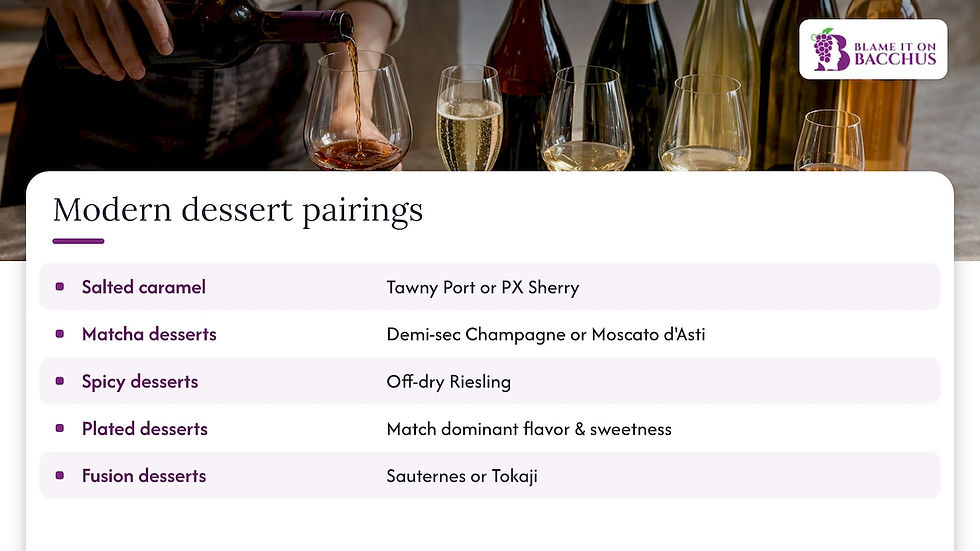
Not every dessert on your table fits neatly into the pie-and-cake category anymore, and that’s where things get fun. Salted caramel anything leans into the same logic as chocolate: reach for tawny Port or PX Sherry, since their caramelized, nutty notes mirror the caramel instead of clashing with it. Matcha desserts bring bitterness and a slightly vegetal edge, so a demi-sec Champagne or a lightly sweet Moscato d’Asti balances that without overwhelming the tea flavor.
Spicy desserts, think chili-chocolate or ginger-forward bakes, do well with something that has a touch of residual sugar to cool the heat, like an off-dry Riesling. Deconstructed or plated restaurant-style desserts with multiple components (a crumble, a sauce, a scoop of something cold) can be trickier, but the same rule still applies: find the dominant flavor and sweetness level on the plate and build your pairing around that, not every individual element.
Fusion desserts, like a miso caramel tart or a yuzu cheesecake, reward a wine with bright acidity to match the savory or citrus twist. Sauternes or Tokaji both bring that acid-sugar combination that handles complexity well. The short version: modern desserts don’t break the sweetness-and-intensity rule, they just ask you to think a little harder about which flavor is actually running the show.
5. Pairing wine with vegan and gluten-free desserts
Dietary restrictions change the dessert, but they don’t change the pairing logic. A vegan chocolate torte made with coconut cream or avocado still carries rich, dense chocolate flavor, so it pairs just as well with tawny Port or PX Sherry as a traditional ganache would. Gluten-free fruit crumbles, often made with almond or oat flour, keep the same bright fruit character as their wheat-based cousins, so late-harvest Riesling or a medium-sweet Moscato still does the job.

Where it gets trickier is wine itself. Most wine is naturally gluten-free, but not all wine is vegan, since some producers use animal-derived fining agents like gelatin or egg whites during production. If that matters to you or your guests, look for bottles labeled vegan-friendly or check with the producer directly, since labeling practices vary by winery. The dessert’s texture and sweetness still drive your choice far more than the dietary label does, so don’t overthink it: taste for richness and sugar level first, dietary needs second.
6. What I’ve learned pouring wine for dessert lovers
Rules get you started, but your own palate gets you the rest of the way. I’ve found that people second-guess themselves more with dessert wine than any other category, when really the only wrong move is pouring something drier than the dish.
Beyond the blog, we built Blame It On Bacchus around that same idea: learning wine should feel like a fun night with friends, not a test. Taste widely, trust your tongue, and let dessert be the easy part of the meal.
— Thomas
Practice your pairings with a guided class
Reading about pairings only gets you so far, so we built classes where you actually taste through the logic yourself. The Elements of Food and Wine Pairing walks you through exactly this kind of sweetness-and-intensity matching with real glasses in front of you, and our Guided Tasting and Private Classes bring that same hands-on practice to your own kitchen table with a group.

Ready to build real confidence with dessert wine? Here’s where to start:
Book The Elements of Food and Wine Pairing to practice pairing logic with instructor feedback.
Set up a Private Class or Guided Tasting for your next dinner party or celebration.
Gift a BIOB eGift Card to the dessert-and-wine lover in your life.
Pair your next tasting night with a little decor too. This wine-themed metal sign makes a fun addition to any home bar or tasting corner.
FAQ
Which wine is best for dessert?
There’s no single best wine for every dessert, since the right pick depends on the dish’s sweetness and weight. As a reliable starting point, late-harvest Riesling, Sauternes, and demi-sec Champagne cover most common desserts because they bring enough sweetness and acidity to match richer dishes.
What alcohol goes well with dessert?
Fortified wines like Port, PX Sherry, and Madeira are classic choices because their concentrated sweetness and caramelized flavors stand up to rich desserts like chocolate and spiced cake. Sparkling wines in demi-sec or doux styles also work well with lighter, fruit-based desserts.
What is a famous dessert wine?
Sauternes and Tokaji are two of the most recognized dessert wines, both made from botrytized grapes that concentrate sugar while keeping bright acidity intact. Port, from Portugal, is another widely known fortified dessert wine, especially paired with chocolate.
What kind of wine pairs well with sweet food?
A wine with sweetness equal to or higher than the dish works best, since sugar in food can make a wine taste thinner or more sour than it actually is. Styles like Moscato d’Asti, late-harvest Riesling, and demi-sec Champagne are reliable options for most sweet dishes.
Should wine be sweeter than the dessert it’s paired with?
Yes, wine should generally be at least as sweet as the dessert, since a drier wine will taste flat or sour next to a sugary dish. This is one of the most consistent rules in dessert wine pairing and applies across nearly every style.
Sources
Recommended
Comments