How to Pair Wine: Simple Strategies for Every Beginner

Updated: May 26

TL;DR:
Wine pairing is approachable with basic tools and understanding five main wine styles.
Pairing strategies include matching flavors (congruent) or balancing contrasts for enjoyable taste.
Trust your senses and experiment; traditional rules are flexible and personalized.
You’re standing in the wine aisle, dinner is almost ready, and you have absolutely no idea which bottle to grab. Sound familiar? Wine pairing can feel like a secret language only sommeliers speak. But here’s the thing: it doesn’t have to be complicated. I’m here to spill the beans on the simple strategies that make every meal taste better. Whether you’re hosting a dinner party or just treating yourself to a cozy night in, this guide walks you through everything you need to feel confident, have fun, and actually enjoy the process.
Table of Contents
Key Takeaways
Point | Details |
Start simple | Use versatile wines and basic charts for easy pairing success at home. |
Match or contrast | Pair by echoing similar flavors or balancing opposites for harmony. |
Avoid classic mistakes | Steer clear of high-tannin reds with fish and always pick a sweeter wine for dessert. |
Trust your taste | Personal enjoyment matters more than tradition—experiment and have fun. |
Essential tools and groundwork for wine pairing
With the big picture in mind, let’s cover what you’ll need before you start pairing. Think of this as your starter kit. You don’t need a fancy cellar or a wine degree. Just a few basics and a little vocabulary go a long way.
The tools you actually need:
A reliable wine opener (a simple waiter’s corkscrew works great)
Two or three glass styles: one for reds, one for whites, one for sparkling
A wine basics guide or reference chart to keep handy
Next, get familiar with the five main wine styles. Reds are bold and warming. Whites are crisp and refreshing. Rosé sits playfully in between. Sparkling wines are festive and versatile. Dessert wines are sweet and rich, built for the final course.
Now for a little vocabulary. Don’t worry, I’ll keep it painless. Tannins are the grippy, drying sensation you feel in a bold red. Acidity is that bright, mouth-watering zing. Body refers to how light or heavy the wine feels in your mouth. Sweetness is pretty self-explanatory! These essential wine terms are your foundation for making smart pairing decisions.
Pro Tip: Reds don’t always need to be room temperature. A slight chill (about 15 minutes in the fridge) actually makes lighter reds taste fresher. And sparkling wine? That’s always a good idea, no matter the occasion.
Beginner-friendly pairings use charts and versatile wines to take the guesswork out of the process. Here’s a quick reference table to get you started:
Wine style | Flavor profile | Classic food match |
Cabernet Sauvignon | Bold, tannic, dark fruit | Grilled steak, lamb |
Sauvignon Blanc | Crisp, citrusy, herbaceous | Salads, seafood, goat cheese |
Pinot Noir | Light, silky, red fruit | Salmon, mushrooms, charcuterie |
Champagne/Prosecco | Bubbly, crisp, toasty | Fried foods, oysters, celebrations |
Riesling | Floral, sweet to dry, high acid | Spicy dishes, Asian cuisine |
Rosé | Fruity, fresh, versatile | Picnic foods, light pasta, grilled veggies |
Keep this table on your phone. Seriously. It’s your cheat sheet for the grocery store.
The step-by-step method: How to pair wine with food
Once you know the basics and have your tools, here’s how to put everything into action with each meal. This is where the fun really starts.
Step 1: Decide your focus. Are you starting with a wine you love and building a meal around it? Or do you have a dish in mind and need to find its perfect partner? Either works!
Step 2: Identify the main flavor elements. Think about what’s on the plate. Is it salty, fatty, acidic, sweet, umami-rich (think soy sauce or mushrooms), or spicy? Each of these flavors interacts differently with wine.

Step 3: Choose your pairing strategy. There are two main pairing strategies: congruent (where similar flavors echo and amplify each other) and contrasting (where opposites balance each other out). A creamy pasta with a buttery Chardonnay? That’s congruent. A salty blue cheese with a sweet Sauternes? That’s contrasting. Both are delicious.
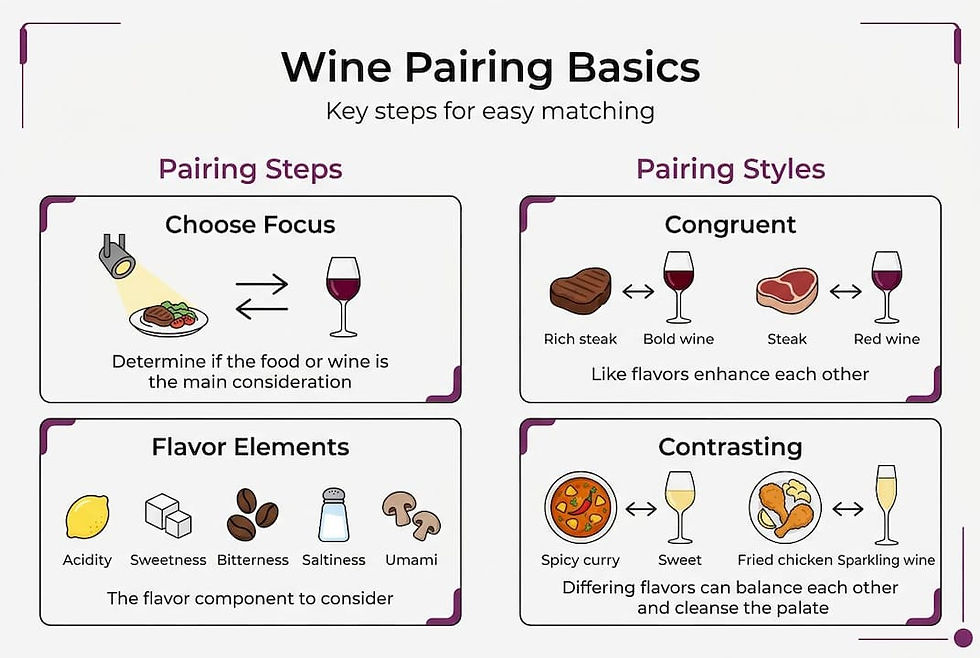
Step 4: Match weight and intensity. A delicate sole fillet needs a light white, not a powerhouse Cabernet. Think of it like dance partners: they should move at the same pace.
Step 5: Test and tweak. Take a sip of wine, then a bite of food, then another sip. Does the wine taste better? Does the food taste brighter? That’s the magic. If something feels off, adjust. Try a squeeze of lemon, a pinch of salt, or swap the glass.
For a quick overview, here’s how the two strategies compare:
Approach | How it works | Example |
Congruent | Similar flavors enhance each other | Buttery Chardonnay with creamy risotto |
Contrasting | Opposites create balance | Sweet Riesling with spicy Thai curry |
For a deeper look at this process, check out this step-by-step pairing breakdown. And if you want to get your wine balance tips dialed in, that’s a great next read.
Pro Tip: What grows together goes together. Regional pairings are a brilliant shortcut. Italian Chianti with pasta, Spanish Albariño with tapas, French Burgundy with coq au vin. The locals figured it out centuries ago!
Troubleshooting common pairing mistakes
Now, to keep your pairings enjoyable, it’s essential to recognize and solve classic rookie errors. Everyone makes them. Here’s how to dodge the most common ones.
The biggest pairing pitfalls:
Tannins with oily fish: Bold reds like Cabernet can taste metallic and bitter next to salmon or sardines. Go lighter or go white.
Wine not sweet enough for dessert: If your wine is drier than your dessert, it’ll taste flat and sour. The wine should always be at least as sweet as the dish.
High-alcohol wines with spicy food: This is a spicy disaster waiting to happen. High-alcohol wines amplify spice, turning a pleasant heat into a five-alarm fire. Reach for a low-alcohol, slightly sweet option instead.
Edge cases trip people up too. Umami-rich foods like soy sauce, mushrooms, and aged cheeses can make tannic wines taste harsh and metallic. The fix? Reach for wines with higher acidity and lower tannins, like Pinot Noir or a crisp white.
Spicy dishes are another tricky zone. Most people reach for a big bold red, but that actually makes the heat worse. A chilled, slightly sweet Riesling is your best friend here.
The most common wine fail? Picking a dry wine for a sweet dessert. The fix is simple: always go sweeter than the dish. A late-harvest Riesling or a Moscato d’Asti saves the day every time.
For more help navigating the world of wine, the wine basics resources section has you covered. And if you’re curious about one of the most iconic pairings out there, the guide to best steak pairings is a seriously fun read.
How to verify and enjoy your pairing
After avoiding common mistakes, here’s how to enjoy and troubleshoot your pairings for best results. This is the part where you actually get to relax and taste.
When a pairing works, you’ll know it. The wine feels lifted, brighter, more interesting. The food tastes richer or more vibrant. It’s like the two are having a conversation, and you’re lucky enough to be listening. When a pairing clashes, the wine might taste harsh, flat, or weirdly bitter. That’s useful feedback, not a failure.
Here’s a simple checklist to run through with every pairing:
Does the wine taste better with the food than without it?
Does the food taste more flavorful after a sip of wine?
Is neither element overpowering the other?
Do you feel like reaching for more of both?
If you said yes to most of those, you nailed it. If something feels off, try adjusting on the fly. A squeeze of lemon can boost acidity and make a wine feel more at home. A pinch of salt can soften harsh tannins. A glass of sparkling wine can cut through rich, fatty dishes like a charm.
Science backs up what your taste buds already know. Odorant synergies in wine can genuinely enhance enjoyment, and there are no absolute benchmarks for what’s “correct.” Your palate is the only judge that matters. Understanding your aroma basics can help you tune into those subtleties even more. And if you want to go deeper, learning about wine blend techniques adds another fun layer to your tasting experience.
The bottom line: trust your senses. Experiment freely. There is no single right answer, only what delights you.
Why conventional wine pairing advice misses the point
With these practical tools, it’s important to remember what really matters in wine pairing. And honestly? I think a lot of traditional advice gets it wrong.
“Red with meat, white with fish” is a fine starting point, but it barely scratches the surface of how we actually eat today. We’re mixing cuisines, layering flavors, and building plates that don’t fit neatly into old-school categories. A light Pinot Noir with grilled salmon? Genuinely wonderful. A bold Viognier with a lamb chop? Absolutely works.
The contrast between classical and modern pairing shows that rigid rules have given way to more flexible, personal approaches. And I think that’s a good thing. Real-world pairing fun comes from experimenting, not from memorizing a rulebook.
Try the oddball combinations. Sparkling wine with fried chicken is a revelation. Sweet Riesling with a spicy taco night is life-changing. Your wine confidence grows every time you trust your own taste buds over someone else’s rules.
“The best pairing is the one you enjoy most.”
Keep that as your north star, and you’ll never go wrong.
Discover more wine wisdom and essentials
Ready to explore wine further? Here’s where you can go next for deeper understanding and enjoyment.
If today’s guide got you excited, you’re going to love what’s waiting for you over at Blame It On Bacchus. There are fun, beginner-friendly online wine classes designed to make you feel confident and genuinely knowledgeable, without any of the stuffy wine-snob energy.
Want a hands-on way to test your new skills? The Elements of Wine course is a fantastic place to start. It’s engaging, practical, and genuinely fun. And if you’re shopping for the wine lover in your life (or treating yourself, no judgment), there’s a whole collection of wine-themed merchandise that makes the perfect gift. Wine knowledge and great style? Yes, please.
Frequently asked questions
What is the best wine to start with for pairing?
Versatile wines like Pinot Noir or Sauvignon Blanc are reliable starting points because they complement a wide variety of foods without overwhelming the palate.
How do I know if my food and wine match?
If flavors feel balanced and neither element overpowers the other, you have a good match. No absolute benchmarks exist, so personal enjoyment is always the best guide.
Can I serve red wine with fish?
Yes, but avoid tannic reds with oily fish since they can taste metallic. Opt for a lighter red like Pinot Noir served slightly chilled instead.
What wine goes best with spicy food?
Low-alcohol, sweet wines like Riesling are your best bet because they cool the heat and create a satisfying balance on the palate.
Recommended
Comments