Low Acid Wines for U.S. Shoppers: Moscato to Merlot, Easier on Reflux

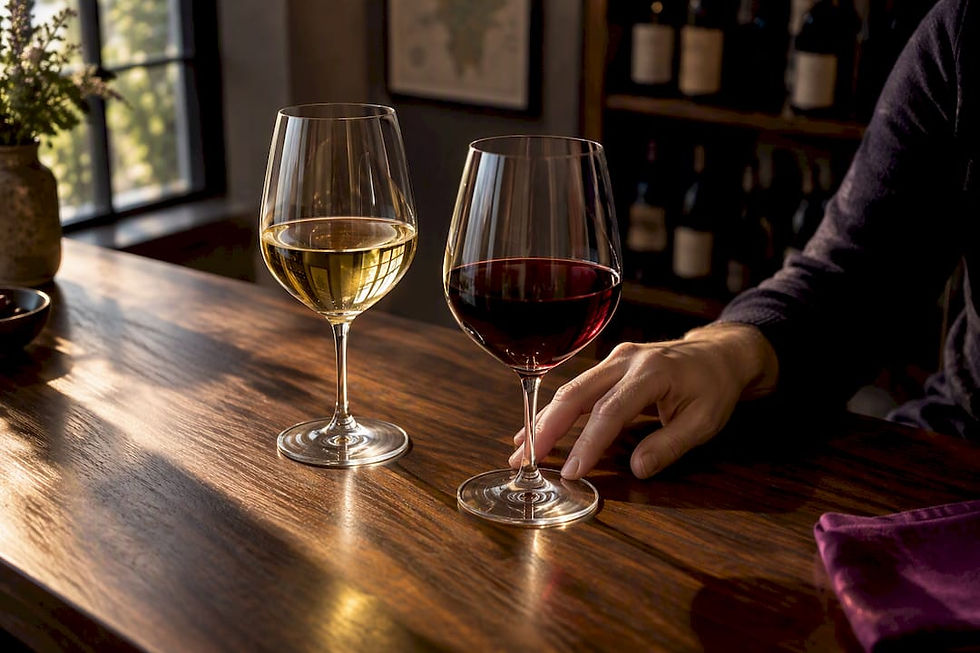
If your stomach flinches at the word “Sauvignon Blanc,” your go-to whites are Gewürztraminer, Viognier, Moscato, and warm-climate oaked Chardonnay, and your go-to reds are Merlot, Grenache, Malbec, and Zinfandel. The rule of thumb: warm climate plus oak or malolactic fermentation plus a fuller body equals a softer, rounder glass. One catch worth knowing upfront, though: alcohol itself can trigger reflux no matter how gentle the acid is.
Table of Contents
What Are Low Acid Wines, and Which Whites Should You Try First?
“Low acid wines” isn’t an official wine category. It’s shorthand for bottles that taste rounder and gentler than the average glass, thanks to grape variety, climate, and cellar technique working together. On the white side, a handful of styles show up again and again as safe bets for sensitive palates or sensitive stomachs.
Gewürztraminer: Aromatic, often slightly off-dry, with lychee and rose petal notes that distract you from any sharp edge. It’s naturally softer on acid than most whites.
Viognier: Full-bodied with stone-fruit and honeysuckle character. Warmer examples, especially from California or the Rhône Valley, lean particularly plush.
Moscato, especially Moscato d’Asti: Low in both acid and alcohol, with a light fizz and grape sweetness that makes it one of the gentlest pours around.
Warm-climate or oaked Chardonnay: Buttery texture from malolactic fermentation and a creamy mouthfeel from oak aging soften what can otherwise be a crisp grape.
Roussanne, Marsanne, and Fiano: Less famous, but worth a try if you want texture over tang. They tend toward waxy, orchard-fruit richness rather than citrus zing.
Consumer wine guides consistently point to these same low-acidity whites as reliable picks for anyone who wants flavor without the pucker.
What Are Low Acid Wines Among Reds, and Which Ones Deliver?
Reds have a natural advantage here, since tannin and body already soften the perception of tartness. But a few varieties go further, delivering that plush, low-acid feel you’re after.
Merlot: Plummy and plush, and widely available. Warm-climate bottling from California or Washington are the gentlest of the bunch.
Grenache (Garnacha): Juicy, high-alcohol, and famously easy on acid. Southern Rhône blends and Spanish Garnacha from Calatayud or Campo de Borja are classic examples.
Malbec: Argentine Malbec, especially from Mendoza, ripens under intense sun and comes out round with dark fruit and minimal bite.
Zinfandel: California Zin runs riper and boozier than most reds, and that extra ripeness translates to softer acidity on the palate.
Dolcetto and Mourvèdre: Both are approachable, medium-bodied options if you want variety beyond the big four.
If you’re building a short list for a dinner party or just restocking your rack, these five names cover almost every situation where a sharp red would clash.
How Wine Acidity Actually Works
Two different numbers describe acidity, and mixing them up causes most of the confusion around “low acid” wine. pH measures hydrogen ion concentration and mostly affects a wine’s stability and color, not how sour it tastes to you. Titratable acidity (TA) measures the total acid content and correlates more closely with the sharp, tart sensation on your tongue. A wine can have a moderate pH and still taste zippy if its TA runs high, which is why enology guidance from Washington State University treats the two as separate, equally important measurements.
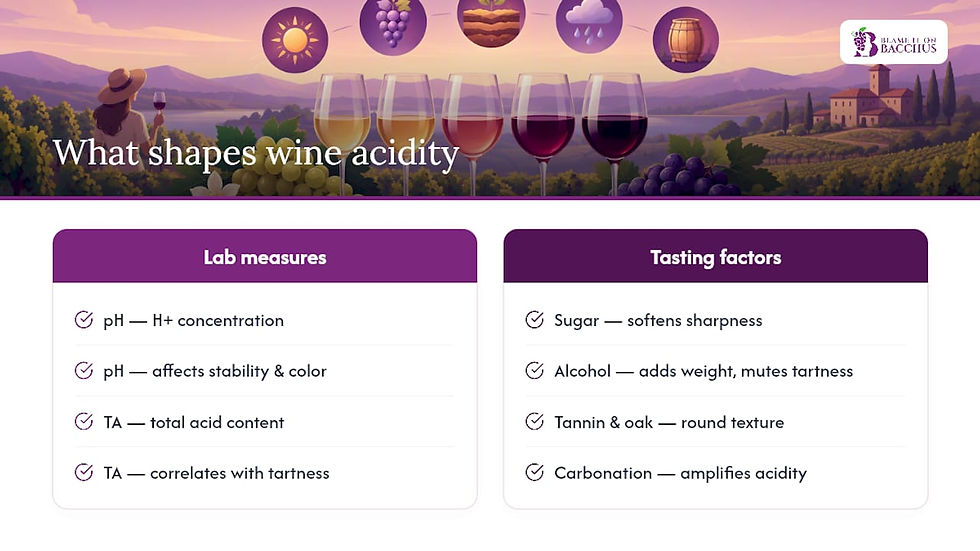
What you actually taste, though, is “perceived acidity,” and it’s shaped by more than the acid itself. Sugar softens sharpness, which is part of why off-dry Gewürztraminer feels gentler than a bone-dry Riesling with similar chemistry. Alcohol adds weight and can mask tartness. Tannin and oak both round out texture, and carbonation does the opposite: it amplifies the sensation of acidity even when the actual pH is unremarkable. That’s why a bone-dry sparkling wine can taste far zestier than a still wine with nearly identical lab numbers. Our beginner’s guide to wine acidity breaks this down further if you want the full picture.
How to Spot a Low-Acid Wine Before You Buy It
You don’t need a lab to find a softer bottle. A quick tasting and label check gets you most of the way there.
Check the mouthfeel first. Swirl, sip, and notice whether the wine feels round and coating or sharp and mouth-watering. Round wins if you’re after low acid.
Watch the finish. A short, warm finish usually signals lower acid; a long, zippy, saliva-inducing finish usually means the opposite.
Read the fruit profile. Ripe stone fruit, dried fruit, or jammy notes point to lower acid. Citrus, green apple, or mineral notes point to higher acid.
Look for oak and butter cues. Terms like “barrel fermented,” “oaked,” or “buttery” on the label almost always mean a softer wine.
Note the alcohol percentage. Riper grapes mean higher alcohol and usually lower acid, so a 14.5% ABV bottle will often feel gentler than a 12% one from the same variety.
At the store or online, search filters like “smooth” or “round” can steer you fast, and asking staff which bottle is their “easy drinking” pick almost always lands you somewhere in this territory.
Pro Tip: Buy a single bottle before committing to a case. Acidity varies by vintage and producer even within the same variety, so last year’s soft Malbec might be this year’s brighter one.

Why Some Wines End Up Lower in Acid
Three forces decide where a wine lands on the acid spectrum: where the grapes grew, how the winemaker handled fermentation, and what happens in the cellar afterward.
Grapes ripening in warmer regions convert malic acid into sugar as they hang longer on the vine, which is why research on climate and grape acidity shows warmer-region fruit consistently arrives at harvest with lower total acidity and higher pH than fruit grown in cooler climates. That single fact explains most of the pattern you’ve noticed: Argentine Malbec versus French Malbec, California Chardonnay versus Chablis.
The cellar adds a second layer. Malolactic fermentation (MLF) converts sharp malic acid into softer lactic acid using bacteria, mainly Oenococcus oeni, and it’s standard practice for most red wines and many oaked Chardonnays, which is a major reason those wines taste rounder than their unfermented chemistry would suggest, according to Oregon State University Extension. Winemakers can also blend, age in oak, or use approved deacidification agents like potassium bicarbonate when a vintage runs too tart, though the WSU guidance notes these techniques demand careful control since they can throw off a wine’s balance if overused. MLF strain choice and timing even influence whether you pick up a buttery, popcorn-like diacetyl aroma, a trade-off winemakers weigh deliberately. Our fermentation explainer covers the mechanics in more depth.
What Should You Drink If You Have Acid Reflux?
Choosing a low-acid wine helps with taste, but it isn’t the whole story if you deal with GERD. Alcohol itself relaxes the lower esophageal sphincter, the muscle that’s supposed to keep stomach contents where they belong, and clinical guidance from StatPearls on GERD lists alcohol among the lifestyle triggers doctors commonly recommend avoiding for symptomatic patients. In other words, a low-acid Merlot can still set off reflux even though its pH is friendlier than a Sauvignon Blanc’s.
If you’re going to drink anyway, a few adjustments lower your risk:
Choose lower-alcohol, low-acid styles like Moscato d’Asti over high-proof reds or sparkling wine.
Skip anything carbonated, since bubbles aggravate reflux independent of acidity.
Always drink with food rather than on an empty stomach.
Keep the pour modest and sip slowly instead of finishing a full glass quickly.
Stay upright for at least a couple of hours afterward rather than lying down.
Diet plays a role too. A review of GERD and functional foods found that fiber-rich, low-fat meals paired with avoiding known trigger foods reduces reflux frequency, so pairing your wine with a light, low-fat dish beats reaching for something rich and greasy. If symptoms are frequent or severe, that’s a conversation for your doctor, not a wine list.
Your Step-by-Step Guide to Picking a Low-Acid Bottle
Standing in a wine aisle with no plan is how you end up with something that fights your stomach for the rest of the night. Follow this sequence instead.
Pick your category first. Decide between a warm-climate red like Merlot or Malbec and an aromatic, slightly sweet white like Gewürztraminer or Moscato. This narrows dozens of options down to a handful.
Read the label like a detective. Look for warm regions (Mendoza, Barossa, Central Valley), terms like “barrel fermented” or “oak aged,” and a higher alcohol percentage, all of which point toward a softer wine.
Cross-check with tasting notes. Words like “round,” “plush,” “buttery,” or “ripe” on a shelf tag or website description confirm you’re in low-acid territory. Words like “crisp,” “zesty,” or “bright” mean keep looking.
Ask before you commit to a case. Staff at a good wine shop taste through their inventory regularly and can point you straight to their gentlest bottles.
Test one bottle first. Even within a “safe” variety, vintage and producer style shift things. Confirm you like it before buying six.
Our climate explainer is a good next stop if you want to understand why region matters as much as grape variety when you’re shopping.
Why Trust This Guide, and How to Learn Tasting Acidity for Yourself
Everything above comes from real enology and clinical research, not guesswork, including extension guidance from Oregon State and Washington State, and gastroenterology literature from the NCBI Bookshelf. But reading about acidity only gets you so far. Recognizing it in your glass is a skill, and it’s one you build fast with a little guided practice.
That’s the gap Blameitonbacchus was built to close. If you want a deeper dive into pairing acid with food, our pairing guide for beginners is a solid companion piece to everything covered here.
A Quick Word on Trusting Your Own Palate
Charts and rules of thumb get you in the right neighborhood, but your own mouth is the final judge. I’d rather see you buy two bottles, one Grenache and one crisp Albariño, and taste the difference yourself than memorize a list. If you want that experiment guided instead of solo, a hands-on tasting session shortcuts the learning curve considerably.
— Thomas
Ready to Taste the Difference for Yourself?
Reading about malic acid and malolactic fermentation only gets you so far. The fastest way to actually recognize a low-acid wine in your glass, rather than just on paper, is guided practice with someone pointing out what to notice. The Elements of Tasting walk total beginners through exactly that: how to read mouthfeel, finish, and fruit character so you can spot a round, gentle wine before you’ve even swallowed. If you’d rather work through this one-on-one or with friends, our Guided Tasting private sessions let you bring your own bottles, including a stack of the Merlots and Viogniers mentioned above, and get real-time feedback on what you’re tasting. Either way, you’ll leave knowing how to shop for a softer pour without guessing. Browse the full course lineup and pick the format that fits your schedule.
This article is general information, not a substitute for advice from a qualified doctor. Consult a qualified healthcare professional about your own circumstances before acting on anything here.
Sources
Simultaneous malolactic fermentation: Is it the right option for your wine? | OSU Extension Service
Managing High Acidity in Grape Must and Wine | Washington State University
Gastroesophageal Reflux Disease (GERD) - StatPearls - NCBI Bookshelf
Climate and varietal effects on grape berry acidity — Frontiers in Plant Science
Functional Food in Relation to Gastroesophageal Reflux Disease (GERD) - PMC
FAQ
What Wine Has the Least Acid?
Moscato, especially Moscato d’Asti, is generally considered one of the least acidic wines on the market, followed closely by Gewürztraminer and warm-climate Grenache. Among reds, ripe Merlot and Grenache from warm growing regions consistently rank as the gentlest options.
What Wine Is OK for Acid Reflux?
No wine is guaranteed safe for reflux, since alcohol itself relaxes the lower esophageal sphincter regardless of a wine’s acidity, according to clinical GERD guidance. If you choose to drink, a low-ABV, low-acid style like Moscato d’Asti taken with food and in moderation carries less risk than a high-alcohol, high-acid wine on an empty stomach.
How Can I Neutralize the Acidity in My Wine?
You can’t safely neutralize acidity in a finished bottle at home. Additives like baking soda throw off the wine’s chemical balance and ruin flavor, so the reliable approach is choosing a naturally low-acid style from the start rather than trying to fix a bottle after opening it.
What Wine Is Easy on the Stomach?
Fuller-bodied, warm-climate reds like Merlot and Malbec, and off-dry whites like Gewürztraminer or Moscato, tend to sit easier on sensitive stomachs than crisp, high-acid options like Sauvignon Blanc or Champagne. Pairing any wine with food and drinking slowly also reduces stomach discomfort regardless of the variety.
Recommended
Comments