4–6 Bottles: Minimalist Wine Tasting Setup for Hosts

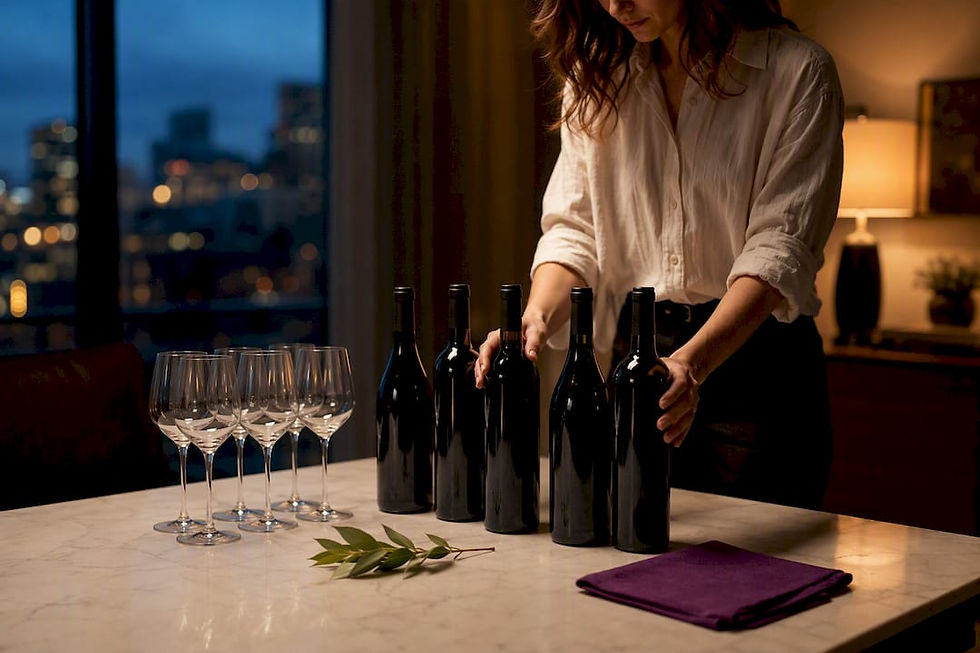
A minimalist wine tasting setup means 4 to 6 themed bottles, one universal glass per guest (or a single glass rinsed between pours), a white surface for checking color, water and plain crackers, and a 90 to 120 minute flow. That’s it. No decanters, no cellar, no fuss. It’s stylish, cheap to pull off, and forgiving enough for total beginners to host with confidence.
Table of Contents
Minimalist Wine Tasting Supplies: What to Buy and What to Skip
You don’t need a wine closet full of gadgets. You need a short list of tools that pull real weight, and the discipline to leave the rest at the store.
Here’s the essentials list for a genuinely simple wine tasting setup:
4 to 6 bottles on one clear theme (a grape, a region, a price point)
Glasses: universal or ISO-style stems, one per guest, or one glass per person rinsed between pours
Tasting mats or simple note cards
An opaque spit bucket or a discreet dump pitcher
A water pitcher and plain, unsalted crackers
A corkscrew (a decent waiter’s-style one, not the fancy electric kind)
Masking tape and a marker for bottle labels
Skip the rest for now. A decanter, a flight board, a wine thermometer, or preservation gear like a WineKeeper tasting station only earn their spot once you’re hosting regularly or pouring wines that need to stay open across multiple days. For a first tasting or two, they’re just clutter competing with the wine for attention.
Pro Tip: Buy your glasses before anything else on this list. Everything else is replaceable with something from the kitchen drawer, but a bad glass genuinely mutes what you smell and taste.
Why Universal or ISO-Style Glassware Wins for Minimal Setups
One glass shape can carry an entire tasting, and that’s the whole point of going minimal. The ISO 3591 tasting glass is the tulip-shaped stem used in formal wine exams because it concentrates aroma into a narrow opening without favoring any single grape variety. It’s also dishwasher-safe and inexpensive, which matters when you’re washing six of them after a Tuesday night tasting.
For the U.S. market, a few practical options cover the full range:
Budget and durable: the International Tableware 3.25 oz sampler glass, built for small, precise pours at commercial tasting events
Mid-range and elegant: an ISO-style stem from any glassware brand, which mimics exam conditions at a fraction of the cost
Premium universal: the L’Exploreur® 655 Aroma Line, designed to open up aroma across reds, whites, and everything between
Varietal-specific, if you want it: a RIEDEL Performance tasting set shows how shape shifts perception, though a single universal glass is typically enough for a minimalist crowd
One glass per guest is the cleanest option if you have six matching stems sitting around. If you don’t, a quick rinse and a splash swirl between wines works fine for a casual group.
Setting Up a Room That Makes the Wine the Star
Your table setup does more heavy lifting than any decor budget could. A plain white surface, or even a stack of white paper placed under each glass, lets guests actually see the color and clarity of what’s in the glass. That single detail matters more than any centerpiece you could buy.

Daylight-balanced lighting beats candlelight every time here. Warm, yellow bulbs distort how a wine looks, so a daylight LED lamp near the tasting area corrects for that without needing to redecorate.
A few more room rules that cost nothing:
Skip scented candles, fresh flowers, or anything with a strong smell competing with the glass
Keep music low or off during the actual tasting portion
Seat guests around a round table so everyone can lean in, compare colors side by side, and talk
Stage one simple focal piece, a wood tray or a single vase, instead of a full tablescape
A round table for 4 to 6 guests keeps the conversation circular instead of split down a long rectangle. That’s the whole trick to feeling intimate without trying hard.
How Many Wines, How Big a Pour, and How Long

Four to six bottles on one theme is the sweet spot most experienced hosts land on, according to practical home tasting frameworks. Pour around 2 ounces (50 to 60 ml) per glass, plan roughly 10 to 15 minutes per wine, and you land at a comfortable 90 to 120 minutes total. A tighter theme also produces better conversation than a scattered lineup of unrelated bottles, since guests can actually compare instead of just reacting.
A simple pouring order and script:
Pour lightest to heaviest, whites before reds, dry before sweet
For each wine: look at the color, give it one or two swirls, take a short smell, then a small sip
Let guests jot one line before moving to the next pour
Reveal the bottle after everyone has tasted, or go fully open if blind tasting feels like too much for a first event
Adjust pacing if the group is small (2 to 3 people move faster) or if anyone joins virtually and needs an extra minute to catch up on pours
Pro Tip: Take reds out of the fridge about 30 minutes before pouring, and keep whites in an ice bucket instead of the freezer. Both moves protect the aromatics without needing a temperature-controlled cellar.
The 5 S’s, Simplified for a Casual Crowd
You don’t need a wine certification to run guests through a real tasting method. A condensed version of the classic 5 S’s works fine for a living room crowd:
See: hold the glass over the white surface and check color and clarity
Swirl: one or two gentle turns, no need to be dramatic about it
Smell: one short inhale, first impression only
Sip: a small taste, rolled briefly across the tongue
Savor: one quick note on how the finish lingers
Skip elaborate scoring sheets. Ask guests for a simple buy or skip verdict instead of a number, since that’s the decision they’ll actually use later at the store.
Keeping the Palate Fresh Without Overthinking It
An opaque spit bucket for every 2 to 3 guests keeps things comfortable, and normalizing spitting early removes any awkwardness around it. Nobody wants to be the only person swallowing every pour by the fourth wine.
Set out still water and plain crackers, and save flavorful snacks for after the tasting wraps — check out these visual food plating ideas for simple styling inspiration
Watch for palate fatigue: flattened flavors, less interest in swirling, guests reaching for water more often
If fatigue hits early, shorten the remaining pours or take a five-minute break rather than pushing through the full lineup
Your Copy-Paste Day-Of Checklist and Timeline
Set out the essentials 30 to 45 minutes before guests arrive: glasses, opened bottles (whites chilling, reds resting), water, crackers, spit bucket, and labeled tasting mats. Budget 45 to 90 minutes for prep, 90 to 120 minutes for the actual tasting, and 15 to 30 minutes to wrap and chat.
Item | Quantity | Notes |
Wine bottles | 4 to 6 | One theme, lightest to heaviest |
Tasting glasses | 1 per guest | Universal or ISO-style |
Water pitcher | 1 | Refill between pours |
Plain crackers | 1 small tray | Nothing flavored yet |
Spit bucket | 1 per 2 to 3 guests | Keep it opaque |
Tasting mats | 1 per guest | Simple buy/skip notes |
Label bottles with masking tape and a marker if you’re doing a partial blind format, and lay the mats in pour order so nobody loses track of which glass is which.
Why This Minimal Method Actually Teaches Something
Blame It On Bacchus has built its beginner classes around the same idea running through this whole setup: less gear, more attention on the glass. Our beginner’s guide to enjoying wine and our party ideas roundup both lean on the same 4 to 6 bottle structure recommended here, because it’s the format that keeps beginners engaged instead of overwhelmed.
Three things hold up every time. A tight, themed flight beats a scattered one for actual learning. And pacing, not palate sophistication, is what separates a tasting that stays fun from one that fizzles out by wine number four.
Keep the Vibe Light, Not a Lecture
Hosting isn’t about proving you know terroir. Teach a little, then step back and let people talk. Taste preference is personal, so treat every “I don’t get it” as a discovery moment, not a wrong answer. The best minimalist tastings feel like a hangout that happens to have really good wine in it.
— Thomas
Want a Pro to Run the Tasting Instead?
DIY minimalism gets you most of the way there, but sometimes you want someone else steering the glass. Blame It On Bacchus offers Guided Tasting sessions where an instructor walks your group through the pours live, and The Elements of Tasting course teaches the fundamentals behind everything covered here, from swirl technique to structured note taking, for a flat 50 dollar one-off fee.

Both options complement the setup above rather than replace it. You still keep your minimal table, your universal glasses, and your 4 to 6 bottle flight. You just get a guide in your corner who can answer the “wait, why does this one taste different” questions in real time. Check available dates for Guided Tasting or browse The Elements of Tasting and other courses to book your next step.
Sources
FAQ
What Is the 5 S’s for Wine Tasting?
The 5 S’s are See, Swirl, Smell, Sip, and Savor, a simple sequence for evaluating any glass of wine. See the color against a white background, swirl once or twice, take a short smell, taste with a small sip, then note how the finish lingers.
How Do I Set Up a Wine Tasting at Home?
Pick 4 to 6 bottles on one theme, set out one universal or ISO-style glass per guest, and place everything on a white surface under daylight-balanced light. Add water, plain crackers, and a spit bucket, then plan for a 90 to 120 minute flow with about 10 to 15 minutes per wine.
What Is the 80/20 Rule for Wine?
It’s the reason the swirl and smell steps matter as much as the sip itself.
What Is the 75-85-95 Rule for Wine?
This isn’t a standard, widely recognized wine framework, so definitions vary depending on where you encounter it. Rather than guess at a specific numeric rule, focus on the tested basics covered above: themed flights, proper glassware, and paced pours.
Do I Need Expensive Glasses for a Minimalist Tasting?
No. A basic ISO-style or universal glass, like the International Tableware sampler, handles aroma concentration just as well as pricier options for most home tastings. Save the premium sets for once you’re hosting often enough to justify the upgrade.
Recommended
Comments