Wine Harvest Season: When It Happens and Why It Moves


Here’s the short answer. Wine harvest season runs roughly from August through October in the Northern Hemisphere and from February through April in the Southern Hemisphere, according to the Orange County Wine Society’s harvest timing primer. But “roughly” is doing a lot of work in that sentence. Grape varieties, weather, region and the style of wine a producer wants all push the picking date around, sometimes by weeks.
I’m going to walk you through the calendar, the reasons it wobbles, how winemakers decide the exact day, and what a harvest morning actually looks like. No viticulture degree required. Grab a glass and let’s get this wine party started.
Table of Contents
When Is Wine Harvest Season?
Think of it as two seasons, one for each half of the planet. Because the hemispheres have opposite summers, someone is always bringing in grapes somewhere.
Hemisphere | Typical harvest window | Where you’ll see it |
Northern | August to October | France, Italy, Spain, Germany, California, Oregon |
Southern | February to April | Australia, New Zealand, Chile, Argentina, South Africa |
The Grape Grower’s Handbook describes the same pattern: August, September and October are prime time for most wineries in Europe and North America, while Australia, New Zealand, South America and South Africa typically pick from February to April. It also notes that both hemispheres often stretch past the edges of those windows depending on the growing season and the vintage.
So if you’ve ever wondered why a winery in Mendoza is busy in March while a winery in Napa is quiet, now you know. They’re on opposite schedules.
Pro tip: If someone says “harvest is in September,” ask “where?” and “what grape?” Those two questions decide almost everything.
Where the Grapes Start Counting Down: Veraison
Harvest doesn’t start with scissors. It starts weeks earlier with a color change. Veraison (say it “ver-ay-ZON”) is the moment green, hard berries begin turning into the grapes you’d recognize, red ones darkening and white ones softening and turning golden.
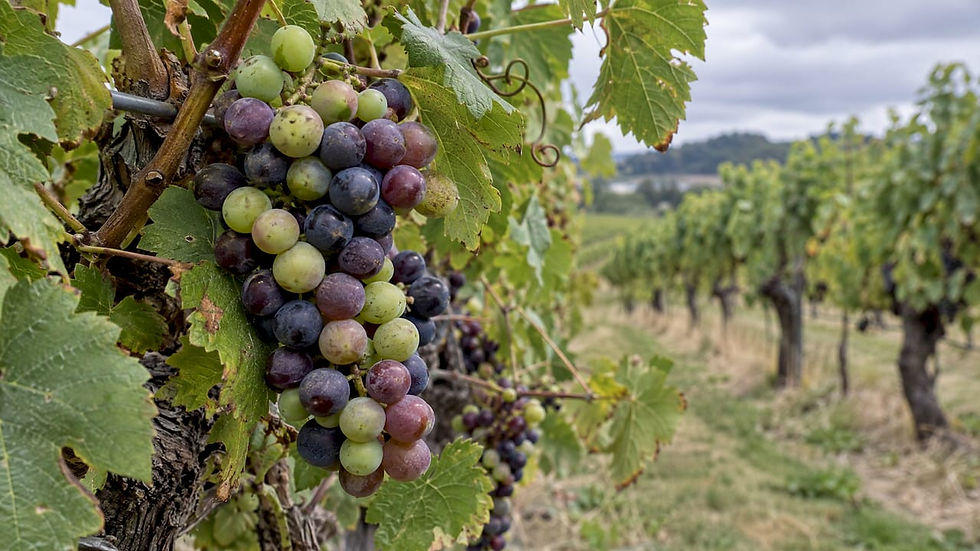
Wine Spectator’s harvest primer explains that veraison usually lands in July or August in the Northern Hemisphere and January or February in the Southern. Ripening after veraison then runs about 30 to 70 days, depending on the variety, the region and the style of wine being made.
That range, 30 to 70 days, is the first clue that there’s no single harvest date. A grape that ripens fast and one that takes its sweet time can sit in the same vineyard and be picked weeks apart.
Why Harvest Dates Move Around
Grape variety
Some grapes are early birds and others are fashionably late. Wine Spectator points out that Tempranillo’s name comes from the Spanish word for “early,” while Petit Verdot ripens long after other varieties are already fermenting in tanks.
Research backs this up in a more numerical way. A 2023 paper in OENO One by Cornelis van Leeuwen found that the slowest-ripening variety in its classification, Colombard, ripens at about half the speed of the quickest, Grenache. In other words, one needs twice the heat after veraison to reach a similar sugar-to-acid balance.
Want to know how different grapes taste once they’re in the bottle? Our guide to grape varietals is a good next stop.
Climate and weather
Hot places ripen fast. Cool places take longer. Wine Spectator notes that cooler climates like Germany have longer ripening cycles, while hot ones like California’s Central Valley have shorter ones.
Weather in a given year matters just as much as the region’s climate overall. The University of Maryland Extension’s guide to assessing winegrape maturity explains that rain, day and night temperatures and sunlight, along with canopy growth and crop load, shape the fruit’s quality, so pH, acidity, sugar and varietal character can vary considerably from one growing season to the next.
The van Leeuwen paper puts a number on the swing: harvest dates can span more than 30 days for a single wine region depending on the vintage’s climate, the vineyard’s microclimate, the grape and the soil. That’s why “vintage” on a label is more than a number. It’s a weather report.
If you want the bigger picture, we break it down in The Role of Climate in Wine, Explained Simply.
The wine style a producer is chasing
This one surprises people. “Ripe” isn’t one fixed target. The Australian Wine Research Institute explains in its guide to defining berry ripeness that the definition of maturity depends on the intended wine style. Some dry white styles want grapes at their peak aromatic punch with fairly high acidity, which can mean picking early. Red grapes in hot climates may also need an earlier pick, because sugar can hit its sweet spot before the other components are where a winemaker wants them.
So two producers with the same grape in the same valley can pick on different days and both be right. They’re just making different wines.
A warming planet
Picking dates are creeping earlier. Maurizio Broggi, writing for Westgarth Wines, reports that climate change has pushed picking earlier in most wine regions, now by around ten days to two weeks on average. He gives an example from traditionally cool Champagne, where the hot, dry summer of 2022 brought an unusually early start in August instead of the more common early September.
How Winemakers Decide the Exact Day
Nobody throws a dart at a calendar. Winemakers and the people tending the vines sample the fruit and watch numbers. The AWRI’s paper on timing of harvest says the best moment is when the fruit’s sugar, acid, color, flavor and aroma are optimal for the wine style wanted, usually worked out by regular sampling and testing in the weeks leading up to harvest.
Here are the main things they check:
Sugar (Brix). A refractometer measures sugar in degrees Brix. The Orange County Wine Society says typical readings at harvest land between 21 and 25 °Bx, and that higher Brix means higher potential alcohol in the finished wine.
Acidity. Acid keeps wine fresh and lively. Too little and the wine goes flabby. Not sure what acidity does for you as a drinker? Read What Is Wine Acidity?
pH. A companion measure of acidity that matters for the wine’s balance and stability.
Tannin and flavor. For reds especially, winemakers taste the grapes, skins and seeds. Our explainer on tannin in wine shows why this matters in your glass.
Why do warm and cool regions behave so differently here? The Orange County Wine Society notes that warmer climates such as California reach higher Brix, while cooler European climates may struggle to reach minimum ripeness. Same job, different challenge.
Curious how that sugar reading works in practice? We have a walkthrough on using a wine refractometer to go from Brix to ABV.
The AWRI paper adds a nice nuance: vineyards are not uniform. Variation happens season to season and also vine to vine, bunch to bunch and even berry to berry, thanks to soil, crop load, vine size and sun exposure. Acidity and anthocyanin (the pigment) levels are much more variable than sugar or pH, though the differences shrink as ripening advances. That’s why careful sampling matters, and why a single reading isn’t the whole story.
What Happens on a Harvest Day
Once the numbers line up, things move fast. The Orange County Wine Society says the harvest itself is done quickly, usually during cool evenings or early mornings so heat doesn’t kick off fermentation early, either by hand or by mechanical harvester.
A crush day described by EnjoyClarksburg looks like this: grapes are often picked overnight, with some vintners starting Chenin Blanc around 5 a.m. By mid-morning the bins are weighed and a sample is checked for Brix. White and sparkling grapes go straight to the press. Reds get destemmed and sent to fermenters, where they soak on their skins. For vineyard and cellar crews, that adds up to six to eight weeks of near-nonstop work.
So the next time a winemaker looks tired in September, give them a break. They’ve earned it.
Hand picking vs. machines
There are two ways to get the fruit off the vine.
By hand. Gentler, and it lets pickers choose only the ripest, cleanest bunches.
By machine. Harvesters shake the vines so ripe berries fall onto conveyors. Fast, good for large blocks, but it can damage grapes and pull in leaves, which is a worry for delicate whites.
EnjoyClarksburg says many wineries hand-harvest premium lots and fragile varieties and save machines for big blocks of sturdy grapes. The Wine History Project of San Luis Obispo County adds that mechanical picking has only been around since the 1960s, mostly on larger or hillside properties, and that harvest can mean anywhere from a week to over a month of hard labor. In France, by the way, it’s called la vendange.
Harvest Around the World
The two big windows hide a lot of local personality. Here’s a sampler, using the regions from the Wine Investment grapevine lifecycle guide and the Orange County Wine Society.
Region | When grapes typically come in |
Bordeaux and Burgundy, France | September |
Champagne, France | Slightly later cycle because of the cooler climate, with bud break in April |
California, USA | Late August to early November, depending on the variety |
Mendoza, Argentina | March to April |
Central Valley, Chile | March to April |
Barossa and Yarra Valleys, Australia | March to April |
Western Cape, South Africa | March to April |
You’ll also notice that vineyard location within a country counts. Wine Investment points out that coastal areas can have milder winters and earlier springs than inland ones, which shifts everything down the line.
The Weird Ones: Early and Very Late Harvests
Not every pick follows the rules, and the exceptions are fun.
Sparkling wine grapes go early. Wikipedia’s harvest entry notes that California sparkling wine grapes can be picked in late July to early August, a touch underripe on purpose to keep the acidity bright.
Riesling can wait. In cooler regions, mid-to-late ripeners like Riesling may be picked in November in the Northern Hemisphere and May in the Southern, according to Westgarth Wines.
Ice wine is the extreme sport of harvests. Westgarth Wines says frozen grapes for German Eiswein can hang on the vine as late as December or even February of the following year. Wikipedia adds that ice-wine grapes in Germany, Austria, the US and Canada may be picked as late as January.
Down south, the calendar stretches too. Per Wikipedia, harvest can start as early as January 1 in warmer parts of New South Wales, Australia, while cool-climate Central Otago in New Zealand picks late-harvest grapes in June. That’s why you can say, with a straight face, that harvest happens in every month of the year somewhere.

What Harvest Means for the Wine in Your Glass
Here’s where it gets personal. Picking day sets the wine’s DNA: how much sugar became alcohol, how zippy the acidity is, how grippy the tannins feel. The University of Maryland Extension says timing and conditions produce a specific set of fruit quality parameters that influence the wine. The Wine Investment guide echoes that precise timing affects sugar, acid and tannin levels, and so the wine’s character.
That’s a useful trick when you’re tasting. A cool, late-ripening year often points toward livelier acidity, while a hot year can lean riper and richer. When a bottle tastes balanced, there’s a good chance somebody nailed the harvest date. Our piece on wine balance shows you how to spot it.
And it’s one more reason older vintages are fascinating to compare. If you’re curious, see Understanding Wine Aging.
Turn Harvest Season Into Your Own Tasting Project
You don’t have to live in wine country to join in. Harvest season is a handy excuse to taste with purpose. Try this:
Pick a pair of vintages. Same grape, same producer if you can, two different years. Notice how acidity and body differ.
Taste across hemispheres. A Chilean Cabernet and a California Cabernet come from opposite calendars. Compare them.
Compare an early grape with a late one. Think Tempranillo next to a slow ripener, and see what the climate and timing did.
Write down three words per wine. Juicy, zippy, grippy. Whatever fits. Your own notes beat any chart.
New to the whole tasting thing? Start with our wine grapes for beginners overview, which explains the flavors you’re likely to find, and how grapes shape wine flavor.
Learn the Rest of the Story With Our Online Classes
Harvest is chapter one of how a bottle gets to your table. If you’d like the rest explained in a fun, no-snobbery way, our online classes are built for beginners. The Elements of Wine is $75 one-off, and The Elements of Tasting is $50 one-off. When you’re ready to go region by region, the Passport classes cover France, Italy, Spain, Germany, California and Australia at $125 each.

Want a class just for your friends or team? We also offer private classes, including guided tastings, food and wine pairing and custom classes. And if there’s a wine lover in your life who deserves a gift, our eGift card and wine-themed merchandise are waiting.
Our Take on Harvest Season
We think harvest season is the best argument for learning wine as a story rather than a vocabulary list. Every bottle holds a handful of decisions made over a few frantic weeks: when to pick, how to pick, how ripe is ripe. Once you know that, words like acidity, tannin and vintage stop being jargon and start being clues. You taste a wine and you can guess how the year went. That’s the way we teach. Our classes are made for beginners, with humor and a wallet-friendly price, because we believe nobody should feel intimidated by a wine list. Start with The Elements of Wine for the foundations, add The Elements of Tasting to sharpen your palate, and pick a Passport when you want to dive into a specific region. If you’d like something tailored for a group, our custom classes are there for that. Harvest happens every year somewhere in the world. Your curiosity can do the same. Thomas
FAQ
What is the harvest season for grapes?
In the Northern Hemisphere, most grapes come in between August and October. In the Southern Hemisphere, it’s mostly February through April. The exact timing depends on the grape, the region and the weather that year.
Does harvest happen in every month of the year?
Somewhere, yes. Warm spots like parts of New South Wales in Australia can begin picking in January, while ice-wine grapes in places like Germany and Canada can hang on until January or later. Cool-climate Central Otago in New Zealand picks late-harvest grapes in June.
How do winemakers know when grapes are ready?
They sample and test the fruit regularly in the weeks before picking, checking sugar (Brix), acidity, pH, color, tannin and flavor. Typical sugar readings at harvest are between 21 and 25 °Bx. The target depends on the wine style they want to make.
Why are grapes often picked at night or at dawn?
Cool temperatures protect the fruit. Picking in cool evenings or early mornings keeps heat from encouraging early fermentation before the grapes reach the winery.
Is harvest getting earlier?
According to Westgarth Wines, picking has moved earlier in most wine regions, now by about ten days to two weeks on average. Warmer growing seasons speed ripening, so winemakers are watching the vines closely each year.
Sources
Wine Education 101: Harvest Timing (Orange County Wine Society)
An operational model for capturing grape ripening dynamics (OENO One)
How to Assess Winegrape Maturity and Make Harvest Decisions (University of Maryland Extension)
Wine Harvest Season: Timing and Tips for Success (EnjoyClarksburg)
It’s Harvest Time (Wine History Project of San Luis Obispo County)
Recommended
Comments