Pack These 5 Palate Cleansers for Wine Tasting, Classroom Tested


The best palate cleansers for wine tasting are still water, sparkling water, plain unsalted crackers, plain white bread, and cool slices of cucumber or green apple. Staying hydrated throughout the tasting matters more than any single snack. Sip water between every pour, nibble something bland if your mouth feels coated, and you’ll taste each wine clearly. More on how and when to use each option is coming up.
Table of Contents
The Palate Cleansers for Wine Tasting Worth Keeping on Hand
Not every snack on the table deserves a spot next to your wine glass. Here’s what actually resets your taste buds without picking a fight with the wine itself.
Still mineral water. This is your workhorse. It rehydrates a mouth that alcohol has been quietly drying out, and it rinses away lingering flavor without adding any of its own. Skip anything heavily mineralized or chlorinated tap water, both of which can leave a faint taste behind.
Sparkling water. Think of the bubbles as tiny scrub brushes. Carbonation breaks up the oily residues and tannin buildup that cling to your gums and tongue, which makes it especially handy after a bold red or an oily, buttery white.
Plain unsalted crackers or plain white bread. These act like little sponges. Dry starch soaks up sugar, acid, and leftover oils sitting on your palate, which is why tasting critics keep coming back to bread as a go-to option.
Cucumber and green apple. Cool, crisp, and mostly water, these give you hydration plus a whisper of mild acidity that doesn’t compete with what’s in your glass.
Specialist options for the curious. Steamed white rice, a small bite of mild fresh goat cheese, or (in rare cases) a sip of milk can work too, though milk is a special case we’ll get to shortly.
What you want to avoid is just as important as what you reach for. Salty pretzels, oily cheese boards, anything smoked or spicy, and scented lip balm will all fight with the wine and throw off what you’re tasting.
Pro Tip: Keep your cleanser lineup boring on purpose. The moment something tastes interesting on its own, it stops being a cleanser and starts being a competitor.
Why These Cleansers Work: The Science Behind the Sip
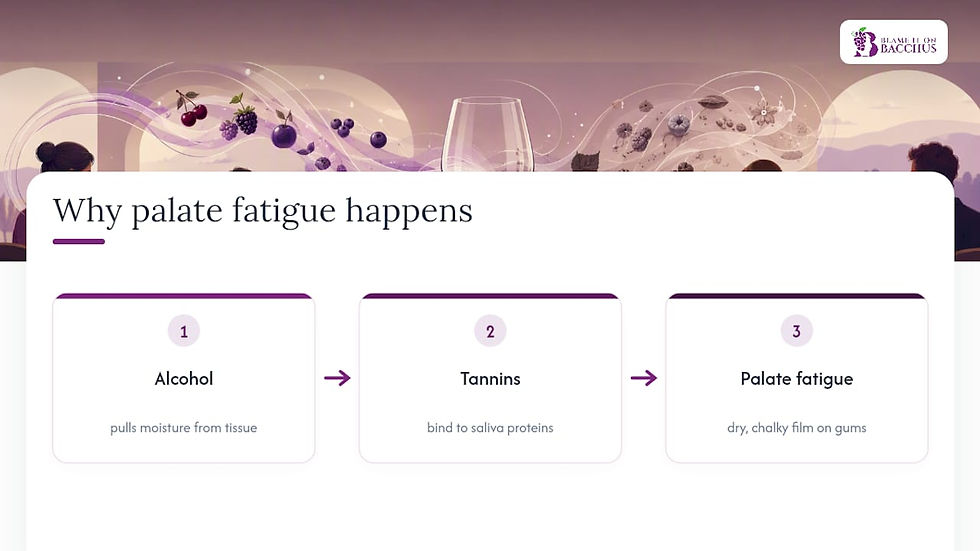
Wine dries your mouth out because alcohol pulls moisture from your oral tissue. That’s the first half of what causes “palate fatigue,” and it’s why experts push hydration so hard during tastings. The second half comes from tannins, the compounds in red wine (and some whites) that bind to proteins in your saliva. That binding creates the dry, chalky, film-like feeling on your gums after a big Cabernet.
Bread and crackers solve this differently than sparkling water does. Starch physically absorbs the sugars and acids sitting on your tongue, while carbonation works more like a rinse, dislodging residue rather than soaking it up. Neither approach is universally “better.” Individual palates vary, and what clears one taster’s mouth completely might leave another still sensing a faint film.
There’s one outlier worth knowing about. A controlled saliva study measured milk’s effect on wine residue and found it was the only cleanser tested that measurably reduced polyphenols in saliva and lowered perceived astringency compared to plain water or carbonated water.
Milk outperformed both water and sparkling water at reducing measurable astringency in a lab setting, a finding that hints at why dairy fat and protein interact differently with tannin than plain rinsing does.
That’s a real result, not a suggestion to start pouring milk next to your wine glasses at your next tasting.
Matching Your Cleanser to the Wine You’re Drinking
Different wine structures leave behind different residue, so your cleanser should shift with what’s in the glass.
Tannic reds (Cabernet, Nebbiolo, Syrah): room-temperature still mineral water paired with plain bread or crackers works best. Cold water can numb your palate right when you need it sharp.
Acidic whites (Sauvignon Blanc, Riesling): chilled sparkling water or crisp apple slices cut through the tang without adding more acidity on top of what you already tasted.
Sparkling wines: stick with still water and cucumber. Adding more carbonation between two sparkling pours just muddies your sense of each wine’s own bubble structure.
Light rosé and orange wines: still water and neutral crackers keep things simple, since these wines rarely leave heavy residue behind.
If you’re moving from a big, tannic red into something lighter, don’t just wipe your mouth and pour. Use a two-step reset: water first, then a bland bite of bread or crackers, then pause for a few seconds before you taste again. Jumping straight from a bold Zinfandel into a delicate Pinot Grigio without that pause is how good wines end up tasting flat.
How to Cleanse Your Palate Between Wines: Timing and Technique
Getting the timing right matters as much as picking the right cleanser. Here’s the sequence that works at both formal tastings and your kitchen table.
Taste, then wait a beat. Let the finish of the wine actually register before you reach for anything.
Sip water first, always. A small mouthful is enough. This isn’t a competition to see how much you can drink.
Add a bland bite only if needed. A single small cracker or a thin slice of bread is plenty. Overeating between pours fills you up and dulls your attention long before the tasting is over.
Swig and spit at formal tastings. If you’re working through more than five or six wines, spitting keeps your judgment sharp. At a relaxed dinner tasting, swallowing small sips is fine.
Taste light to heavy. Structure your lineup from lighter whites toward bigger reds, resting and rehydrating between each shift in intensity.
Pro Tip: Maintain hydration by aiming to drink a full glass of water regularly throughout your tasting, about once every few wines. It sounds excessive until you notice how much sharper your palate feels by wine number six.
Your Palate-Cleanser Packing List for Any Tasting
Whether you’re heading to a public tasting room or setting up a table at home, the same short list covers you.
Small bottles of still mineral water
A can or small bottle of sparkling water
A sleeve of unsalted crackers or a thin baguette, sliced
Cucumber or apple, sliced right before you leave
Napkins and a cup or small spittoon
Optional additions include steamed white rice or a small wedge of mild goat cheese if you want to experiment. One more thing worth planning around: skip your morning coffee, strong mint toothpaste, and any perfume or cologne before you go. All three linger longer than you’d expect and dull your ability to pick up subtle aromas.
Item | Why It Matters |
Still water | Hydrates and rinses without adding flavor |
Sparkling water | Scrubs tannin and oily residue |
Unsalted crackers or bread | Absorbs sugar, acid, and oils |
Cucumber or apple | Cools and hydrates with mild acidity |
Napkins and a cup | Keeps hands and glass clean between pours |
What the Research Actually Says About Palate Prep
Training bodies frame palate prep in two parts: avoid strong flavors and scents beforehand, then use neutral cleansers during the tasting itself. WSET’s own guidance leans heavily on plain bread for exactly this reason, and it lines up with what most working sommeliers already tell their students.
The goal isn’t finding one perfect cleanser. It’s building a habit of hydrating often enough that your palate never gets the chance to fatigue in the first place.
The milk finding from earlier is a genuine lab result, worth knowing, but not a green light to pour dairy at your next tasting. Milk isn’t flavor neutral, and its texture coats the mouth in a way that can throw off a casual taster far more than it helps.
A Classroom Note on Teaching This
I start every beginner class the same way: water and crackers first, no exceptions. Once students taste the difference, I bring out cucumber and apple and let them compare side by side. Try the two-step reset yourself between a big red and a lighter white, and pay attention to what changes. That contrast, more than any lecture, is what makes tannin and astringency finally click for people. If you want a structured version of that exercise, our beginner’s plan for building your palate walks through it step by step.
— Thomas
Ready to Practice These Skills With Real Wine in Your Glass
Reading about palate cleansers gets you halfway there. Actually tasting a tannic red next to a crisp white, with someone walking you through why your mouth reacts the way it does, is what makes the technique stick. Blameitonbacchus built The Elements of Tasting for exactly this reason: a beginner-friendly online class where you practice tasting order, palate resets, and structure comparisons in real time, without needing to already know what “astringent” means.

If you’d rather practice with friends than a screen, our private guided tastings let a small group work through the same techniques together, with someone there to answer the “wait, why does this wine feel dry?” questions as they come up. Book a guided tasting or grab a spot in an upcoming class, and the next time someone hands you a heavy Cabernet followed by a delicate Pinot Grigio, you’ll already know exactly what to reach for.
Sources
FAQ
How Do You Cleanse Your Palate When Drinking Wine?
Sip room-temperature still water between pours and eat a small bite of plain bread or unsalted crackers if your mouth feels coated. Carbonated water works well too, especially after a tannic red, since the bubbles help break up residue that plain water can leave behind.
What’s a Good Palate Cleanser for Whiskey Tasting?
Plain water and unsalted crackers work for whiskey the same way they do for wine, resetting your mouth without adding competing flavor. Some tasters also use a small bite of plain bread between pours, since whiskey’s higher alcohol content dries the palate even faster than wine does.
How Do You Get Rid of Wine Taste in Your Mouth?
Rinse with still or sparkling water first, then eat something bland like a cracker or a slice of cucumber to absorb any leftover residue. Avoid mints, gum, or strongly flavored snacks right after, since they mask the taste rather than actually clearing it.
What Is the 20 Minute Wine Rule?
This isn’t a formally documented tasting standard, and definitions vary depending on who you ask. Most versions refer to letting a glass of wine sit and open up for some time before tasting, which allows aromas to develop, rather than anything related to palate cleansing itself.
Recommended
Comments