Wine Coolers Explained: Appliance Guide for Wine Lovers


“Wine cooler” means two completely different things depending on who’s asking: it’s either a lower-alcohol, fruit-flavored wine beverage that had its moment in the 1980s, or a temperature-controlled appliance (also called a wine fridge) built to store bottles at stable temperatures and humidity. This guide is all about the appliance — because that’s what most people shopping for wine storage or a wine-lover gift actually need to understand.
Table of Contents
What are wine coolers as a beverage?
The drink version is pretty simple. A wine cooler is a pre-mixed, ready-to-drink product made by blending wine with fruit juice, carbonation, or both. Think of it as wine’s laid-back, lower-ABV cousin — the kind of thing you’d crack open at a backyard barbecue without overthinking it.
A few things define the beverage:
Lower alcohol content than table wine (typically around 4–7% ABV)
Fruit-forward flavor — citrus, berry, and tropical notes are common
Served cold, straight from the fridge or over ice
Pre-mixed and ready to drink — no pouring or pairing required
The beverage peaked in the 1980s and has since been largely replaced by hard seltzers and alcopops in the ready-to-drink market. If you Googled “wine cooler” looking for the drink, now you know. If you’re here for the appliance, keep reading.
What does a wine cooler appliance actually do?
A wine cooler appliance — also called a wine fridge or wine cabinet — is a temperature- and humidity-controlled cabinet built specifically for storing wine. It’s not just a smaller refrigerator. It’s engineered to replicate the conditions of a proper wine cellar without requiring you to dig one into your backyard.
Here’s what makes it different from your kitchen fridge. A standard refrigerator runs around 35–38°F and pulls moisture out of the air aggressively. That’s great for leftovers, terrible for wine. A dedicated wine cooler maintains roughly 45–65°F with stable humidity around 50–70%, which keeps corks from drying out, prevents temperature swings that mess with flavor development, and reduces the vibration that disturbs sediment in aging bottles.
Storage sweet spot: Experts at Wine Enthusiast recommend a stable band near 53–57°F for general storage and aging — narrower than most fridges can reliably hold.
Wine coolers come in three main formats: freestanding units you can place anywhere, under-counter built-ins that slot into cabinetry, and compact countertop models for small collections. Capacity ranges from 6-bottle countertop coolers all the way up to 300-bottle built-in cabinets.
What features should you look for in a wine cooler?
Single-zone vs. dual-zone
A single-zone cooler holds everything at one temperature — ideal if you’re aging a collection or storing mostly one wine type. A dual-zone cooler has two independently controlled compartments, so you can keep whites and sparkling wines colder while reds stay warmer. Dual-zone is a convenience feature for serving, not a long-term aging tool.
Thermoelectric vs. compressor cooling
Feature | Thermoelectric | Compressor |
How it works | Peltier effect (no moving parts) | Refrigerant cycle (like a standard fridge) |
Temperature range | ~20–25°F below ambient room temp | Independent of room temp; reaches lower temps |
Vibration | Virtually none | Low (modern units use rubber shock mounts) |
Noise | Very quiet | Slightly louder |
Best for | Small collections, quiet spaces | Large collections, built-ins, warm rooms |
Typical capacity | 6–24 bottles | 24–300+ bottles |
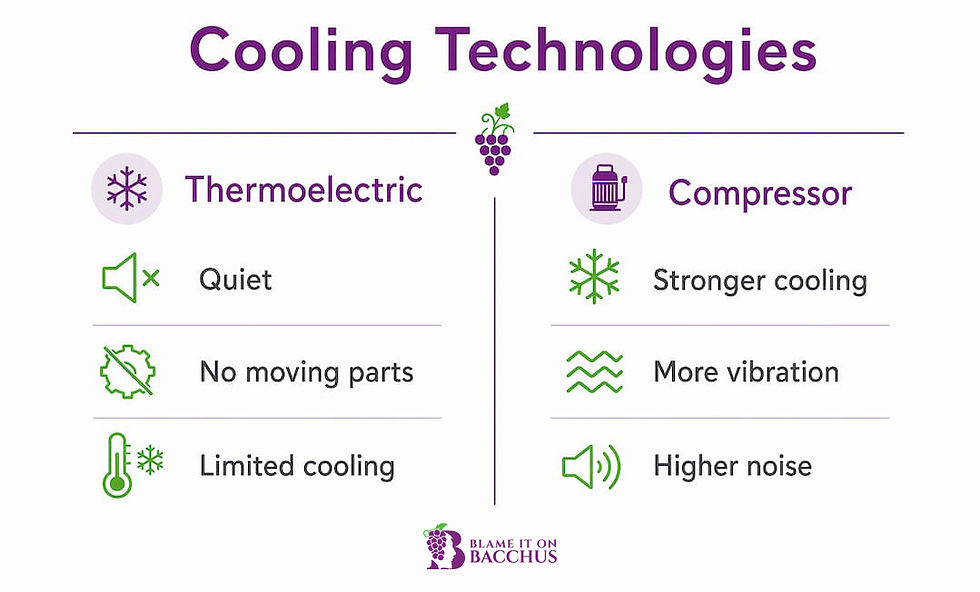
Thermoelectric coolers use the Peltier effect and are nearly silent, but they can only cool about 20–25°F below the room temperature around them. Put one in a hot garage and it won’t keep up. Compressor units work like a traditional fridge and deliver consistent cooling regardless of ambient temperature — they’re the right call for built-in installs and larger collections.
Pro Tip: Thermoelectric units must be freestanding with clearance around the sides and back for heat exhaust. Sliding one into a tight cabinet kills its performance.
Other features worth knowing
UV-protective glass doors shield wine from light that degrades flavor
Humidity control keeps corks from drying and cracking
Vibration damping protects sediment in aging bottles
Interior LED lighting lets you display your collection without heat buildup
Built-in vs. freestanding determines venting requirements and installation complexity
How do you choose the right wine cooler for home?
Here’s a practical checklist to run through before you buy:
Measure your collection, then add 50%. Overcrowding blocks airflow and creates hot spots. If you have 20 bottles now, shop for a 30-bottle unit minimum.
Decide single-zone or dual-zone. Single-zone works for aging or a one-wine-type collection. Dual-zone is worth it if you regularly drink both reds and whites and want them ready to serve at different temps.
Match cooling type to your space. Quiet bedroom or apartment? Go thermoelectric. Warm kitchen, large collection, or built-in install? Compressor is your friend.
Check venting requirements. Freestanding units need airflow clearance. Built-ins vent through the front and require a precise cabinet cutout.
Confirm the temperature range. Make sure the unit can hold your target storage or serving temp reliably.
Look at the warranty. Compressor units typically last 10–15 years with proper care; thermoelectric units can run longer with fewer mechanical parts to fail.
Price ranges to expect:
Under $200: Compact countertop units, 6–18 bottles, thermoelectric, basic features
$200–$800: Midrange freestanding, 24–50 bottles, compressor or thermoelectric, dual-zone options
$800 and up: Premium built-in or large-capacity freestanding, advanced humidity control, panel-ready finishes
Freestanding units ship and set up quickly — often same-week delivery. Built-ins typically require professional installation and a longer lead time.
What temperature should you set your wine cooler to?
The difference between storage temperature and serving temperature trips up a lot of people. Storage temp is where bottles live for weeks or months. Serving temp is what you pour at. They’re not the same.
Wine Type | Storage Temp (°F) | Serving Temp (°F) |
Red wine | 53–65°F | 60–68°F |
White wine | 45–55°F | 45–55°F |
Rosé | 50–55°F | 50–55°F |
Sparkling / Champagne | 45–50°F | 45–65°F |
For a deeper dive on wine storage temperature, Blameitonbacchus has a full collector’s guide worth bookmarking.
Humidity should stay in the 50–70% range. Too dry and corks shrink; too humid and labels mold.
Pro Tip: If you only have a single-zone cooler and a mixed collection, set it to 55°F. That’s a stable middle ground that works reasonably well for both reds and whites over the short to medium term.
How do you maintain a wine cooler and avoid common problems?
Routine care keeps a wine cooler running for a decade or more. Here’s what to stay on top of:
Clean the interior every 3–6 months with a mild solution of water and baking soda. Avoid harsh chemicals near your bottles.
Check door seals regularly. A worn gasket lets warm air in and throws off temperature stability.
Monitor temperature and humidity with a small digital thermometer/hygrometer inside the unit.
Level the unit. An unlevel cooler stresses the compressor and can cause vibration. Most units have adjustable feet.
Leave clearance for airflow on freestanding models — at least 2–3 inches on the sides and back.
Limit door openings. Every time you open the door, warm air rushes in. Grab what you need and close it.
Replace carbon filters if your unit has them, typically once a year.
For basic wine storage tips that go beyond the appliance itself, Blameitonbacchus has a beginner-friendly guide that pairs well with this one.
Common issues to troubleshoot: inconsistent temperature usually points to a failing door seal or blocked airflow; excess vibration in a compressor unit often means the unit isn’t level; condensation on the exterior glass is normal in humid rooms but heavy interior condensation signals a humidity control issue.
Wine cooler design, aesthetics, and gift ideas
Wine coolers have become as much a display piece as a storage tool. Glass-front doors with interior LED lighting turn a bottle collection into a conversation starter. Finishes range from stainless steel to matte black to panel-ready fronts that blend seamlessly into custom cabinetry. If the recipient has a home bar or open kitchen, aesthetics matter as much as specs.
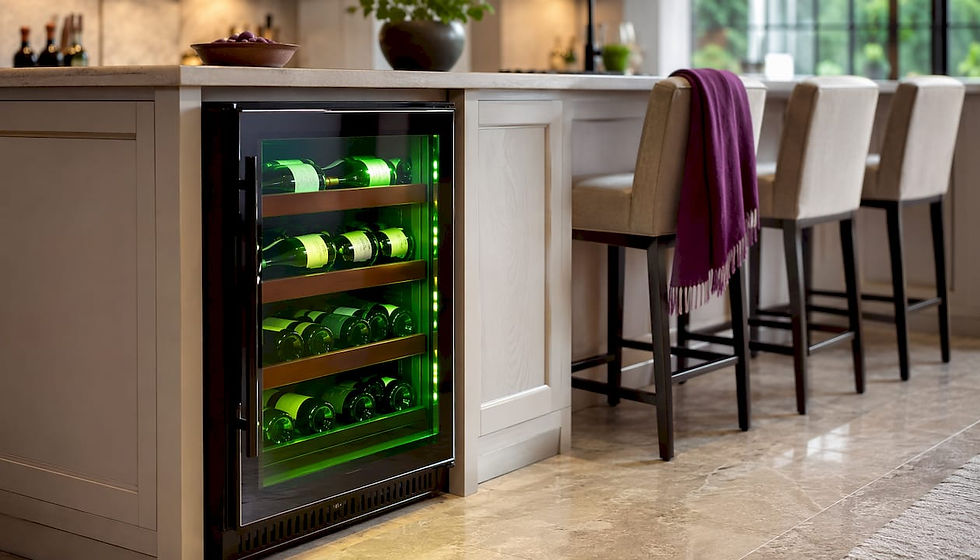
For gift shoppers, think about the recipient’s space first. A compact countertop unit under $200 works beautifully for an apartment dweller with a modest collection. A midrange freestanding unit ($200–$800) suits someone with a dedicated kitchen or dining room. Premium built-ins are a serious investment best left to the buyer themselves.
The best wine-lover gifts pair a practical item with something personal. A compact cooler alongside a wine-themed tee or a beginner wine class makes a gift that’s both useful and fun. If you’re building a full gift spread, a charcuterie board guide pairs naturally with a cooler gift for the entertainer in your life.
Freestanding coolers ship quickly and require no installation, making them solid last-minute gift options. Built-ins are not a last-minute gift — plan for professional installation time.
Where to learn more about wine storage and coolers
Blameitonbacchus has a few resources worth bookmarking if you want to go deeper:
Wine Storage Temperature: A Collector’s Complete Guide — detailed guidance on storage and serving temps
Why Use Wine Temperature Control for Better Wine — explains the science behind why temperature matters for flavor
Creative Wine Bottle Display Ideas for Your Home — design inspiration for showing off your collection
The Role of Climate in Wine, Explained Simply — useful context for understanding why storage conditions mimic what wine experienced in the vineyard
For technical deep dives on cooling technology, the Department of Energy’s overview of thermoelectric coolers is a solid, no-nonsense read.
Key Takeaways
A wine cooler appliance protects bottles by holding a stable 45–65°F with 50–70% humidity — conditions no standard refrigerator reliably delivers.
Point | Details |
Two meanings, one term | “Wine cooler” is either a fruit-flavored beverage or a temperature-controlled appliance; this guide covers the appliance. |
Ideal storage temperature | Set your cooler to 53–57°F for general aging; adjust serving temps by wine type. |
Size your cooler generously | Buy at least 50% more capacity than your current collection to allow proper airflow. |
Cooling type matters | Thermoelectric for quiet, small spaces; compressor for large collections, built-ins, and warm rooms. |
Blameitonbacchus resources | Pair a wine cooler gift with a beginner wine class or wine-themed merch from Blameitonbacchus for a complete present. |
The part most buying guides skip
Wine coolers get sold on temperature specs, but the real value is stability. A fridge that swings between 38°F and 55°F throughout the day does more damage to a bottle than storing it at a consistent 60°F. Most kitchen refrigerators cycle aggressively and run too cold and too dry for wine. The cooler’s job isn’t to hit a magic number — it’s to hold that number without drama, day after day.
The other thing people underestimate: vibration. It’s not just a marketing bullet point. Constant vibration from a compressor, a washing machine nearby, or even heavy foot traffic can disturb sediment and accelerate chemical reactions in aging wine. That’s why thermoelectric units earned their reputation among serious collectors, and why modern compressor units now use rubber shock mounts to close the gap.
If you’re buying a wine cooler as a gift, skip the spec sheet and ask one question: where will this person put it? The answer tells you everything about which format, size, and cooling type actually fits their life.
A wine-lover gift that goes beyond the bottle
A compact wine cooler is a great gift. But you know what makes it unforgettable? Pairing it with something that helps the recipient actually enjoy what’s inside.

Blameitonbacchus offers beginner-friendly online wine classes that teach anyone how to taste, store, and talk about wine with confidence — no sommelier certification required. Bundle a class with a countertop cooler and a piece of wine-themed apparel and you’ve got a gift that’s genuinely thoughtful. Browse the full shop at Blameitonbacchus to find the right pairing for your wine lover.
Useful sources
Wine cooler — Wikipedia — background on both the beverage and appliance meanings
What Is A Wine Cooler? Benefits, Types & How To Choose — Flight Wine Bar — practical overview of appliance types and sizing
Yes, You Need a Wine Fridge. Here’s Why. — Wine Enthusiast — expert-backed temperature and aging guidance
Thermoelectric vs Compressor Wine Cooler — Cooking Authority — definitive comparison of cooling technologies
Thermoelectric Coolers — U.S. Department of Energy — authoritative technical overview of Peltier cooling
Are Wine Coolers Worth It? — Luxury Appliances Direct — pros, cons, and buying considerations
Wine Storage Temperature: A Collector’s Complete Guide — Blameitonbacchus — brand-owned deep dive on storage and serving temps
FAQ
What are wine coolers used for?
Wine coolers (appliances) store bottles at a stable temperature and humidity to protect flavor and quality. They’re used for both short-term serving readiness and longer-term aging.
How is a wine cooler different from a regular refrigerator?
A wine cooler holds a narrower temperature range (roughly 45–65°F), maintains 50–70% humidity, and reduces vibration — conditions a standard kitchen fridge can’t reliably provide.
What is the best temperature setting for a wine cooler?
Set it to 53–57°F for general storage and aging. For serving, adjust by wine type: whites and sparkling around 45–50°F, reds closer to 60–68°F.
Can you store both red and white wine in the same cooler?
Yes. A single-zone cooler set to around 55°F works as a reasonable middle ground. A dual-zone unit lets you hold each type at its ideal serving temperature simultaneously.
What’s a good wine cooler gift to pair with a beginner wine class?
A compact countertop cooler paired with a Blameitonbacchus beginner wine class makes a genuinely useful gift. Add a piece of wine-themed apparel and you’ve covered all the bases.
Recommended
Comments