Wine Tasting Games: Buy One Kit, Run 11 Quick DIY Rounds Tonight


The fastest way to win at wine tasting games is to grab a ready-made kit like BlindVine for blind-tasting fun, Sommify if you want a board-game vibe, or a wine bingo pack for zero-prep crowd-pleasing. No kit on hand? Bag three bottles, hand out scorecards, and you’ve got a blind tasting running in five minutes flat.
Table of Contents
What Are the Best Wine Tasting Games to Buy?
If you want a wine-tasting game night without the DIY hassle, three kinds of purchasable kits dominate the market right now: app-connected blind-tasting boxes, board-game style tasting sets, and pre-printed bingo packs. Each solves a different hosting problem.
BlindVine ships as a blind tasting kit built for competition. It comes with several small bottles and a free companion app that scores guesses automatically, so nobody has to do math while sipping. It’s designed to work with two or more players, which makes it flexible for a couples’ night in or a bigger group split into teams, according to BlindVine’s product page.
Sommify takes a different approach. It’s a board game, not a bottle-in-a-box, with a physical board, dry-erase wine keys, bottle shock cards, markers, and pawns. You bring your own bottle for each round, and the game teaches a repeatable blind-tasting method as you play. Sommify recommends groups of four to ten players, and because the components are reusable, one purchase covers party after party.
Then there’s the low-lift option: wine bingo kits. Retail packs sold on Amazon typically include multiple unique cards, markers, a caller’s sheet, and instructions right in the box, according to this popular Amazon listing. Nobody needs wine knowledge to play, which makes bingo the easiest “yes” for a mixed-experience crowd.
Game | Type | Ideal players | What’s included | Learning level | Price range |
BlindVine | Kit + app | 2+ | Several small bottles, scoring app | Social/competitive | Mid-range, direct purchase |
Sommify | Board game | 4-10 | Board, wine keys, bottle shock cards, markers, pawns | Educational | Sold on official product page |
Wine bingo kits | Card game | Large groups | Multiple bingo cards, markers, call sheet, instructions | Purely social | Budget, widely available on Amazon |
Here’s the quick read on who each one fits:
BlindVine works best for a smaller group that wants a genuine blind-tasting contest with built-in scoring.
Sommify wins with groups who want to actually learn a tasting method while they play, not just guess.
Wine bingo kits are the move when you need something that works for grandma, your wine-novice coworker, and your somm friend all in the same room.
10+ DIY Wine Tasting Games You Can Run Tonight
You don’t need a box shipped to your door to have a great wine-tasting party. Here are the formats that consistently work, plus what they take to pull off.
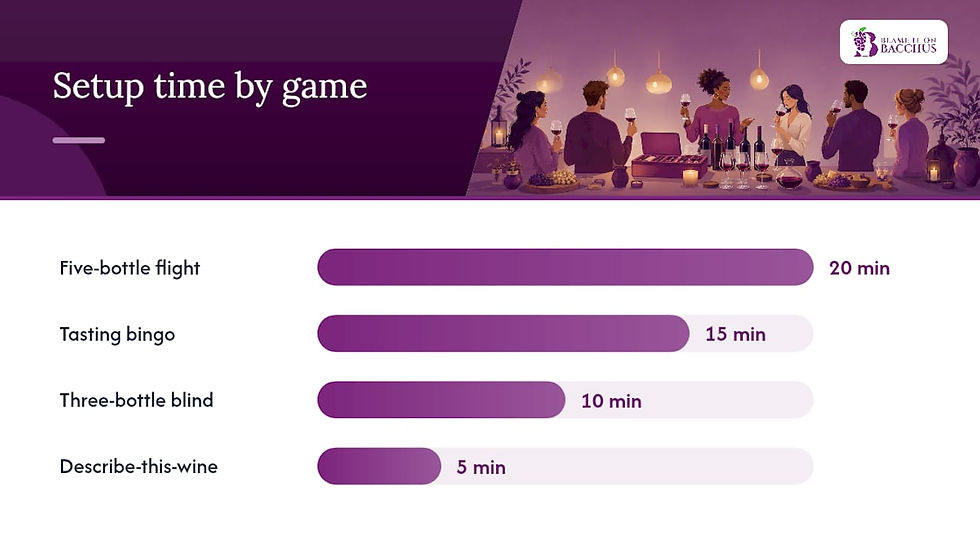
Three-bottle blind guess. Bag three bottles, number them, and have guests rank by preference before revealing. Setup: 10 minutes. Best for 4 to 8 people.
Five-bottle flight challenge. Same idea, bigger stakes. Score points for correctly guessing grape, region, or price. Setup: 20 minutes. Best for 6 to 12 people.
Tasting bingo. Print or buy cards with tasting terms (“cherry,” “oak,” “leather”) and mark them as they show up in the wine. Setup: 15 minutes. Great for large groups.
Describe-this-wine. Everyone writes one tasting note, no names attached, then the group guesses who wrote what. Setup: 5 minutes.
Aroma relay. Pass a glass around and each person adds one new smell descriptor without repeating a previous answer. Setup: instant. Works best in circles of 6 or fewer.
Price-guess game. Show the bottle shape, hide the label, and have guests write down what they think it costs. Closest guess wins the bottle.
Label drawing contest. Hand out blank paper and have guests sketch what they imagine the label looks like based on taste alone. Fun for groups with kids-at-heart energy.
Trivia rounds. Mix conversational, surprising questions (funny wine terms, historical bottle sizes) rather than technical chemistry, since event planners find approachable trivia sparks more laughs than obscure questions.
Pairing challenge. Set out three cheeses or snacks and have guests match each to the wine they think fits best.
Finish-the-note. Start a tasting note sentence (“This wine tastes like…”) and pass it around the table for each person to add a word.
Virtual adaptation. Ship identical mini bottles to remote guests ahead of time and run a video-call blind tasting, an approach covered in our virtual wine tasting games guide.
Pro Tip: Cap each round at 10 minutes. Wine games lose steam fast once people start refilling glasses and forgetting what round they’re even on.
For small groups, stick to aroma relay or describe-this-wine, since they thrive on intimacy. For big parties, bingo and trivia scale effortlessly because everyone can play at once without waiting their turn.
How Do You Host a Wine Tasting Game Night?
Pacing makes or breaks a wine-game night. Pour one and a half to two ounces per taste, that’s roughly a quarter of a standard glass, so guests can get through four or five wines without anyone tipping over by round three.
Bag or foil-wrap bottles and number them before guests arrive, so nobody peeks.
Print scorecards with columns for each wine: appearance, aroma, palate, and final guess.
Run tastings in the same order every round: look, smell, sip, then discuss, which mirrors the SAT approach used by professional tasting trainers.
Award bonus points for correct guesses made earlier in the reveal, rewarding sharp deduction over lucky guessing.
Set up a spit bucket and always have a nonalcoholic option on the table, since not every guest will want five full pours.
One night rarely needs more than two flights of four or five wines each. Beyond that, palates fatigue and scores stop meaning much anyway.
Quick host checklist: bagged bottles, scorecards, pens, water pitchers, a spit bucket, and a timer for pacing rounds.

How to Choose the Right Wine Tasting Game or Kit
Not every group needs the same setup, so run through this before you buy or build anything.
Group size first. Bingo and trivia scale to a crowd; blind-tasting board games top out around ten players comfortably.
Social vs. educational. Decide whether the goal is laughs or actually learning to identify wine styles, since that changes whether you want Sommify’s teaching method or a bingo pack’s pure fun.
Included wines vs. bring your own. Kits like BlindVine ship bottles included; Sommify and most DIY games assume you’re supplying the pours yourself.
App features matter for scoring. If nobody wants to tally points by hand, an app-connected kit removes that friction entirely.
Replay value. A board game with reusable components pays off over many parties; a bingo pack is often a single-use party favor.
Buy a kit when you want convenience and don’t want to plan tasting mechanics yourself. DIY when budget matters more or you want the game customized to a specific wine region or theme. Most kits are sold directly through the maker’s website or through major retailers like Amazon, and “box contents” usually just means the physical pieces, cards, markers, boards, since the wine itself is often BYO unless stated otherwise.
What Our Wine Classes Taught Us About Great Game Nights
Running guided tastings for years taught us one thing fast: structure is what turns a fun game into an inclusive one. When everyone follows the same look, smell, sip sequence, nobody feels lost, even total beginners. For deeper background on why that structure works so well, our beginner’s guide to wine basics breaks it down further.
A few small tricks we’ve picked up: timebox every round to keep energy up, drop a subtle pairing hint before the reveal to spark conversation, and open with a low-stakes icebreaker question before diving into anything blind. It’s the difference between a room of strangers and a room having fun together.
Our Take: Buy the Shortlist, Then Build the Party
Most wine-game advice online either oversells fancy kits or drowns you in DIY options with no order of priority. Neither approach respects how a real host actually plans a night. You don’t have unlimited prep time, and you don’t need to become a sommelier to run a good game.
The smartest move is buying one solid kit for your headline activity, BlindVine or Sommify if your group leans competitive, bingo if it leans casual, and then filling the rest of the night with quick DIY rounds that need zero shopping. Conventional wisdom treats games as either “serious tasting” or “party fluff.” That’s a false choice. The best nights blend both: a little structure so people learn something, a lot of levity so nobody feels tested.
If there’s one thing to prioritize first, it’s pacing, not props. A room with mediocre wine and great pacing beats a room with premium bottles and no rhythm every single time.
— Thomas
Ready to Host a Wine Tasting Game Night You Don’t Have to Plan Alone?
You can find live, guided tastings run by experienced hosts who know how to pace flights, time rounds, and keep a mixed-knowledge group engaged without needing to look up wine terms mid-party.

Our Guided Tasting and private class options let you book a hosted session built around exactly this kind of interactive tasting game, no scorecards to print, no bottles to bag yourself. If you’d rather learn the fundamentals first so you can host with confidence next time, The Elements of Tasting walks you through the same tasting method we use in every private event. And if you’re planning a gift instead of a party, a BIOB eGift Card lets a fellow wine lover pick their own class or game night. Book a private tasting or grab a gift card today and let someone else handle the pacing for once.
FAQ
How Do You Make a Wine Tasting Fun?
Keep pours small, rounds short, and questions conversational rather than technical. Games like bingo or blind guessing work because they give guests something active to do besides just sipping.
What Are Some Fun Games to Play Over Wine?
Blind tasting, wine bingo, price-guess, and label-drawing contests are all reliable crowd-pleasers, and kits like BlindVine and Sommify package these formats so you don’t have to build them from scratch.
What Are the 5 S’s of Wine Tasting?
Definitions vary slightly by source, but a common version is see, swirl, smell, sip, and savor, the basic sequence most blind-tasting games and apps build their scoring around.
What Are Some Fun Trivia Games About Wine?
Stick to approachable prompts, like unusual bottle sizes or funny wine terms, rather than obscure chemistry questions, since conversational trivia gets more laughs and cross-table chatting.
What Does Blame It On Bacchus Offer for Hosting a Game Night?
Blame It On Bacchus offers bookable Guided Tasting sessions and private classes that structure your game night for you, plus standalone courses like The Elements of Tasting for $50 one-off if you want to learn the method yourself first.
Recommended
Comments