Beginner Pick: Blame It On Bacchus Double Hinged Corkscrew + $75 Class

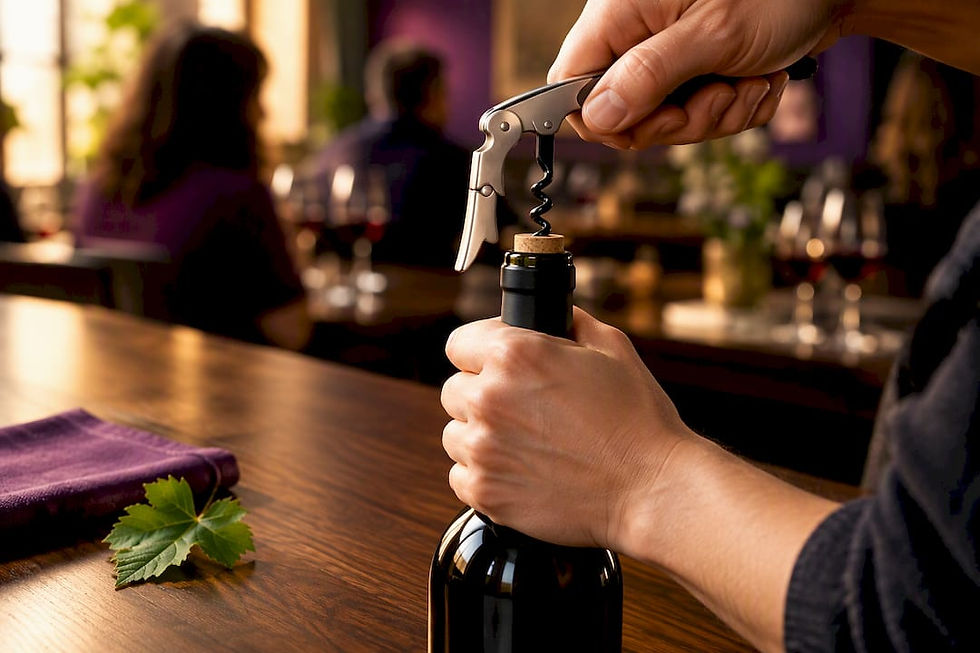
A double hinged waiter’s corkscrew is the best everyday wine opener, hands down, and a waiter’s corkscrew with two-step leverage, compact size, and grippy handle is a reliable pick for beginners. Testing from Food & Wine backs this up: double-hinged designs consistently beat single-lever keys for everyday use.
Table of Contents
What to look for when buying a double hinged corkscrew
Not all wine keys are created equal, and the difference shows up the second you try to pull a stubborn cork. Here’s what separates a corkscrew you’ll love from one that ends up in a kitchen drawer, forgotten.
Hinge construction: look for a smooth, two-stage hinge with a solid pin, not a wobbly one that flexes under pressure.
Worm design: a grooved worm grips the cork without shredding it, while an overly sharp one can act like a drill.
Handle material: rubberized or contoured grips reduce hand fatigue, especially if you’re opening more than one bottle.
Foil cutter: a built-in cutter saves you from fumbling with a separate knife.
Price and durability: solid stainless steel models tend to outlast cheaper alloy versions, even if they cost a few dollars more.
Pro Tip: Give the hinge a test wiggle before buying. If it feels loose or gritty, skip it. A tight, smooth hinge is the difference between a clean pull and a wrestling match.
How to use a double hinged corkscrew step by step
Once you’ve got the right tool, the technique is simple. Beginners usually get the hang of it quickly.
Cut the foil below the lip of the bottle using the built-in cutter.
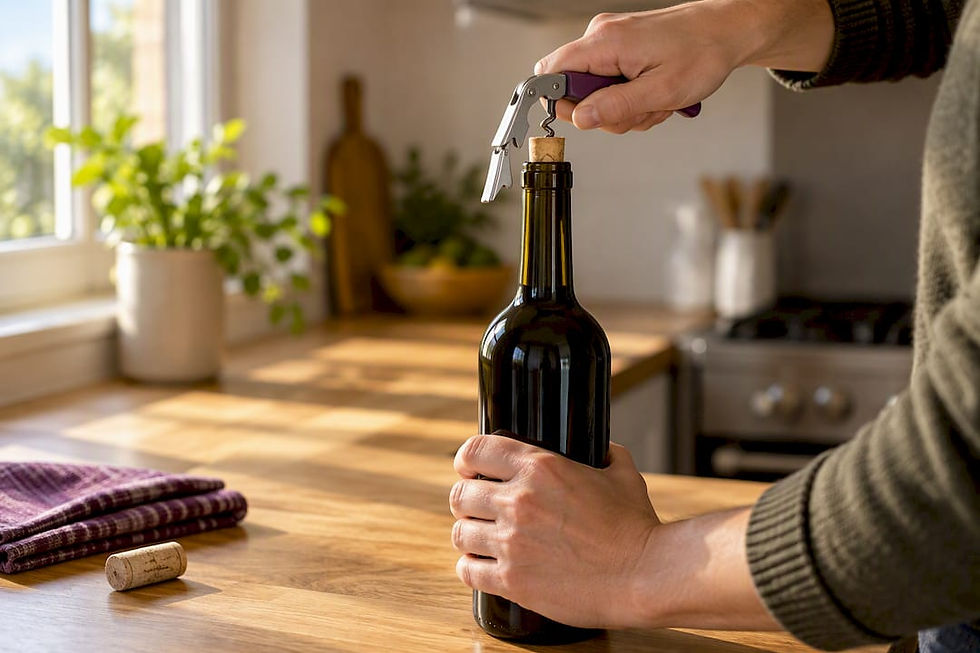
Center the worm on the cork and twist it in about five full turns.
Rest the first hinge notch on the bottle rim and lift the handle to raise the cork partway.
Move to the second hinge notch and lift again to finish the extraction smoothly.
Wiggle gently if the cork feels stuck, rather than forcing it.
If the cork crumbles or feels overly dry, back off and reinsert the worm at a slightly different angle rather than cranking harder. Our step-by-step guide walks through this with pictures if you want a refresher.
Pro Tip: Never brace the bottle against your knee for extra leverage. It looks impressive in movies, but it’s how bottles get chipped and hands get hurt.
Materials and worm design that affect cork removal
The guts of a corkscrew matter more than the price tag suggests. A cheap-looking tool with the right worm can outperform a fancier one with the wrong design.
Stainless steel bodies and hinge pins resist rust and hold up to years of regular use.
Grooved worms displace cork material while letting air down the channel, which TechGearLab’s testing found reduces the vacuum effect that makes corks stick.
Worm length matters too: longer worms handle natural corks better, while shorter ones suit synthetic stoppers just fine.
A grooved worm design reduces drilling action and helps break the vacuum seal that causes stuck corks, according to TechGearLab, which is a meaningful detail when you’re comparing models that otherwise look identical.
Design features that help with weak hands or limited grip
If wrist strength or arthritis makes twisting and pulling a chore, the right corkscrew design makes a real difference before you ever consider a pricier electric option.
Slightly curved, non-slip handles distribute pressure across your palm instead of concentrating it in your fingers.
Wider grip surfaces give you more control with less squeezing.
Two-step leverage spreads the extraction force across two motions instead of one hard pull, which is gentler on joints than a single-lever key.
Vertical lever or electric openers are worth considering if grip strength is a consistent struggle, even though they cost more and take up more counter space.
For most people, though, a well-made double hinged model solves the problem without the extra bulk or battery.
Choosing by size for pocket, drawer, or bar kit use
Most double hinged corkscrews fold down to a compact size that fits easily in a kitchen drawer or a jacket pocket, which is part of why they’re the go-to for servers and hosts alike.
Compact folding models slide into a purse or travel bag without adding bulk.
Slightly larger handles trade a bit of pocketability for more comfortable grip during long dinner parties.
Storage matters: keep the worm covered or sheathed when not in use to avoid dulling the tip or nicking other drawer contents.
A dry towel wipe after use also keeps the hinge moving freely and prevents corrosion over time.
Practical recommendations for buying the right corkscrew
If you’re ready to buy, here’s the short version of everything above, boiled down into a path you can actually follow.
For most everyday drinkers, a compact, ergonomic waiter’s corkscrew with two-step leverage is a smart pick that makes cork removal painless.
If you’re shopping other entry-level or travel-friendly options, look for the same features: grooved worm, solid hinge, and a comfortable handle, regardless of brand.
Expect budget models to run cheaper but sometimes skip the grooved worm, while premium stainless steel versions cost more and typically last for years.
Once you order online, standard shipping usually gets a corkscrew to your door within a few business days, so you’re not waiting long to put it to use.
Whichever route you take, the two-hinge design is the detail that matters most. Everything else is personal preference.
Why classroom teaching shapes this advice
Teaching beginners to use a wine key for years taught me one thing: almost everyone tries to yank the cork straight out on the first lift, and almost everyone relaxes once they learn the two-hinge motion. Our beginner’s guide covers the same technique we use in class.
— Thomas
Shop the corkscrew and classes that make wine night easy
A waiter’s corkscrew designed with beginners in mind is compact, easy to grip, and suited to everyday kitchen use rather than special occasions.

Grab the White or Burgundy version depending on your kitchen style.
Pair it with The Elements of Wine, a $75 one-off class that builds real confidence around bottles, corks, and everything in between.
Book a Guided Tasting if you want hands-on practice with a group.
Once you’ve got the right tool and a little know-how, opening a bottle stops being a production and starts being the easy part of the evening. Browse the full shop to see what else pairs well with your new corkscrew.
Sources
Food & Wine’s testing covers real-world use and pro endorsements, while TechGearLab breaks down worm design in technical detail.
FAQ
What is a double hinged corkscrew?
A double hinged corkscrew, also called a waiter’s corkscrew, uses two folding hinge points to lift the cork out in two smooth stages instead of one hard pull. This two-step leverage is why Food & Wine’s testing ranks it as the top everyday pick.
What are the different types of corkscrews?
Common types include the double hinged waiter’s key, the winged corkscrew, the pull-style “rabbit” lever, and electric openers. Specialty tools like the Ah-So exist for handling old or fragile corks that a standard worm might crumble.
What is the best wine opener for people with weak hands?
A double hinged corkscrew with a wide, non-slip handle is a solid starting point since the two-step motion spreads out the force needed. For persistent grip challenges, a vertical lever or electric opener is worth the extra cost and counter space.
Which type of corkscrew is the easiest to use?
The double hinged waiter’s corkscrew is widely considered the easiest for most people because it requires less force than a single-lever design and folds down small enough to keep in a drawer or bag. Its two-stage lift also makes it more forgiving with older or drier corks.
What should I expect to pay for a double hinged corkscrew?
Prices vary based on materials, with basic stainless steel models on the lower end and premium versions with reinforced hinges and finer worm grooves costing more. The Blame It On Bacchus™ Waiter’s Corkscrew fits comfortably in the everyday, beginner-friendly range.
Recommended
Comments