Measure First: Tote Bag Sizes for Buyers and Makers

Pick a tote by the largest flat item it must carry, then add gusset for bulk, and pick handle drop for comfort, that’s the whole trick. Sizes usually fall into small, medium, large, and jumbo tiers, and manufacturer specs like L.L.Bean’s Boat and Tote line show exactly how those numbers play out in real life. Stick around and I’ll walk you through the measuring, the math, and where a Blame It On Bacchus wine tote fits into the picture.
Table of Contents
Standard size tiers and example dimensions
Let’s break down what “small,” “medium,” “large,” and “jumbo” actually mean when you’re staring at a product listing, because those words get thrown around pretty loosely.
A small tote runs about 9 to 12 inches wide and 10 to 12 inches tall, usually with little to no gusset, think 0 to 3 inches of depth. These are your light-duty bags, fine for a book, a water bottle, or a wallet, but not much else. Medium totes step up to roughly 13 to 15 inches wide and 13 to 15 inches tall, with a gusset in the 4 to 6-inch range, which is where most everyday bags live. Large totes land around 16 to 18 inches wide and tall, with gussets stretching 5 to 8 inches, built for groceries, gym gear, or a laptop. Jumbo totes go 19 inches wide or more, often with 7 inches of gusset or deeper, made for beach days, travel, or hauling a week’s worth of groceries in one trip.
L.L.Bean’s Boat and Tote family is a good real-world anchor here. The medium measures 12 x 13 x 6 inches and holds about 17 liters, the large comes in at 15 x 17 x 7.5 inches for roughly 35 liters, and the extra-large hits 17 x 19 x 10 inches for about 56 liters. Notice that jump from 17 liters to 35 liters: the width and height barely changed, but adding 1.5 inches of gusset depth nearly doubled the capacity.
Small: 9-12"W x 10-12"H, 0-3" gusset, good for books or a wallet.
Medium: 13-15"W x 13-15"H, 4-6" gusset, the everyday workhorse size.
Large: 16-18"W x 16-18"H, 5-8" gusset, built for groceries or a laptop.
Jumbo: 19"+ W, 7"+ gusset, made for beach trips or bulk hauling.
How to measure a tote: width, height, gusset, and strap drop
Here’s the step-by-step, whether you’re checking a bag you already own or following a sewing pattern.
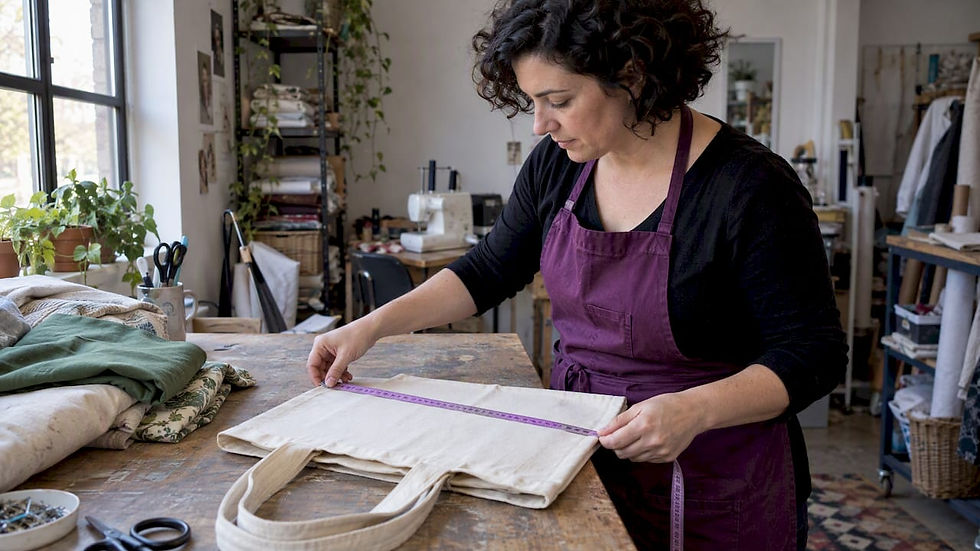
Lay the tote completely flat on a table, front panel facing up, with no wrinkles or folds.
Measure width corner to corner across the top opening, then measure height from the top edge straight down to the bottom seam.
Pinch the side seam and measure the gusset, the folded depth that lets the bag expand when it’s full.
Measure handle drop by holding the handle loop flat and measuring from the top edge of the bag to the top of the loop; shorter drops (around 5 to 10 inches) sit in your hand, while longer drops (around 14 inches) ride comfortably over a shoulder, per L.L.Bean’s listed handle options.
If you’re checking a folded or stowed tote, like a foldable storage bin, note that the folded size is not the same as the open capacity, so always confirm open dimensions separately.
Pro Tip: Measure the largest flat item you plan to carry first, laptop, binder, wine bottle box, whatever it is, then shop or sew to that number instead of guessing.
Choosing the right size for your actual use
Different jobs call for different totes, and matching the size tier to the task saves you from a bag that’s either floppy and useless or stretched past its limit.
For everyday carry or a laptop bag, medium to large is your sweet spot. If you’re packing a 15 inch laptop, aim for at least 16 inches of width plus a 4 inch gusset so the laptop sits flat without squeezing the sides, a rule echoed in Optima Bags’ sizing guide. Grocery runs and beach days call for large or jumbo, with a gusset of at least 6 to 8 inches and a long handle drop so the bag can ride your shoulder when it’s loaded down. Trade-show or promotional totes are a different animal entirely: medium size with a flat, uninterrupted print area works best, and you’ll want a shallower gusset or one positioned away from the print zone so your logo doesn’t get lost in a fold.
Everyday or laptop: medium to large, at least 16" width plus 4" gusset for a 15" laptop.
Groceries or beach: large to jumbo, 6-8" gusset minimum, long handle drop for shoulder carry.
Trade show or promo: medium, flat print panel, gusset kept shallow or shifted away from artwork.
The general rule from PromotionChoice’s sizing breakdown holds true across every use case: size by the largest flat item, then add gusset only when the load is genuinely bulky. Size up when you’re hauling boxy or stacked items, size down when portability matters more than capacity, like a tote you’re stuffing into a suitcase or purse.
Sewing considerations: finished size versus cut size
If you’re sewing your own tote, the single biggest mistake is confusing the pattern-piece size with the finished size. Seam allowances, hems, lining, and interfacing all eat into your final dimensions, sometimes by an inch or more on each side.
A common university pattern example uses two 16 x 14 inch panels with 23 inches of webbing for the straps, producing a finished utility tote around 16 x 13 x 6 inches with a 12 inch strap drop, according to the 4-H sewing pattern guide. Lining and interfacing add structure but also shave off interior space, and a boxed gusset corner takes a bite out of usable width too.
Start with your target finished size, then add seam allowances and hems before cutting.
Account for lining and interfacing thickness, they reduce interior usable space.
Test a paper mock-up before you cut your actual fabric.
Pro Tip: Cut a quick paper or scrap-fabric mock-up at your planned dimensions and fold it into shape before touching your good fabric, it catches sizing mistakes in minutes instead of after the seams are sewn.
How capacity really behaves in practice
Nominal width and height only tell half the story. Depth is where capacity quietly explodes, and the L.L.Bean Boat and Tote lineup proves it: going from a 6 inch gusset to a 7.5 inch gusset took the bag from roughly 17 liters to 35 liters, more than doubling capacity for a change that looks small on paper.
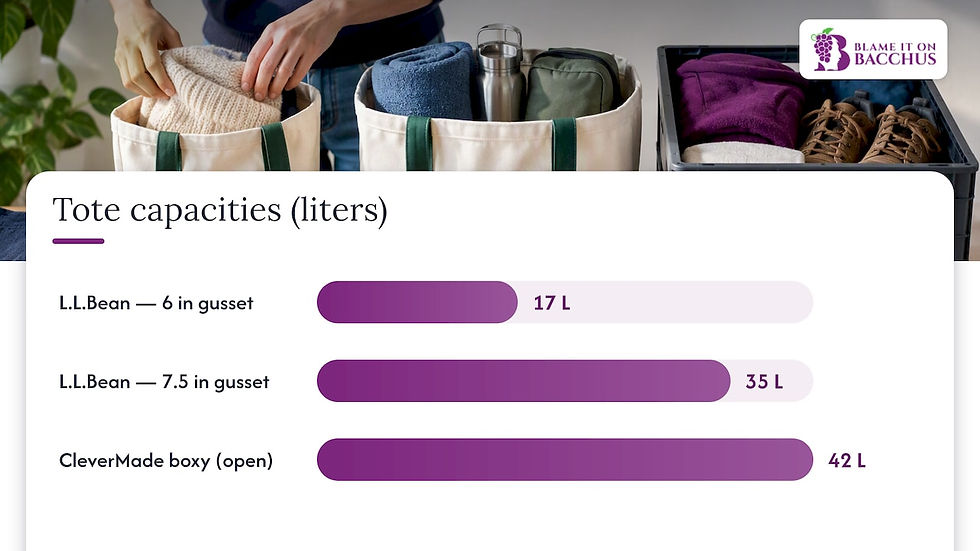
A 1.5 inch gusset increase roughly doubled capacity in L.L.Bean’s medium-to-large comparison, from about 17 liters to 35 liters, showing how much depth matters versus width or height alone.
High-capacity designs don’t always mean wide and shallow, either. CleverMade’s storage tote measures 18 x 8 x 18 inches open, holds 42 liters, and supports a 25 pound load, but it also folds flat for storage, proving that tall, boxy totes can outperform wide, flat ones for sheer volume.
A medium tote (around 17 liters) comfortably fits 2 to 3 standing 750ml wine bottles with padding.
A large tote (around 35 liters) fits a 15 inch laptop plus a folded beach towel with room to spare.
A jumbo or 42 liter boxy tote fits 6 or more wine bottles, a full beach setup, or a stacked grocery haul.
Why sizing matters most for wine and grocery totes
Wine bottles are a great stress test for sizing rules because they’re tall, heavy, and unforgiving of a shallow gusset. Our 6-Bottle Insulated Wine Tote fits the large-to-jumbo tier, while the 4-Bottle Insulated Wine Tote suits medium needs. Keep bottles upright, pad the gaps, and pick sturdy handles, our wine travel guide covers the rest.

My take on tote sizing
Most people size a tote by looking at it, not measuring it, and that’s backward. The workflow is simple: measure your largest item, pick the tier that fits it, check the gusset and handle drop, then adjust up or down from there. A tote that looks roomy on a shelf can still fail you if the gusset is shallow or the handle drop digs into your shoulder.
Before you buy or cut fabric, run through this:
Measure your largest flat item.
Match it to a size tier with some clearance.
Confirm gusset depth suits the bulk you’re carrying.
Check handle drop against how you’ll actually carry it, hand or shoulder.
— Thomas
Ready-made totes and gifting options worth a look
Measuring and sewing are great if you’ve got the time, but sometimes you just want a tote that already fits the job. Our Grocery & Wine Tote handles everyday hauls and a bottle or two, while the 4-bottle and 6-bottle insulated totes cover dedicated wine transport without any guesswork.

4-Bottle Insulated Wine Tote: compact gifting size, perfect for a couple bottles and a card.
6-Bottle Insulated Wine Tote: built for parties, potlucks, or stocking up.
Grocery & Wine Tote: an everyday bag that doubles as bottle transport.
Pair any of these with a BIOB eGift Card or one of our wine classes for a gift that covers the bottle, the bag, and the know-how to enjoy it. Browse the full merchandise shop to see every size side by side.
Sources
L.L.Bean Boat and Tote specs, the 4-H sewing pattern PDF, Optima Bags’ size guide, and PromotionChoice’s capacity rules cover the specs and rules behind this guide. For a look at depth and construction on a retail tote, check Left 4 Left’s tote bag page.
FAQ
What is a normal size for a tote bag?
A normal, everyday tote bag typically measures 13 to 15 inches wide and tall with a 4 to 6 inch gusset, landing it in the medium tier. This size comfortably handles a wallet, a water bottle, and a light jacket without feeling bulky or floppy.
What are the standard dimensions of a tote bag?
Standard dimensions break into four tiers: small (9-12"W x 10-12"H), medium (13-15"W x 13-15"H), large (16-18"W x 16-18"H), and jumbo (19"+ W). Gusset depth ranges from 0-3 inches on small bags up to 7 inches or more on jumbo ones, as shown across the L.L.Bean Boat and Tote lineup.
What is the most popular tote bag size?
The medium tier, roughly 13 to 15 inches wide and tall, is the most common choice because it balances everyday capacity with manageable bulk. It fits a laptop sleeve, groceries for one or two people, or a day’s essentials without feeling oversized.
What is the typical size of a tote bag in inches?
A typical tote runs about 13 to 18 inches wide and tall depending on its intended use, with gusset depth adding another 4 to 8 inches for bulkier loads. Manufacturer examples like L.L.Bean’s large Boat and Tote, at 15 x 17 x 7.5 inches, sit right in that typical range.
How much should I add for a 15-inch laptop?
Aim for at least 16 inches of width and a 4-inch gusset so the laptop lies flat without pressing against the seams. This clearance guideline comes from Optima Bags’ sizing recommendations for laptop and gym bag use.
Recommended
Comments