Explore the main types of wine grapes: 10,000 varieties

Updated: May 26

TL;DR:
Fewer than 20 grape varieties dominate most wines available on shelves.
Grape characteristics like skin thickness, acidity, and climate influence wine flavor.
Exploring diverse grape varieties enhances wine appreciation and tasting experience.
With 10,000 grape varieties worldwide, picking a wine can feel like trying to find one specific song on a playlist with no search bar. Overwhelming, right? But here’s the good news: fewer than 20 of those varieties account for the majority of wine you’ll actually find on shelves. So you don’t need to memorize thousands of names. You just need to get cozy with the key players. I’m here to walk you through the main types of wine grapes, what makes each one special, and how that knowledge turns every wine selection from a guessing game into a genuinely fun adventure.
Table of Contents
Key Takeaways
Point | Details |
Most wines use few grapes | Despite thousands of grape types, fewer than 20 varieties make up most of the wine we drink. |
Red and white grapes differ | Major red and white grapes each have distinct flavors, regions, and food pairings. |
Names can be confusing | Many grapes have multiple names or synonyms, so knowing both helps in choosing wine. |
Blends enhance complexity | Wines made from multiple grape varieties often showcase greater balance and interest. |
Tasting expands appreciation | Trying different grapes is the best way to develop wine knowledge and personal taste. |
How wine grapes are classified and what makes them unique
With the big picture in mind, let’s break down what makes one wine grape different from another.
Almost every wine you’ve ever tasted comes from a single species: Vitis vinifera. This is the workhorse of the wine world, and it’s been cultivated for thousands of years. But within that one species, the variation is wild. According to wine grapes and varietals, differences arise from skin-to-juice ratio, aromatic compounds, clonal variation, and climate adaptation. That’s a fancy way of saying: the thickness of a grape’s skin, the natural chemicals inside it, and where it grows all shape the wine in your glass.
Here’s what those factors actually mean for you as a drinker:
Skin thickness controls tannins (that drying, grippy feeling in red wines). Thick-skinned grapes like Cabernet Sauvignon give bold, structured wines. Thin-skinned ones like Pinot Noir feel silky and light.
Acidity keeps wine fresh and food-friendly. High-acid grapes like Riesling pair beautifully with rich dishes.
Aromatic compounds (terpenes, thiols, pyrazines) create those distinctive smells, from floral and peachy to grassy or earthy.
Clonal variation means the same grape variety can behave differently depending on the specific plant clone used.
Climate is the great modifier. A warm climate makes grapes riper and fruitier. A cool climate keeps acidity high and flavors more restrained.
One thing that trips people up is synonyms. Syrah and Shiraz are the same grape, just called different names in different countries. The term “noble grapes” gets thrown around a lot too, but it’s mostly a marketing label, not an official regulated category. If you want to learn wine basics without getting lost in jargon, starting with grape variety is genuinely the smartest move.
Pro Tip: When reading a wine label, look for the grape variety front and center. European wines often list the region instead (like Burgundy or Rioja), but the grape is still there if you know what region equals what grape.
The leading red wine grapes: characteristics and tasting notes
Now that you know what shapes a grape’s character, let’s explore the headline-making red grapes you’ll encounter most often.
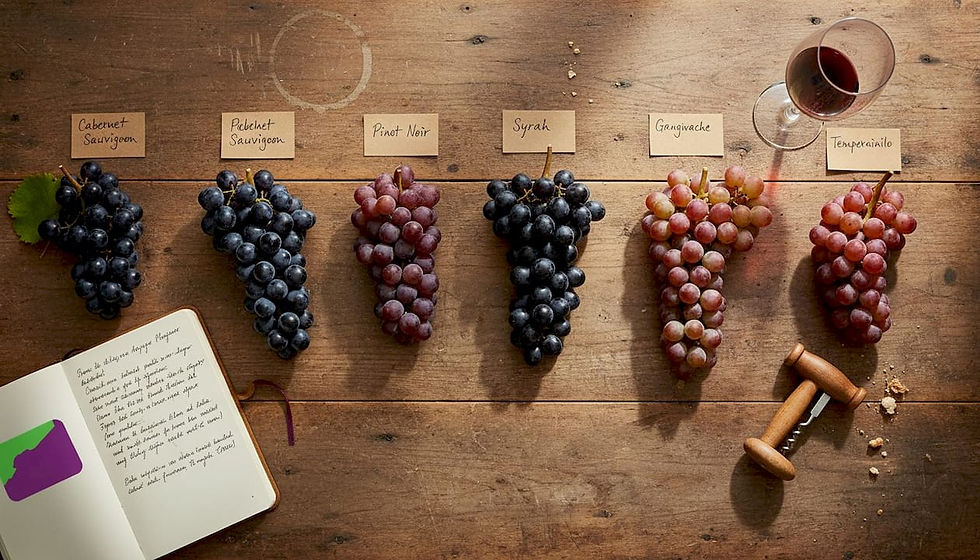
The major red wine grapes include Cabernet Sauvignon, Merlot, Pinot Noir, Syrah/Shiraz, Grenache, Sangiovese, Tempranillo, and Nebbiolo. Each one has a distinct personality. Think of them like characters in a great TV show: bold leads, charming sidekicks, and a few dark horses.
Grape | Tannins | Acidity | Flavor notes | Key regions |
Cabernet Sauvignon | High | Medium | Black currant, cedar, tobacco | Bordeaux, Napa Valley |
Merlot | Medium | Medium | Plum, chocolate, bay leaf | Bordeaux, California |
Pinot Noir | Low | High | Cherry, raspberry, earth | Burgundy, Oregon |
Syrah/Shiraz | High | Medium | Black pepper, blueberry, smoke | Rhône, Australia |
Grenache/Garnacha | Low | Low | Strawberry, spice, herbs | Spain, Southern Rhône |
Sangiovese | High | High | Tart cherry, leather, tomato | Tuscany |
Tempranillo | Medium | Medium | Red fruit, vanilla, leather | Rioja, Ribera del Duero |
Nebbiolo | Very high | High | Rose, tar, dried fruit | Piedmont |
Blends built on these grapes are legendary. Bordeaux mixes Cabernet Sauvignon with Merlot and Cabernet Franc. The Southern Rhône leans on Grenache as the base, often blended with Syrah and Mourvèdre. Check out our guide to red wines for deeper dives into each style.
If you’re curious about Tempranillo examples or want to show off your love for understanding Syrah, we’ve got you covered with some fun gear too.
Pro Tip: Serve lighter reds like Pinot Noir slightly cooler (around 60°F) and fuller reds like Cabernet around 65°F. Temperature dramatically changes how a wine tastes and smells.
Famous white wine grapes and their flavor profiles
Red grapes often get the spotlight, but white wine grapes have their own distinct set of stars.
The major white wine grapes include Chardonnay, Sauvignon Blanc, Riesling, Pinot Grigio, Gewürztraminer, and Viognier. Each one brings something completely different to the table.
Chardonnay: The chameleon of white wines. Unoaked versions are crisp and citrusy. Oaked versions are rich, buttery, and full-bodied. Thrives in Burgundy and California.
Sauvignon Blanc: Zingy, grassy, and refreshing. Think grapefruit, lime, and fresh herbs. New Zealand’s Marlborough region made this grape globally famous.
Riesling: Misunderstood but magnificent. It ranges from bone-dry to lusciously sweet. Always high in acidity, which makes it incredibly food-friendly.
Pinot Grigio/Pinot Gris: Light and crisp in Italy (Pinot Grigio), richer and spicier in Alsace (Pinot Gris). Same grape, very different personalities.
Gewürztraminer: Wildly aromatic. Think lychee, rose petals, and ginger. If you want to understand wine aroma basics, this grape is a fantastic teacher.
Viognier: Lush and floral with peach and apricot notes. Low acidity makes it feel round and generous.
Grape | Sweetness | Acidity | Style |
Chardonnay | Dry | Low to medium | Full-bodied, versatile |
Sauvignon Blanc | Dry | High | Crisp, aromatic |
Riesling | Dry to sweet | Very high | Light, precise |
Pinot Grigio | Dry | Medium | Light, easy-drinking |
Gewürztraminer | Off-dry | Low | Intensely aromatic |
Viognier | Dry | Low | Rich, floral |
For food pairings, Chardonnay loves roasted chicken and creamy pasta. Sauvignon Blanc is a dream with goat cheese and seafood. Understanding wine balance tips will help you nail these combinations every time.
Blends, synonyms, and the surprising complexity of grape identity
Getting to know individual grapes leads to a bigger question: how do names and blends shape what you drink?
Blending is not a shortcut. It’s an art form. Many of the world’s most celebrated wines are blends. Bordeaux, Champagne, and the Rhône Valley have built entire reputations on combining grapes to create something greater than the sum of their parts. Blends often outperform single-varietal wines in complexity and balance.
Then there’s the name confusion. Synonymy is common: Syrah equals Shiraz, Grenache equals Garnacha equals Cannonau. Same grape, different countries, different names. That’s synonymy. Homonymy is the trickier beast: the Pinot family (Pinot Noir, Pinot Gris, Pinot Blanc) shares a name but are genuinely different varieties. Confusing? A little. But also kind of fascinating once you get the hang of it.
Here’s a quick comparison to keep you sane:
Name on label | Also known as | Region |
Syrah | Shiraz | France / Australia |
Grenache | Garnacha, Cannonau | Spain / Sardinia |
Pinot Grigio | Pinot Gris | Italy / Alsace |
Cabernet Franc | Bouchet | Loire / Bordeaux |
How to decode a confusing wine label in four steps:
Check if the grape name is listed. If yes, you’re golden.
If only a region is listed, look up what grapes that region is known for.
Search for synonyms if the name looks unfamiliar.
When in doubt, ask your wine shop or check a trusted source.
“The diversity of wine grapes is a feature, not a bug. Every unfamiliar name on a label is an invitation to discover something new.”
Explore how blends shape aroma and check out our apparel celebrating Grenache synonyms and Cabernet Franc examples if you want to wear your grape love proudly.
How to choose and enjoy wines based on grape variety
Now the crucial part: how do you turn this grape knowledge into more enjoyable and adventurous wine selections?
Grape variety determines the baseline structure of a wine, including tannins from skin thickness and aromatics from terpenes, thiols, and pyrazines. But climate, clones, rootstock, and blending all modify that expression. So the grape is your starting point, not the whole story.
Here’s how to use grape knowledge when picking wine:
Know your preferences. Do you like bold and tannic? Reach for Cabernet Sauvignon or Nebbiolo. Prefer something silky and light? Go Pinot Noir.
Scan the label for the grape name. If it’s a European wine with only a region listed, a quick search tells you the grape.
Try a new variety each month. Seriously. Pick one grape you’ve never tried and commit to it for a bottle or two.
Organize a grape-focused tasting at home. Grab three bottles of the same grape from different regions and taste them side by side. The differences will blow your mind.
Ask questions. Wine shop staff love helping curious customers. Tell them what you usually drink and ask for something similar but different.
Pro Tip: For a home tasting, try three Chardonnays: one unoaked from Chablis, one lightly oaked from California, and one rich and buttery from Australia. Same grape, three wildly different experiences. It’s a game-changer for understanding how region and winemaking shape flavor.
Feeling confident wine choices start with knowing your grapes. Once you have that foundation, every bottle becomes a little more exciting.
Why exploring grape diversity is the key to unlocking wine appreciation
Here’s my honest take: most people get comfortable with one or two grapes and stop there. Chardonnay becomes their white, Cabernet becomes their red, and that’s that. I get it. When something works, why mess with it?
But sticking only to the famous names means missing out on some of the most thrilling wines on the planet. Grüner Veltliner from Austria. Assyrtiko from Greece. Carménère from Chile. These grapes tell stories that Chardonnay simply can’t. Trying them is how your palate actually grows.
I also want to push back on the idea that knowing grape names makes you a wine expert. It doesn’t. Real wine appreciation is built on experience, curiosity, and a willingness to be surprised. The grape is the map, but the journey is the tasting. So use what you’ve learned here as a launchpad, not a finish line. The most exciting bottle you’ll ever drink is probably one you haven’t tried yet.
Deepen your wine journey with Blame It On Bacchus
For those energized to keep learning, here’s what Blame It On Bacchus offers.
If this article got your wine curiosity buzzing, you’re going to love what we’ve built over at Blame It On Bacchus. We make wine education genuinely fun, approachable, and a little cheeky, just like it should be.

Our Elements of Wine guide is a fantastic next step if you want to go deeper on grape structure, tasting techniques, and building real confidence with wine. And if you’re looking for a broader collection of guides, tastings, and resources, our wine learning resources hub has everything you need to keep the adventure going. Come explore. Bring your curiosity and maybe a glass of something new.
Frequently asked questions
What is the difference between table grapes and wine grapes?
Wine grapes are smaller, with thicker skins and higher sugar and acid levels compared to table grapes, which are bred for eating and have a milder, juicier profile.
What are the ‘noble grapes’ and why are they important?
The ‘noble grapes’ is an informal marketing term applied to several classic varieties like Cabernet Sauvignon, Chardonnay, and Pinot Noir that are recognized globally for their quality and adaptability.
Why do some grape varieties have multiple names?
Many grapes carry synonyms due to regional language differences and labeling laws. Syrah and Shiraz are the exact same grape, just named differently in France and Australia.
How many types of wine grapes are used globally?
There are around 10,000 grape varieties worldwide, but fewer than 20 dominate most commercial vineyards and the wines you’ll find on store shelves.
Is it better to choose a single-varietal wine or a blend?
Neither is better across the board. Blends often deliver greater complexity, while single-varietal wines let one grape’s unique character shine through clearly.
Recommended
Comments