The Real Role of Oak in Wine, Explained

Updated: May 25
TL;DR:
Oak influences wine beyond flavor, shaping texture, tannins, and aging potential through chemical compounds and oxygen exchange. Different oak types and toasting levels produce diverse aromatic profiles, with French and American oak offering distinct characteristics; winemakers customize oak impact through blending and barrel choices. Proper oak aging enhances wine structure, color stability, and mouthfeel, but excessive use can overshadow the grape’s expression, emphasizing the importance of balanced application.
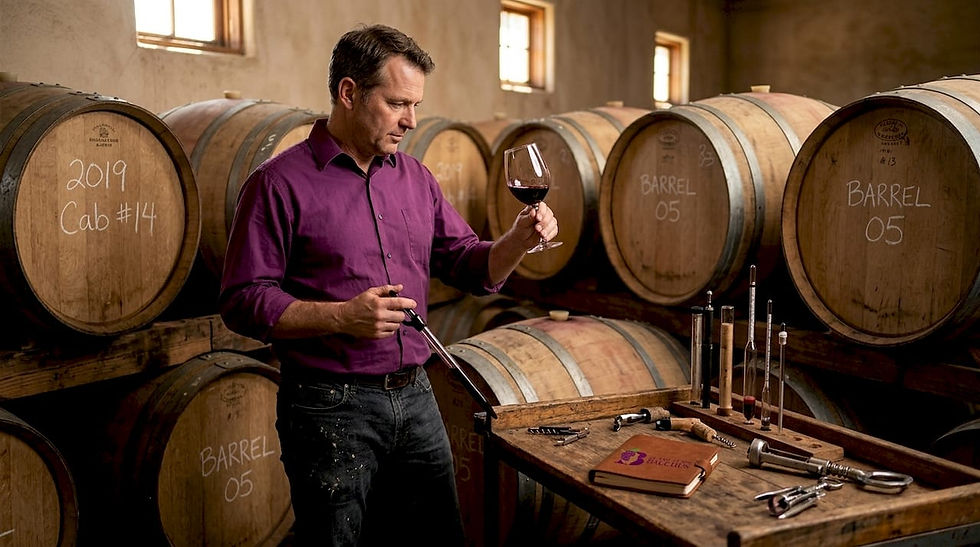
Think oak just adds a hit of vanilla to your Chardonnay? That’s the tip of the iceberg. The role of oak in wine is one of the most nuanced, layered topics in all of winemaking, and once you understand it, you’ll never sip a barrel-aged red the same way again. Oak shapes texture, tannin structure, aroma complexity, and long-term aging potential. It’s less like a flavoring and more like a co-winemaker working silently in the cellar.
Table of Contents
Key Takeaways
Point | Details |
Oak does more than flavor | Oak contributes tannins, oxygen exchange, and structural compounds that define a wine’s texture and longevity. |
Toast level drives aroma | Light toast preserves tannins while heavy toast generates smoky, spicy, and caramel notes from lignin breakdown. |
Oak type changes everything | French oak delivers subtlety and spice; American oak brings bold coconut and vanilla notes much faster. |
Winemakers blend for balance | Mixing new and neutral barrels gives winemakers precise control over oak intensity without overpowering the fruit. |
Oak alternatives exist | Chips and staves offer flavor and some oxygen benefits at a fraction of the cost, but cannot replicate full barrel aging. |
The chemistry behind oak’s influence on wine
Here’s where it gets genuinely fascinating. When wine sits in an oak barrel, it’s not just absorbing flavor. It’s interacting with a whole cocktail of chemical compounds that each do something distinct. Understanding these compounds is the key to understanding why oak-aged wines taste, smell, and feel the way they do.
The biggest structural players are ellagitannins. French oak leads in hydrolysable tannin concentration compared to both Hungarian and American oak, according to Penn State research using machine learning to fingerprint barrel tannins. These tannins bind with wine’s native grape tannins to create a softer, more integrated mouthfeel over time. Think of them as the peacemakers in a very complex room.
Then there’s the flavor brigade:
Vanillin comes from the breakdown of lignin in the wood and gives that classic vanilla sweetness you notice in many barrel-aged whites and reds.
Whiskey lactones (also called oak lactones) contribute coconut and woody spice aromas. They’re present in all oak but vary wildly by species.
Guaiacol is the compound responsible for that smoky, almost bacon-like note you sometimes pick up in heavily toasted barrels.
Eugenol brings clove and spice character, adding warmth to the aromatic profile.
Furfural is a caramel and almond note generated during toasting from the breakdown of hemicellulose in the wood.
Toast level is where the winemaker really starts pulling strings. Toasting transforms lignin and hemicellulose into vanillin, guaiacol, and furfural at varying concentrations depending on how deep the char goes. Light toast keeps more ellagitannins intact and delivers a subtler oak influence. Heavy toast burns off a chunk of those tannins and cranks up the smoky, spicy character instead. Medium-plus toast sits in the sweet spot for a lot of red wines, giving spice and vanilla without going full campfire.
Pro Tip: When you read a tasting note that mentions “toasty,” “smoky,” or “vanilla,” that’s the barrel talking. Recognizing those markers in a glass is your first step toward understanding wine terminology at a deeper level.
French vs. American vs. Eastern European oak
Not all oak is created equal. The species and geographic origin of the wood produce dramatically different wines, and winemakers choose their barrels the way a chef chooses seasoning.
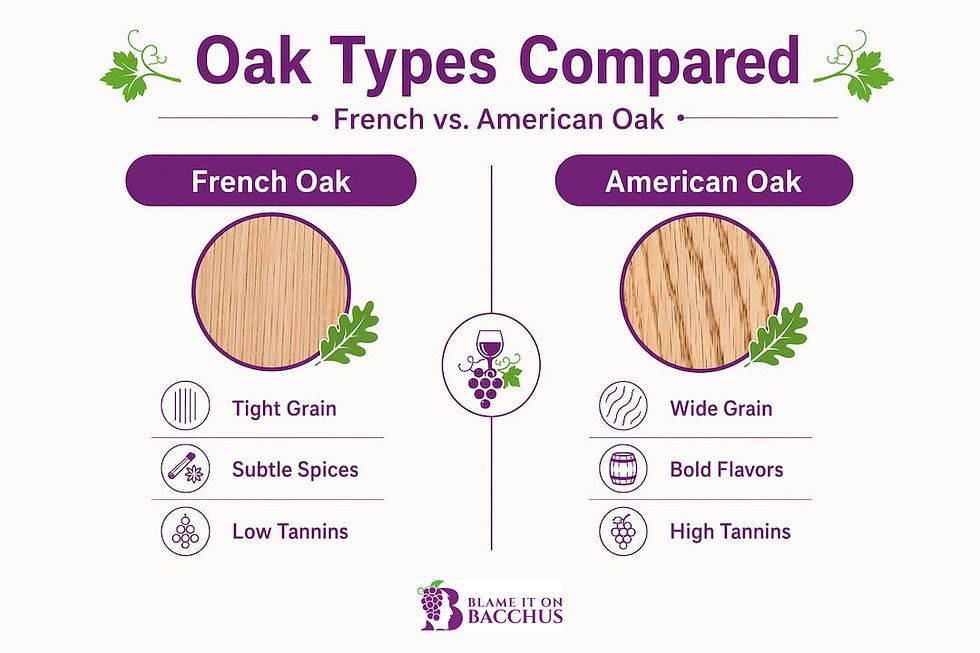
Oak Type | Grain | Tannin Level | Key Flavors | Best Suited For |
French (Quercus petraea) | Tight | High | Spice, cedar, subtle vanilla | Pinot Noir, Chardonnay, Bordeaux blends |
American (Quercus alba) | Loose | Lower | Coconut, bold vanilla, dill | Rioja Tempranillo, Napa Cabernet, Zinfandel |
Hungarian (Quercus petraea) | Medium | Medium-high | Spice, dried fruit, earthy | Syrah, Merlot, value-tier reds |
Slavonian (Eastern European) | Wide | Low-medium | Neutral, gentle oak | Barolo, Amarone, large format aging |
The grain structure difference is huge. French oak’s tight grain slows extraction and oxygen transfer, producing a more gradual, subtle integration. American oak’s loose grain speeds everything up, which is why Rioja Reservas aged in American oak taste bold and coconutty after just a year or two. American oak contains 3 to 4 times the whiskey lactone concentration of French oak, extracting 50 to 80 micrograms per liter annually compared to just 10 to 20 for French oak.
Slavonian oak barrels, common in traditional Italian winemaking, are enormous. We’re talking 500 to 5000 liters. That size massively reduces the wood-to-wine contact ratio, so the oak impact becomes almost neutral. Barolo producers love this because it lets the wine develop complexity and tannin softening through gentle oxygenation without oak flavor overwhelming the Nebbiolo character.
Pro Tip: Want to taste the difference between French and American oak side by side? Grab a French-oaked Burgundy and a California Chardonnay aged in American oak. Same grape, totally different oak personality. It’s one of the best wine education experiments you can run at home.
How oak aging transforms wine structure
Flavor is honestly only half the story. The role of oak in winemaking gets even more interesting when you look at what it does to wine’s physical structure over time. Here’s the process, step by step.
Slow oxygen ingress through the staves. Oak barrels allow 15 to 45 milligrams of oxygen per liter per year into the wine, with the rate varying by oak type, barrel age, and cellar humidity. This is not oxidation in the bad sense. It’s micro-oxygenation, a slow, controlled process that does things bulk tank aging simply cannot replicate.
Tannin polymerization. That controlled oxygen triggers grape tannins to link together into longer chains. Long-chain tannins feel smooth and silky on your palate. Short, free tannins feel grippy and harsh. Oak aging literally smooths the wine out from the inside.
Color stabilization. Oxygen from the barrel also facilitates reactions between anthocyanins (the red pigments) and tannins, creating stable color complexes. This is why a well-aged Cabernet Sauvignon holds its deep ruby color for decades instead of turning brown quickly.
Concentration through evaporation. About 2% of wine volume evaporates through the barrel each year, a phenomenon winemakers affectionately call the “angel’s share.” While that sounds like a loss, it concentrates what remains, amplifying structure and complexity.
Mouthfeel enhancement. Beyond tannin softening, oak aging in wine also increases glycerol levels slightly, contributing to that lush, round texture you get in a well-made aged red. It’s part of why a barrel-aged wine feels more luxurious in the mouth than a tank-fermented one. You can dig deeper into this process with a look at how aging unlocks flavor in wine over time.
If you want to understand what wine oxidation actually does and how barrel aging keeps it beneficial rather than destructive, that distinction is what separates a “complex” wine from a “gone off” one.
How winemakers fine-tune oak’s impact
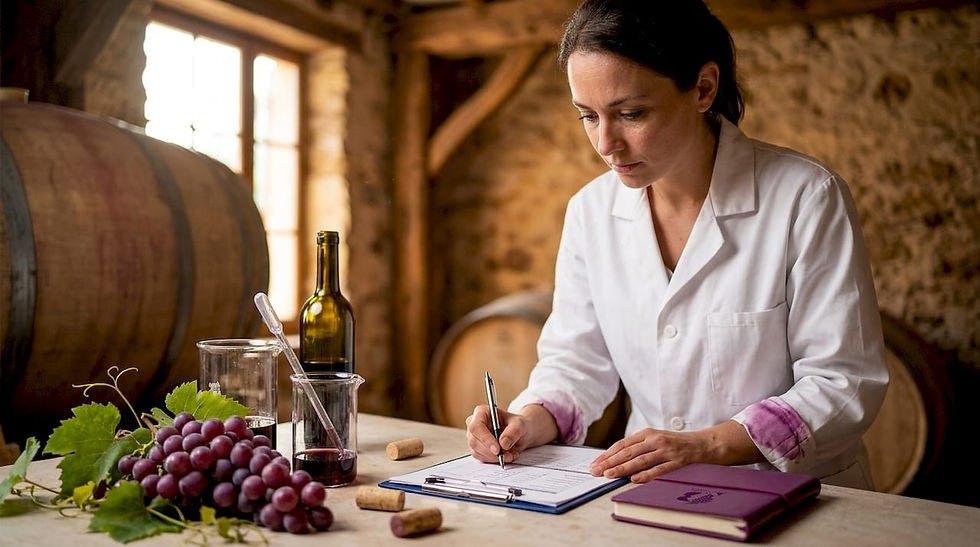
The impact of oak on wine is never one-size-fits-all. Winemakers have an entire toolkit of decisions that let them dial in exactly how much oak character ends up in your glass.
The single biggest lever is the percentage of new oak. A wine aged 100% in new French oak gets a heavy dose of flavor, tannin, and vanilla. A wine aged in barrels used for two or three previous vintages (called “neutral” barrels) gets all the oxygen exchange benefits with almost none of the flavor contribution. Most winemakers blend both. Winemakers treat oak like a dial, blending new and neutral barrels to calibrate the exact level of vanilla and spice without steamrolling the fruit underneath.
Beyond that, here’s how the decisions stack up:
Toast level selection is chosen at the cooperage, and a good winemaker specifies exactly what they want. Light, medium, medium-plus, and heavy toast each deliver a different aromatic fingerprint, as toast level is a primary factor in shaping a wine’s complexity and tonal range.
Barrel size directly controls intensity. Smaller barrels (like the classic 225-liter Bordeaux barrique) deliver more wood-to-wine contact and faster extraction than large format casks.
Aging duration matters enormously. Twelve months in oak is a very different wine than 24 months, even in the same barrel.
Oak alternatives like chips, spirals, and staves have become a real part of the conversation. They deliver some of the flavor compounds quickly and cheaply, but they cannot replicate the slow oxygen ingress of a full barrel. Some appellations outright prohibit them, which tells you everything about the regulatory weight that oak aging carries.
This is also where oak aging decisions balance complexity and tannin integration against preserving the terroir expression of the grape and site. Overlook that balance and you get a wine that tastes like a lumber yard.
My take on what oak actually means for your glass
I’ve tasted a lot of wines over the years, and here’s what I’ve found: the most common oak mistake isn’t using too much. It’s using oak as a shortcut for complexity instead of earning it. When I taste a wine and the oak overshadows everything, it tells me the winemaker was covering something up, whether that’s underwhelming fruit, a difficult vintage, or just a lack of patience.
The wines I keep coming back to are the ones where oak played a supporting role. You sense it in the texture and the length, in that slight warm spice on the finish, but you can still taste where the grapes grew. That’s the magic. Oak should feel like a frame around a painting, not paint splashed all over the canvas.
What I’ve also noticed is that oak trends cycle. The heavily oaked California Chardonnays of the 1990s gave way to leaner, more restrained styles. Today there’s a growing appreciation for minimal oak or large-format aging that lets terroir breathe. If you want to sharpen your own palate for this, the best thing you can do is taste deliberately. Find two versions of the same wine at different oak levels and take notes. That kind of tasting education sticks with you far longer than reading about it.
— Thomas
Explore oak and wine with Blameitonbacchus

If all of this has you hungry to go deeper, Blameitonbacchus has exactly what you need. Their Elements of Wine course breaks down everything that goes into a glass, oak included, in a way that’s fun, approachable, and genuinely eye-opening for any enthusiast. It’s the kind of education that turns wine from something you enjoy into something you truly understand. And if you want to browse all available wine courses from Blameitonbacchus, there’s a full lineup waiting. Whether you’re a curious beginner or a seasoned sipper who wants to go further, there’s something in there for you.
FAQ
What is the role of oak in wine?
Oak shapes wine’s flavor, texture, tannin structure, and aging potential through chemical compounds and controlled oxygen exchange. It contributes notes like vanilla, spice, and smoke while softening tannins and stabilizing color over time.
What does an oak wine barrel actually do?
A barrel allows tiny amounts of oxygen into the wine each year, triggering tannin softening, color stabilization, and a rounder mouthfeel. The wood also contributes flavor compounds like vanillin and lactones depending on the toast level.
How does French oak differ from American oak in wine?
French oak has a tighter grain that slows extraction and delivers subtle spice and cedar notes, while American oak’s loose grain extracts faster and contributes bold coconut and vanilla flavors at a higher concentration.
Can winemakers control how much oak flavor gets into wine?
Yes. By blending wine aged in new barrels with wine from neutral barrels, adjusting toast levels, and controlling aging duration, winemakers can dial oak influence from barely noticeable to front-and-center.
Are oak chips and staves the same as barrel aging?
Not quite. Oak alternatives deliver similar flavor compounds quickly and at lower cost, but they cannot replicate the slow, controlled micro-oxygenation that a full barrel provides, which is the structural heart of traditional oak aging in wine.
Recommended
Comments