No Experience Needed: Virtual Wine Tasting Club for Beginners & Gifts

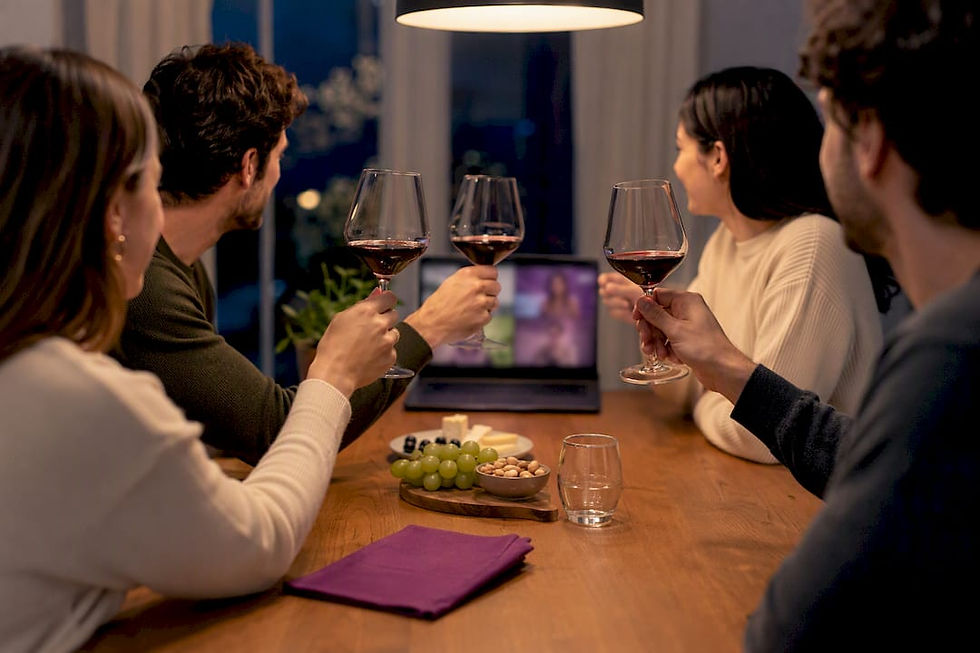
A wine tasting club, in the sense that matters here, is a paid online guided tasting or class, not a membership that ships bottles to your door. It’s a live or recorded session led by an actual host who walks you through wine like a friend who happens to know a ton about it. Perfect for total beginners or anyone shopping for a gift that doesn’t feel generic. Ready to book one or grab an eGift card? Keep reading.
Table of Contents
What is an online wine tasting club, exactly?
Forget the idea of joining something and waiting for a box to show up every month. A virtual wine tasting club is a paid experience: a guided tasting or class you attend from your kitchen table, glass in hand, host on screen. These come in a few flavors.
Live group classes: scheduled public sessions where you learn alongside other wine-curious strangers.
Private guided sessions: booked just for you, your friends, or a work team, with the host tailoring the pace and topics.
Recorded or self-paced courses: pre-filmed lessons you work through on your own schedule.
Most sessions come with tasting notes to follow along, and some let you add a wine kit or wine-themed merchandise to the order. For beginners, the appeal is obvious: someone else does the planning, explains the jargon in plain English, and there’s zero pressure to sound like a sommelier. For gift shoppers, it’s even easier. You’re not guessing at a bottle the recipient might already own. You’re handing them an experience they get to pick the wine for.
What actually happens during a guided tasting
Once you log in, the session follows a rhythm that’s easy to predict, which is half the reason it works so well for nervous first-timers.
Welcome and orientation: the host introduces themselves, explains the wines on the table, and sets expectations for the hour.
Guided tasting of each pour: you move through the classic sequence together (see, swirl, sniff, sip, savor) one glass at a time.
Discussion and questions: the host opens the floor, compares notes across the group, and answers whatever’s confusing you.
Session length and pour count vary by provider, but there’s a practical ceiling. Sensory-analysis guidance from the OIV recommends capping serious tasting sessions at around 8 to 10 samples, since your palate starts to tire past that point. Most consumer-facing classes serve fewer pours, enough to keep things lively without dulling anyone’s senses too early.
To keep things interactive, hosts lean on a few tricks: printable tasting sheets, quick polls about what you’re smelling, guided aroma exercises, breakout rooms for private chats in bigger groups, and sometimes blind-coded pours just to make the guessing game more fun.
How to pick the right tasting or class
The best choice depends on what you’re actually after, so start there before you start comparing prices.
Match the format to the goal: group classes suit social learning and tighter budgets, while private sessions fit celebrations, gifts, or anyone who wants the host’s full attention.
Check the fine print: how many pours are included, whether a tasting kit ships to you, how long the session runs, how many people are in the group, and what the host’s background is.
Look at refund and rebooking policies: life happens, and a provider that lets you reschedule without a fight is worth more than one that doesn’t.
Pricing usually climbs when you’re booking a private event, when kits are shipped rather than self-supplied, when the group is small and personal, or when the host brings serious credentials to the table. If you’re buying as a gift, dig into the details: does the eGift card expire, are there blackout dates for scheduling, and can the recipient pick their own date? Some providers also let you bundle in merchandise, which makes the gift feel like more than a calendar invite.
Pro Tip: Ask upfront if tasting sheets and notes are included. They turn a fun hour into something you’ll actually remember next time you’re standing in a wine aisle.
Getting your space ready before you log on
You don’t need a wine cellar or a fancy setup, just a few basics that make the tasting easier to follow.
Pick a neutral spot: natural light if you can get it, a plain background, and minimal distractions so you can actually focus on the glass.
Use stemmed glasses if you have them: holding the bowl warms the wine, so the stem keeps your grip out of the way.
Have water and plain crackers nearby: a palate cleanser between pours keeps your taste buds honest.
Temperature matters more than most beginners expect. According to Frescobaldi’s tasting guide, sparkling wines show best at 6 to 8 degrees Celsius, whites at 10 to 12, and reds at 12 to 18. Serve red wine too warm and the alcohol overpowers everything else, which is a rookie mistake even confident drinkers make.
A properly chilled pour changes what you can actually smell and taste, according to Frescobaldi, since muted aromas are one of the most common reasons a wine tastes flatter than it should.
Once the wine’s in the glass, run through the five S’s: see, swirl, sniff, sip, savor. That sniff step matters more than people realize. As BBC Good Food explains, most of what you register as “flavor” is actually happening retronasally, through your nose, while the wine is in your mouth. Coravin walks through the same five-step method as a simple entry point for anyone tasting seriously for the first time. If you want a slower walkthrough before your session, our beginner’s tasting guide covers it step by step, and why swirling matters if you’ve ever wondered whether that move is just for show.
Buying a tasting or merch as a gift
A guided tasting makes a genuinely good gift, mostly because it doesn’t sit in a drawer. There are a few ways to buy one depending on the occasion.
eGifts for instant delivery: perfect when you need something today and the recipient can pick their own date.
Scheduled seats in a public class: good for a specific date you already know works, like a birthday or anniversary.
Private bookings for group events: bachelorette parties, work socials, or family gatherings where everyone tastes together.
You can also bundle the experience: pair a class with wines for tasting, or add branded merchandise like a tumbler, tote, or hoodie so the gift feels complete on arrival, not just a link in an inbox. Before you check out, confirm three things: how long the recipient has to redeem it, how long any shipped kit or merch takes to arrive, and how easy it is for them to reschedule if the original date doesn’t work.
Why I built tastings around beginners, not experts

I started Blame It On Bacchus because most wine education takes itself way too seriously, and beginners end up too intimidated to ask the questions that actually matter. Our classes and private guided tastings are built for people who’ve never used the word “tannin” out loud and don’t want to feel judged for it.
We also keep gifting simple. Between eGift cards and wine-themed merchandise, you can hand someone a full experience instead of another bottle they might already own. Learning wine should feel like a fun afternoon, not a test.
— Thomas
Ready to book your first tasting or send a gift
Here’s the good news: you don’t need to research five different providers to get started. If you want a fun, no-pressure way into wine, browse our course catalog for options like The Elements of Wine or a Passport series tasting through a specific country’s wines. Planning something for a group or a special occasion? Our private classes page covers guided tastings, food and wine pairings, and fully custom sessions.

Buying for someone else? Grab a BIOB eGift Card and let them pick their own class.
Want to add a little flair? Check out our wine-themed merchandise to pair with any gifted experience.
Planning a private or custom event? Reach out through our private classes page and we’ll help you set it up.
Where these tasting tips came from
The serving temperatures and setup guidance here come from Frescobaldi’s tasting guide. Sample counts and pacing advice draw on the OIV’s sensory analysis review. The five S’s and retronasal explanation are pulled from BBC Good Food and Coravin.
Sources
FAQ
What is a virtual wine tasting club?
It’s a paid online session, live or recorded, where a host guides you through tasting several wines with notes and discussion built in. It’s different from an in-person wine membership that ships bottles on a schedule.
How many wines are usually included in a session?
Most consumer tastings pour enough wines to keep the session engaging without tiring your palate. Longer or more formal sessions may go up to 8 to 10, which sensory-analysis guidance from the OIV treats as a practical ceiling.
What temperature should wine be served at for tasting?
Serving temperature affects how much aroma and flavor you actually pick up. Frescobaldi’s guide recommends 6 to 8 degrees Celsius for sparkling wines, 10 to 12 for whites, and 12 to 18 for reds.
Can I gift a wine tasting class to someone?
Yes, eGift cards and scheduled class seats both work well as gifts, and bundling in wine-themed merchandise makes the gift feel more complete. Blame It On Bacchus offers a BIOB eGift Card that lets the recipient choose their own class and date.
What’s the difference between a group and private tasting?
Group classes are scheduled public sessions where you learn alongside other participants, usually at a lower cost. Private sessions are booked just for you or your group, offering more personalization and flexibility, which is why they typically cost more.
Recommended
Comments