Wine With Thai Food: Pad Thai, Curry, and a Bottle for Tonight


Grab a higher-acid, low-alcohol white, ideally one with a whisper of sweetness, or a light, low-tannin red, and you’ve solved most Thai-food pairing problems. Acidity and a touch of sugar tame the heat, while low tannin keeps your red from picking a fight with the chilies. Sparkling and rosé work too, no stress.
Table of Contents
1. Which wine styles should you open with Thai food?
Think of this as your shopping list. Every style below plays nicely with sweet, sour, salty and spicy all in one bite, and sommeliers recommend Riesling and Chenin Blanc again and again for exactly that reason.
Off-dry Riesling: Bright acidity plus a little sugar cools chili heat like a splash of cold milk.
Chenin Blanc (Vouvray): Versatile, with enough body for sweeter, savory dishes.
Grüner Veltliner: A peppery, herb-friendly white that loves vegetable-heavy plates.
Gewürztraminer or Pinot Gris: Aromatic whites that flatter curry and herb-forward dishes.
Dry sparkling or pét-nat: Bubbles act as a palate reset between fried or fiery bites.
Light reds (Pinot Noir, Gamay, Beaujolais): Low tannin and juicy fruit keep things breezy with saucy, herby plates.
If you only remember one name, make it Riesling. It’s the all-rounder that Michelin Guide Thailand points to for its acidity and lower alcohol.
2. What wine goes with Pad Thai, curry, and other favorites?
Let’s match the bottle to the plate in front of you. Here are the pairings that keep coming up from working sommeliers:
Pad Thai: Chenin Blanc or off-dry Riesling. The slight sweetness echoes the tamarind, and the acid keeps the noodles from feeling heavy.
Green curry: A cool Pinot Noir or Gamay, or an aromatic Gewürztraminer or Grüner Veltliner. Go red for chicken, aromatic white for fiery versions.
Massaman: Richer aromatic whites, orange wines or Gewürztraminer. Those nutty, umami flavors want a wine with some weight and spice of its own.
Tom yum: Citrusy Loire Sauvignon Blanc or any high-acid dry white that matches the lime and lemongrass.
Larb: Grenache or Gamay if you want red, or a crisp white that echoes all those fresh herbs.
Mango sticky rice: Sauternes or a late-harvest Riesling, with Moscato d’Asti as a lighter, fizzier option.
Wine Enthusiast’s sommelier roundup lands on many of these same matches, including Chenin Blanc for Pad Thai, Loire Sauvignon for tom yum, and Sauternes for dessert.
One handy rule: when a single bottle can’t cover the whole table, pick for the dish you care about most. If everyone’s fighting over the green curry, build around the green curry. The rest will survive.
For more on why spice changes everything, we break it down in our piece on the best wine with spicy food.
3. How do you pick one bottle for a multi-dish Thai meal?
Thai meals arrive all at once, which is a blessing and a pairing headache. You need one bottle that plays well with everything. Here’s the checklist to run through at the shop:
Check the label for a lower-alcohol wine. Alcohol amplifies the burn of chilies, so lower is friendlier.
Look for moderate-to-high acidity. Acid keeps your mouth refreshed and the flavors lively.
For spicier menus, choose a wine with a touch of sweetness. “Off-dry” or “Kabinett” on a Riesling label is a great sign.
Skip heavy oak and big tannins. Oaky Chardonnay and bold Cabernet turn bitter and hot beside chili.
If you want red, go fruit-driven and light, like Pinot Noir or Beaujolais.
Pro Tip: If you’re hosting and the budget allows, buy two bottles, one aromatic white and one light red, so every guest and every dish has a wingman.
Want the bigger framework behind these rules? Our guide on how to pair wine covers it for beginners.
4. How should you serve wine with Thai food?
Good service makes an okay pairing feel brilliant. A few small moves go a long way:
Chill whites and rosés, but skip the ice-bucket deep freeze. Too cold and the aromas disappear.
Give light reds a short stint in the fridge so they taste fresh instead of flabby.
Pour sparkling wine or pét-nat between heavy or spicy bites. This is the classic “champagne reset,” and it works with a wine that costs far less than Champagne.
Use a standard white wine glass for aromatic whites so you can catch the perfume.
For shared plates, pour small amounts and refill often. Thai food moves fast, and so does a warm glass.
If you’re tasting several wines, go lightest to richest, and sweetest last.
Pro Tip: Keep a glass of plain water on the table. It’s not cheating, it’s strategy.
5. How do regional Thai dishes change the wine you pour?
Thai cooking isn’t one cuisine, it’s several wearing the same hat. The north leans on herbs, grilled meats and mild, earthy curries. The northeast (Isan) brings sharp, sour, funky and fiery flavors, think som tum and larb. The central plains, home of Pad Thai and green curry, love balanced sweet-salty-sour richness with coconut. The south turns up the heat with turmeric, fresh seafood and punchy chili pastes.
That matters at the table. Milder dishes suit crisp Sauvignon Blanc, while spicier dishes want more aromatic, slightly sweeter wines like off-dry Riesling, according to The Guardian’s Fiona Beckett.
So northern herb-driven plates like to be matched with a zippy white or a Gamay. Isan salads call for Moscato d’Asti or off-dry Riesling to soften the fire. Central coconut curries get on with Chenin Blanc, Gewürztraminer or Pinot Noir. Southern heat-bombs deserve the sweetest, lowest-alcohol bottle you can find.
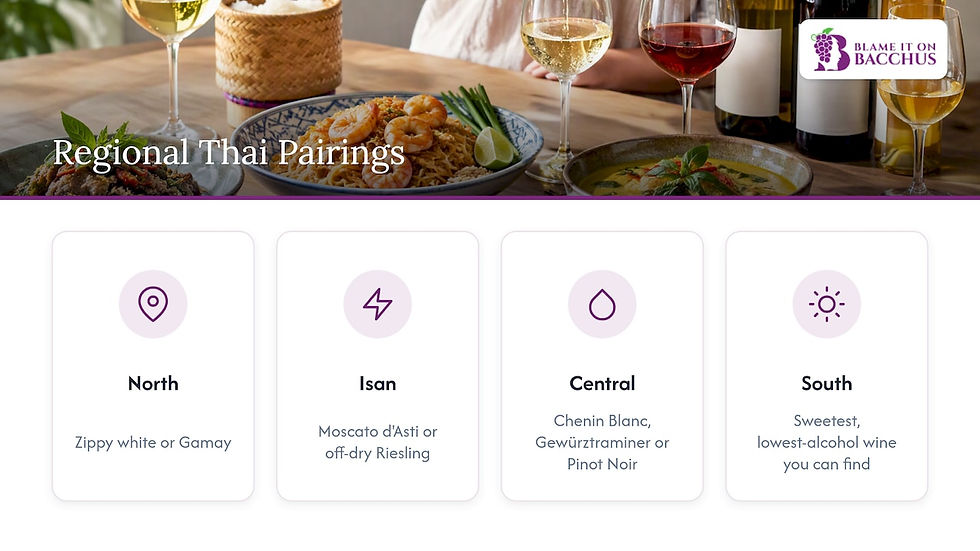
Even top restaurants work this way. Sommeliers at Thai fine-dining spots tailor wines to the spice level and region, often asking guests how much heat they can take before recommending a bottle.
6. How sweet should your wine be for spicy Thai dishes?
Sugar is your fire extinguisher, but you don’t need to drown the flame. The trick is matching sweetness to heat. Mild dishes need a bone-dry or barely-there-sweet wine. Medium heat loves off-dry. Properly fiery food can handle a wine that tastes noticeably sweet.
Try this simple ladder:
Mild: Dry Sauvignon Blanc or dry sparkling.
Medium: Off-dry Riesling or Chenin Blanc with a gentle sweetness.
Hot: A Riesling with clear residual sugar, Gewürztraminer or Moscato d’Asti.
Sweetness should always come with acidity. A sugary wine without zip tastes syrupy and flat next to Thai food, and that’s the opposite of what you want.
If you’re unsure, pour the wine and take a bite of your spiciest dish. If the burn gets louder, go sweeter. If the wine tastes like candy, go drier. That’s it, you’re a pairing pro.
Also watch the alcohol. A sweeter wine at lower alcohol, say Mosel Riesling, is a smarter choice than a high-alcohol sweet wine, since alcohol itself fans the flames.
7. Which wines work with vegetarian and vegan Thai dishes?
Veggie Thai food is a joy for wine, because there’s no heavy meat to fight with. The flavors lean on tofu, mushrooms, fresh herbs, coconut milk and vegetables, so you want wines that are fresh and expressive rather than big.
Grüner Veltliner: Its peppery, green notes mirror stir-fried greens and herb-packed salads.
Dry or off-dry Riesling: Handles vegetable curries and tofu pad thai without overpowering them.
Pinot Gris: A little more body for creamy coconut-based veggie curries.
Gamay or Beaujolais: Served slightly chilled, it’s lovely with mushroom stir-fries and basil dishes.
Dry sparkling: Spring rolls, fried tofu and tempura-style veggies all beg for bubbles.
A small heads-up for strict vegans: some wines are fine with animal products. Look for bottles labeled vegan-friendly, or ask your wine shop.
Vegan fish-sauce substitutes tend to be saltier and a bit less funky, which makes high-acid whites even more flattering. When in doubt, choose freshness over weight.
8. How do you taste wine alongside Thai food?
Tasting with Thai food is a bit different from sipping alone. The strongest flavors are in the food, so judge the wine on how it behaves with the plate, not on how it tastes in isolation.
Try this three-step routine:
Sip first. Notice the wine’s acidity, sweetness and fruit on its own, so you have a baseline.
Take a bite, then sip. Ask yourself: did the heat calm down or flare up? Did the wine still taste like fruit, or did it turn thin and bitter?
Reset and repeat. Drink water, then try another dish with the same wine.
The best pairings make both the food and the wine taste better. If the wine goes dull, hot or harsh, it’s not a match, and that’s useful information, not failure.
Take notes if you’re feeling nerdy. Jot down the dish, the wine and one word for how it felt. After a few dinners, you’ll spot your own pattern, maybe you’re a Chenin person, maybe a Gamay person. Our classes teach exactly this skill, but you can start at your own kitchen table tonight.
9. What adventurous wine pairings work with Thai food?
Once you’ve nailed the classics, it’s time to play. Thai food has so many layers that it rewards a little curiosity.
Orange wine: Skin-contact whites bring texture, nutty notes and a hint of tannin that suits massaman and grilled meats.
Tokaji (Tokay): Michelin-winning Thai sommelier Ian Krupp uses sweeter wines like Tokay for mango sticky rice, and he also reaches for Burgundy and chilled Beaujolais.
Dry Rheingau Riesling: Thai-focused sommelier voices in a Michelin Guide roundup praise bubbles and Trocken Riesling for their versatility.
Chilled light Grenache: Great with herb-heavy larb.
Low-intervention pét-nat: Cloudy, funky and fun beside fried snacks.
Rules are made to be bent, but keep your guardrails: low alcohol, low tannin, good acidity. Stay inside those lines and almost anything can surprise you in a good way.
10. What do sommeliers say about wine with Thai food?
Here’s what I keep noticing: sommeliers, again and again, reach for Riesling, Chenin Blanc and light reds when Thai food hits the table. That’s not trendiness, it’s a pattern worth trusting. The Serious Eats panel and Wine Enthusiast’s picks line up almost perfectly, and so does our experience teaching beginners to taste at Blame It On Bacchus.
One more thing from the classroom: people who say “I hate sweet wine” often change their minds the moment off-dry Riesling meets a spicy curry. Suddenly the sugar isn’t sugary, it’s balance.
— Thomas
11. Want to practice pairings with us?
Reading about pairings is great. Tasting them is where it clicks. That’s why we built The Elements of Food and Wine Pairing, a beginner-friendly online class that’s $75 one-off and walks you through the how and why, with zero snobbery.
Prefer something live and personal? Our Guided Tasting and private classes are perfect for date nights, team events or a group of friends who want to nail Thai-night pairings together. We can tailor the session to your menu. Current pricing details are on our site.

Pick a class or book a private session, and bring your appetite.
FAQ
What is the 20 minute wine rule?
It’s a simple serving tip: take white wine out of the fridge a bit before drinking, and put red in the fridge briefly beforehand. That brings both to a friendlier temperature, so aromas show up and light reds taste fresh.
What wine pairs well with massaman curry?
Go for a richer aromatic white such as Gewürztraminer, or try an orange wine. Their body and spice notes suit the nutty, savory flavors of massaman.
Does red or white wine go best with curry?
White usually wins, especially off-dry Riesling or Gewürztraminer, because acidity and a little sweetness calm the heat. If you want red, pick a light, low-tannin one like Pinot Noir or Gamay, as sommeliers often suggest.
What drink pairs well with Thai?
Off-dry Riesling is the safest single-bottle bet. Sparkling wine, rosé and Chenin Blanc are great backups, and bubbles are especially good for resetting your palate between spicy bites.
Sources
Recommended

Comments